“Shelving on wheels is mobile shelving mounted on casters to give you instant flexibility.”
From inner-city flats to large-scale warehouses, Australians are discovering the freedom of shelving on wheels. In a compact Melbourne studio, a mobile unit can divide living space by day and tuck neatly away by night. Warehouse managers in Sydney rely on wheeled racks to speed up picking times, cutting out unnecessary bending and lifting. Event organisers in Brisbane retool staging areas on the fly, slashing both set-up and pack-down hours.
This guide walks you through choosing the right frame material, sizing up load capacity and plotting your perfect layout—whether at home, in a small business or on an industrial site. You’ll find real-world examples, tips on caster selection and safety advice. By the end, you’ll know exactly how to pick and fit shelving on wheels that suits your space, budget and workflow.
Let’s dive into installation pointers, upkeep checklists and compliance must-knows for safer, smarter mobile shelving.
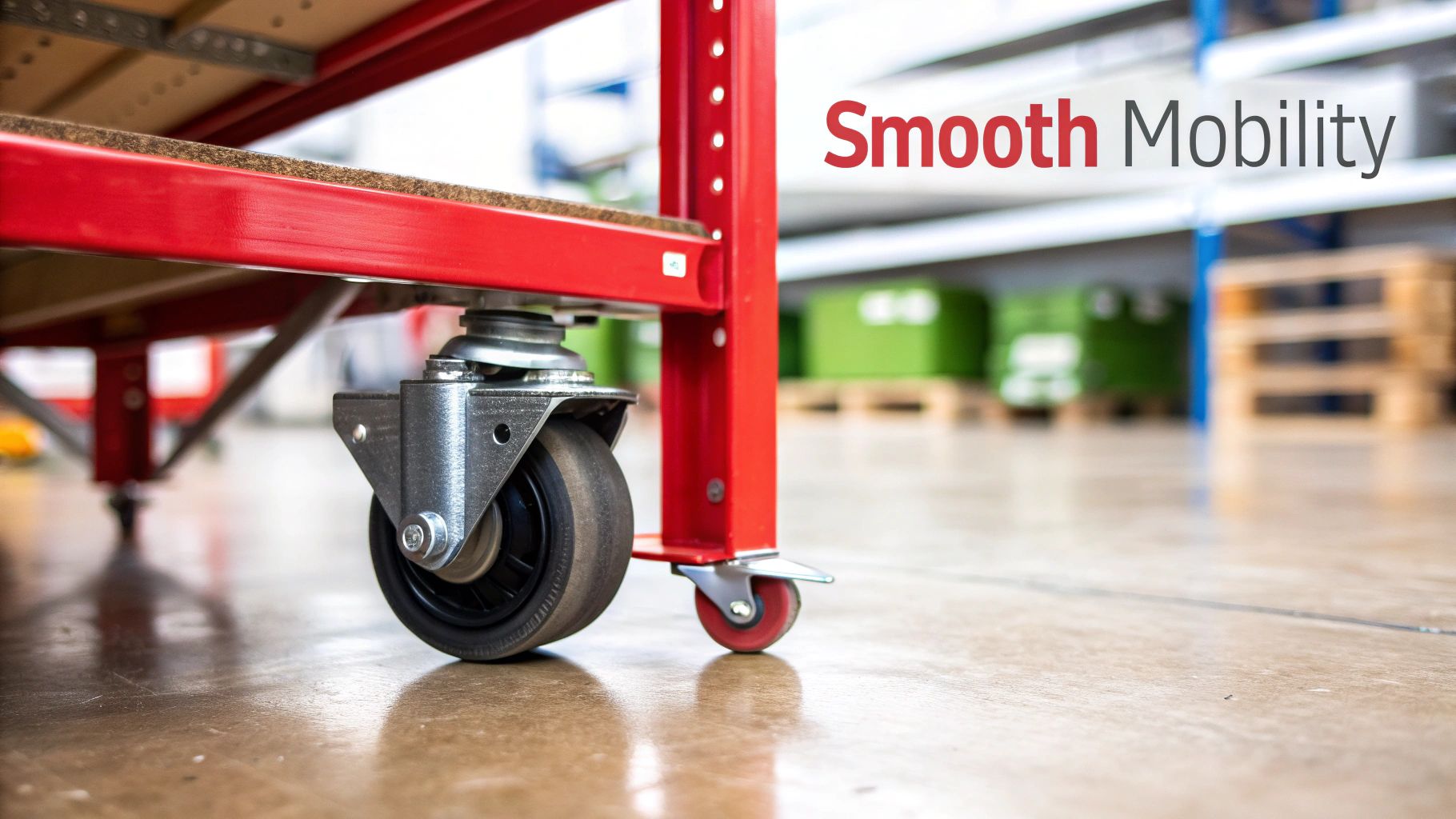
Swapping fixed feet for robust castors turns a static shelf into a mobile workstation—like steering a giant trolley where you need it. In tight retail back rooms, shifting stock feels more like a gentle push than hauling boxes. In home garages, you can reconfigure your workshop in seconds or glide shelves aside to clean underneath.
Mobility matters when every second and every square metre count in busy workspaces.
Super Rack’s heavy-duty castors are built to perform day in, day out—no wobble, no fuss.
Picking the right wheel material means balancing noise, floor protection and load demands. Across Australia, mobile shelving is riding the self-storage boom. By 2025, operators ran 2,590 facilities across roughly 7.6 million square metres of rentable space, all looking to squeeze more capacity into every square metre.
Read more insights on the mobile shelving market from Business Research Insights.
Between 2022 and 2025, average street rates for a 3 × 3 m² unit climbed from AUD 258.54 to AUD 272.21, a rise of just over 5%. That steady growth has businesses investing in high-quality castors to protect floors and ensure long-lasting performance.
Super Rack stocks swivel, rigid and locking castors ready for fast dispatch. Need quiet movement? Rubber is your go-to. Moving pallets? Metal wheels are primed for the job. Wherever you roll—be it a busy warehouse or your weekend garage project—you’ll notice the difference.
Next, we’ll explore the key benefits and real-world use cases that make mobile shelving essential for modern spaces.
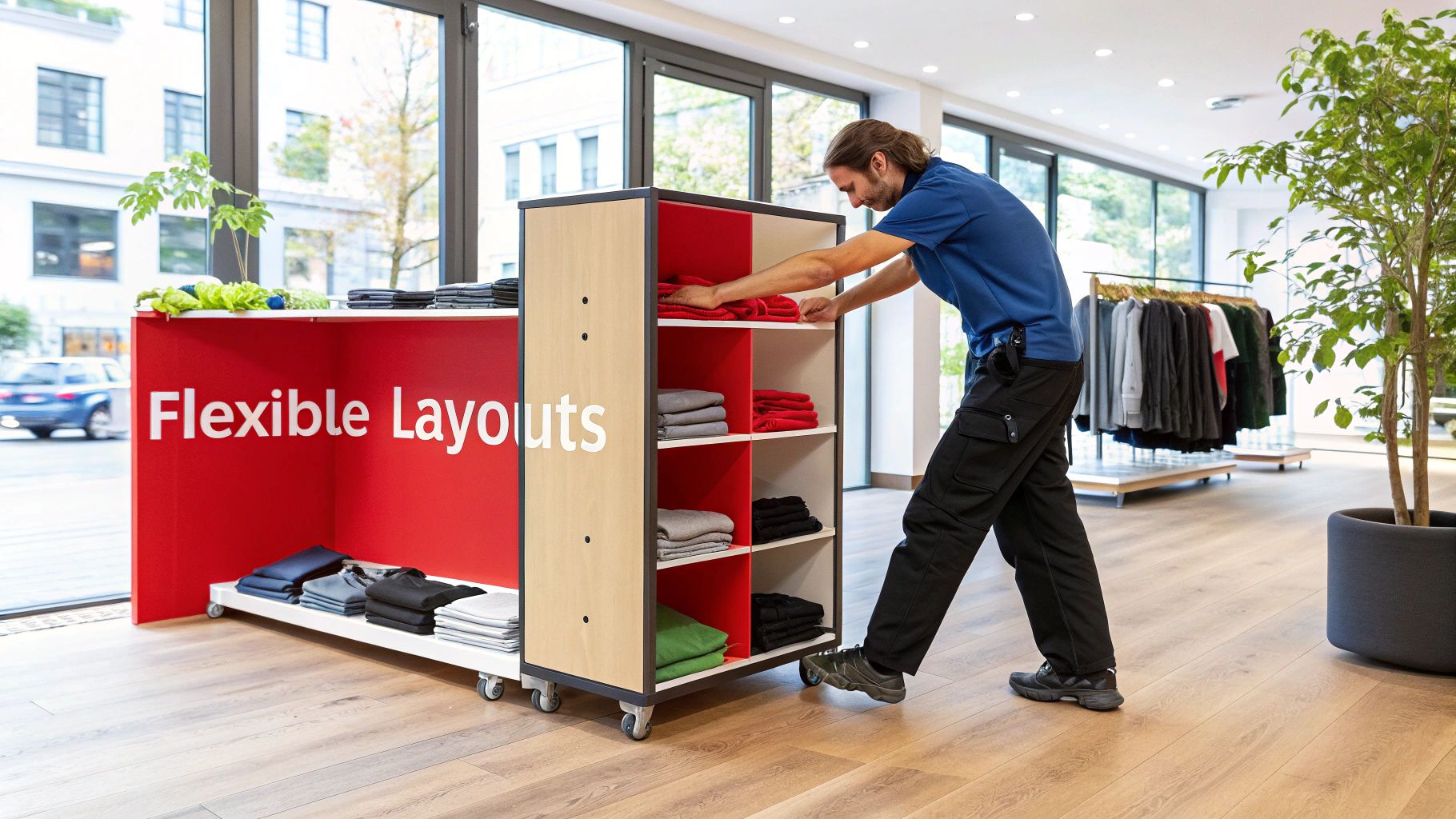
Imagine fixed shelving that suddenly rolls into action. With mobile shelves, you can adapt to seasonal swings, speed up cleaning and fine-tune your layout in seconds.
In a Brisbane garage, one DIY enthusiast mounted tool racks on locking casters, turning a cluttered corner into a flexible workshop. When weekend projects call, a quick unlock-and-roll is all it takes.
In Melbourne boutiques, store managers wheel in fresh collections with ease. When events demand a clear floor, they compress units out of the way.
Quick rotations keep retail floors fresh and boost customer engagement.
Across retail and archiving, space is at a premium. With the Australia home storage market valued at about AUD 453.6 million in 2024 and a CAGR near 8.9%, mobile units are the go-to solution for retailers and small businesses alike. For a deeper dive, check out the Australia home storage market report.
Seasonal lines flip faster than you can say “holiday sale”. A florist in Adelaide wheels summer bouquets aside and rolls in winter arrangements overnight.
In a busy Sydney warehouse, pickers use heavy-duty racks on pneumatic casters to cut travel distances. The result? A 15% drop in walking time and a noticeable lift in throughput.
Use cases and Super Rack advantages:
Event teams in Perth know deadlines can be tight. They unpack Super Rack’s mobile shelving in minutes, roll exhibits into position and lock everything down before doors open.
On Aussie farms, every square metre counts. Farmers wheel feed bins and tools from bay to bay, keeping supplies off damp floors and within reach.
Super Rack offers competitive pricing and express dispatch nationwide. With the right layout, caster choice and a simple maintenance routine, you can take full control of storage in workshops, retail outlets and logistics centres.
Selecting the right material is like choosing a solid pair of boots—it sets you up for comfort, durability and long-term performance. For shelving on wheels, the frame’s make-up determines how well it handles daily use and environmental challenges.
First, weigh up steel, timber and plastic. Each has its benefits, so your pick should reflect budget, workspace conditions and load needs.
Steel frames
Pros: shrug off moisture, support up to 500 kg per shelf, thrive under heavy use.
Cons: heavier to manoeuvre and cost more.
Timber frames
Pros: warm, natural finish at moderate cost, easy to customise.
Cons: can warp in damp areas and holds less weight.
Plastic frames
Pros: lightweight, corrosion-proof and budget-friendly for light storage.
Cons: limited load capacity and can wobble under stress.
In most warehouse settings, steel frames come out on top for durability and moisture resistance.
Crunching the numbers helps plan your spend:
Next, consider wheels. Quality casters glide easily and protect your floors.
Always match caster stems and load ratings to your shelving specs for safe, reliable movement.
Before ordering, double-check each caster has a brake and suits your frame. Super Rack’s premium steel frames paired with high-capacity locking casters deliver rock-solid reliability in heavy-duty and damp environments. With competitive AUD pricing on bulk orders, you can kit out a whole facility without blowing the budget.
Learn about essential accessories for shelving on wheels in our guide to Shelving Accessories.
Take advantage of our bulk order perks:
Don’t hang about—contact Super Rack now to secure your bulk discount and swift delivery.
Accurate measurements are your starting point. Grab a tape measure and either graph paper or a digital sketch tool. Map the room, noting doors, windows and fixed features. This ensures your shelves glide smoothly without hitting obstacles.
Taking time here saves headaches and money when it’s time to install.
Comfortable aisles are vital when staff are on the move. For heavy items, aim for 900 mm between shelf faces. This lets two people or a trolley pass easily. Fit locking casters on edge aisles to keep units steady while loading.
Well-planned aisles reduce accidents and speed up picking.
Think of each shelf like a table: heavy loads go low and lighter stock sits up high. That keeps units stable on wheels. Leave room beside your layout for future modules as stock grows.
Super Rack’s custom sizing service adapts to tricky corners and lofty ceilings.
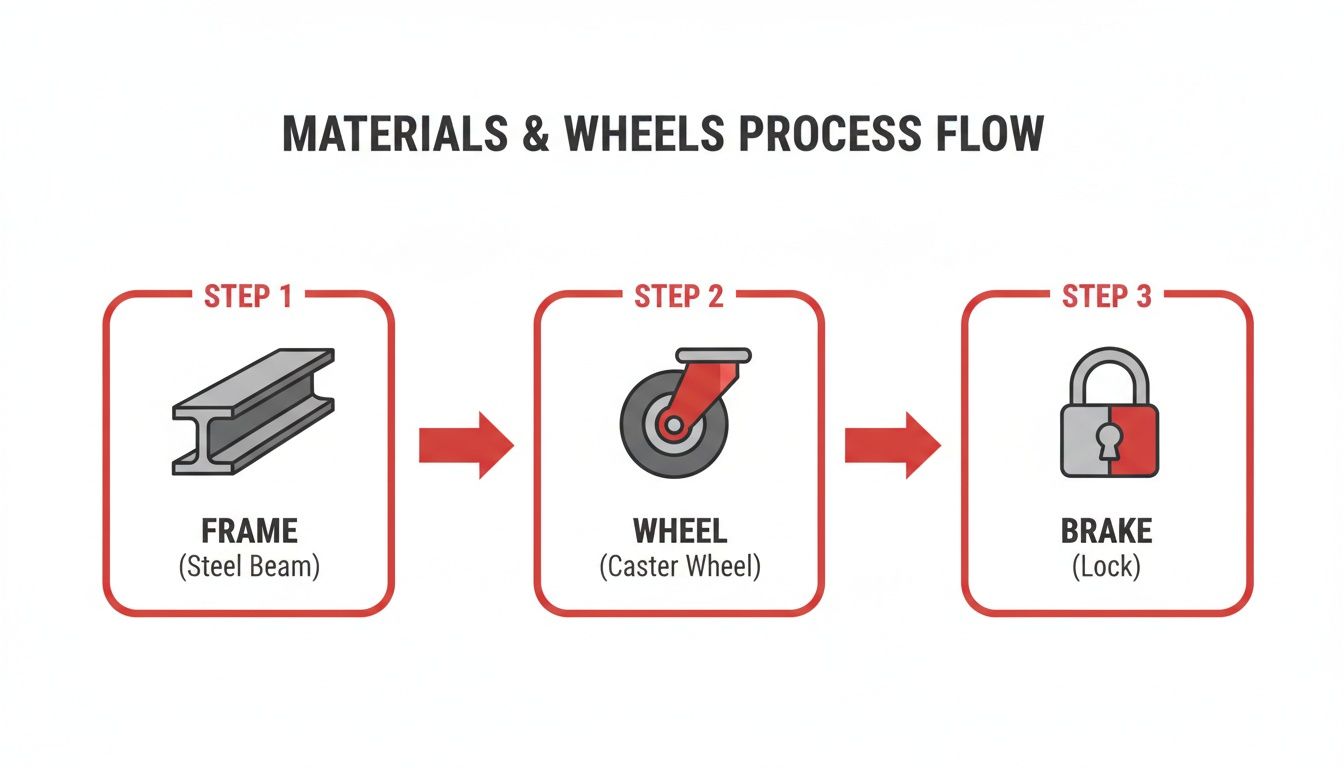
The following infographic visualises the flow from frame and wheel to brake selection.
Picture a 4 m by 3 m storeroom with a 2.5 m ceiling. Draw a 1:50 plan where 1 cm equals 0.5 m.
To calculate shelf tiers, subtract 100 mm clearance per level from the total height.
Tip: store heavy items on the bottom shelves and lock your casters before loading.
You might want to see how mezzanine floors can boost vertical space; check our guide on mezzanine floors.
Once your plan is set, upload it to a design tool or send it to Super Rack for review. Our experts will refine your layout, recommend caster types and verify load capacities.
Ready to build a customised mobile shelving solution? Contact us for a free consultation and shave weeks off your project timeline.
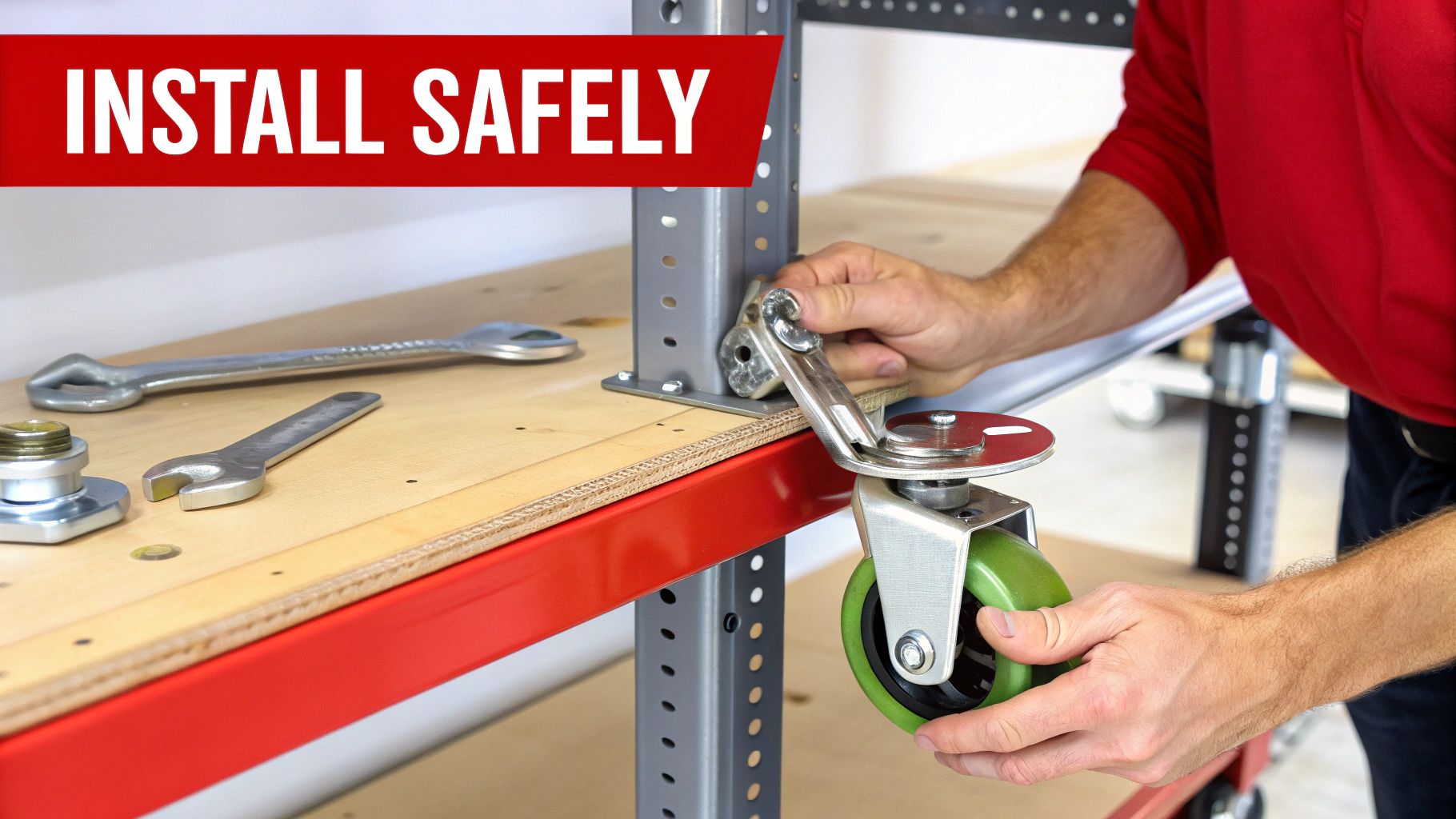
Before you begin, lay your frame flat on a level surface. This first step stops wobble. Next, check each caster stem fits snugly in its hole—any play means shake every time you roll.
Use a rubber mallet to tap stems home without warping the plate. Hand-tighten locknuts until firm, but don’t strip threads. Finally, anchor the unit—bolt a wall bracket or fix floor anchors—to lock everything in place.
Completing these steps means your shelving glides smoothly and locks solidly every time.
Safety best practice
Always wear gloves and eye protection when fitting casters and handling hardware.
Inspect caster plates for sharp burrs before installation.
A quick monthly check keeps wheels rolling freely and extends service life.
If shelves tilt or units creep on uneven floors, look for loose stems or worn wheels. Replace any damaged casters right away. Slip adjustable feet or shims under each corner to level the frame and relieve stress on wheels.
Worn or damaged wheels threaten safety and load stability. Replace any showing cracks or uneven wear immediately. Contact Super Rack for fast replacement casters and minimise downtime.
Follow these Australian regulations to reduce risk and protect your workplace:
Super Rack offers an expert hotline for installation and maintenance support. Call us on 1300 123 456 to speak with our storage specialists. We’ll review your floor plan, confirm caster ratings and share best-practice tips. With nationwide coverage, help is just one call away.
Ensure every step is covered
Download our free safety checklist to follow each installation and maintenance task.
Download our safety checklist
Maintain your shelving on wheels with confidence—and keep your team and equipment safe with Super Rack’s installation expertise.
Swivel casters generally carry up to 125 kg per wheel, ideal for lighter setups needing full manoeuvrability. Rigid casters lock you in a straight path and can bear about 250 kg per wheel. For heavy loads, locking heavy-duty casters safely hold up to 500 kg on each wheel. Always add all wheel ratings together to keep your total load within safe limits.
Picking the right wheel material is like choosing the right shoes—grip, cushioning and durability protect both your feet and the path beneath.
Rubber suits home workshops, while polyurethane is best in busy commercial garages.
Nobody wants shelving that drifts across the room. Securing your units is crucial for stability and safety.
These steps keep your mobile shelves grounded under heavy use.
Getting the right shelving on wheels shouldn’t feel like a treasure hunt. Here’s how to find your perfect fit with Super Rack:
Super Rack delivers across Australia with fast lead times and wallet-friendly bulk pricing. Our team can even visit your site at no extra cost to make sure everything lines up.
Ready to get started with shelving on wheels? Contact Super Rack for a free quote or expert consultation today at https://www.superrack.com.au
