If you're a horse owner in Australia, you know that every bale of hay counts. Between our unpredictable weather and the ever-changing price of feed, managing costs is a constant battle. While feeding on the ground might seem easy, it's a huge source of waste. This is where a quality equine hay feeder stops being an expense and becomes one of the smartest investments you can make for your property, saving you money while keeping your horses healthier.
Tossing hay on the ground might be the old-school way, but it's often the most expensive method when you do the maths. Once hay hits the paddock floor, a good chunk of it gets trampled into the mud, soiled with manure, or just blown away. This isn't just a bit of a mess—it's your hard-earned cash disappearing.
Picture your daily feed-out. You throw out a few biscuits of hay, and within hours, the horses have picked through the best bits and stomped the rest into the dirt. Not only is that hay wasted, but if they do eat it, they risk picking up sand, dirt, and parasites, which can lead to serious health issues like colic.
The financial hit really sinks in when you look at the figures. For anyone running stock through a drought, a good equine hay feeder is a non-negotiable. A 500 kg horse in a bare paddock needs around 12.5 kg of hay a day. That's over 4.5 tonnes a year for just one horse! With oaten hay sitting at roughly $500 per tonne and lucerne at $900, you can't afford to lose any of it. Unfortunately, you can lose up to 30% when hay is scattered on the ground. For a deeper dive into these figures, check out these insights on drought feeding for horses.
By investing in a durable feeder, you're not just buying a piece of equipment; you're actively protecting your feed budget and ensuring every dollar spent on hay goes towards nourishing your animals.
This is where a high-quality feeder proves its worth, becoming a key part of your farm management. By keeping hay contained, you cut down on spoilage and make sure your horses are eating what you've paid for. The benefits are immediate:
Here at Super Rack, we get the challenges of running a property in Australia. Our livestock solutions are built tough to handle Aussie conditions without the premium price tag. With fast, nationwide delivery and real-world advice, we can help you find the right equine hay feeders to make your farm more efficient and profitable.
Choosing the right equine hay feeder isn’t a one-size-fits-all solution. The best setup for your property comes down to your specific needs, from herd size to your day-to-day routine. It’s less about a generic pros-and-cons list and more about what works for you in a real-world Aussie setting.
For example, a hobby farmer with a couple of horses in separate stables has completely different needs to a commercial stud managing a large herd in one big paddock. Your property’s layout, the number of horses you're running, and your daily schedule will all point you toward the right choice.
If you’ve only got one or two horses kept in stables, wall-mounted racks are often the perfect fit. They keep the hay clean and off the floor, so it doesn't get mixed in with bedding, and they’re simple to top up during the morning feed-out. It's a great space-saving option that helps maintain a clean eating area.
On the other end of the scale, if you’re running a commercial operation with ten horses out in a paddock, a large round bale feeder makes a lot more sense. It holds a huge amount of hay, which seriously cuts down on the daily work of refilling. This style lets multiple horses eat at once, reducing squabbles over food and ensuring everyone gets a turn.
The trick is to match the feeder’s design and capacity to your herd’s social dynamics and your own management style. It’s all about finding what’s most efficient for you and safest for your horses.
Another option that's become really popular is the slow feeder. These are designed with smaller openings that make the horses work a bit for their hay, which is much closer to how they'd naturally graze. This is a fantastic approach for horses prone to digestive issues like colic or for those gutsy ones that wolf their food down too fast.
Slow feeders are also a great way to tackle boredom-related behaviours like weaving or cribbing by keeping them busy for longer. They come in all shapes and sizes—from hay nets to enclosed ground boxes—making them a really versatile tool for promoting better gut health and mental stimulation.
This quick diagram shows you just how much of a financial difference your choice can make.
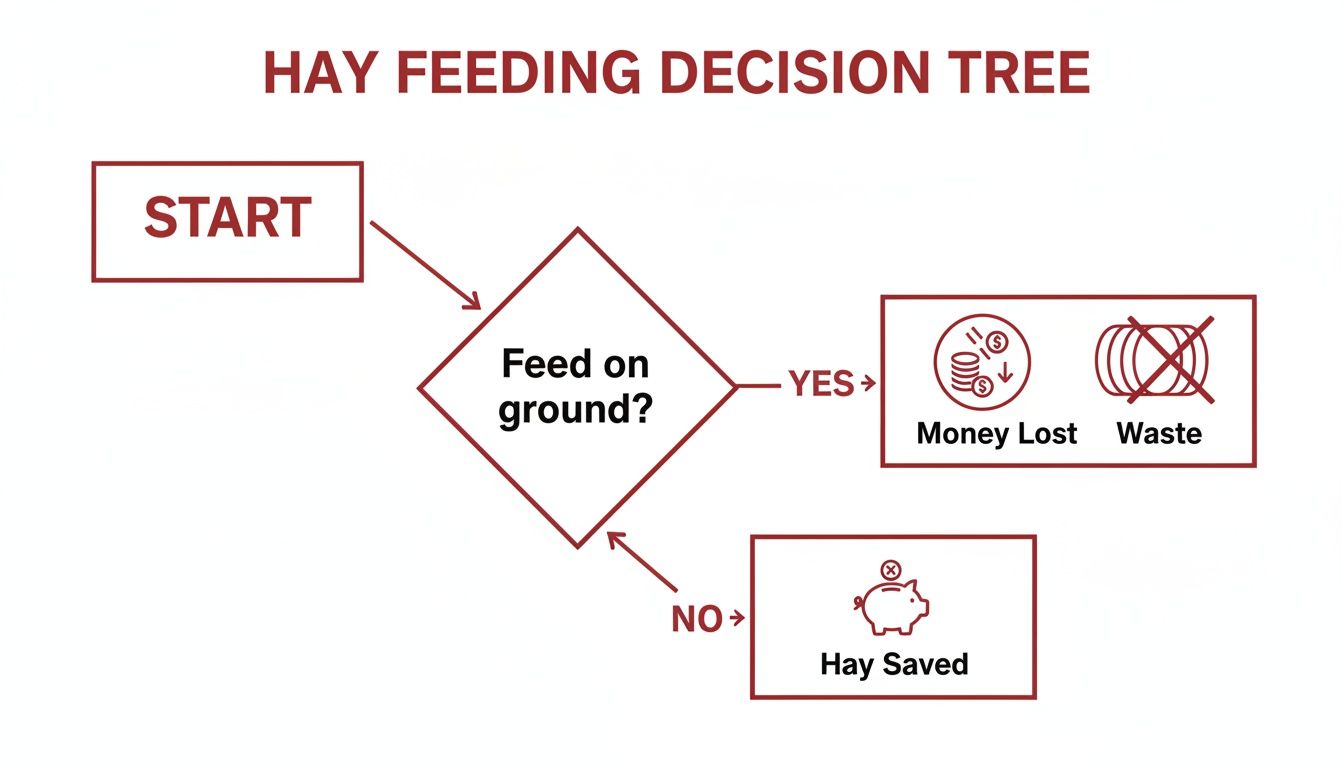
As you can see, simply getting that hay off the ground is a direct path to saving both hay and money.
No matter which type of feeder you land on, the material it’s made from is absolutely critical. For tough Australian conditions, hot-dip galvanised steel is the gold standard. It’s built to handle kicks, shoves, and whatever the weather throws at it without rusting or falling apart. When you invest in a quality feeder, you’re not forking out for a replacement every few years—it saves you a bundle in the long run.
A well-built feeder is also a key part of paddock safety. For anyone also thinking about secure enclosures, looking into what makes a sturdy horse round yard gives you great insight into what to look for in safe, durable livestock gear.
At Super Rack, we’re all about superior quality at competitive prices, making sure our feeders are a smart, long-term investment. With expert advice and fast delivery right across the country, we can help you find the perfect solution for your property.
Choosing the right equine hay feeder is only half the job. Where you put it is just as crucial, turning a simple piece of equipment into a powerful farm management tool. Good placement can head off a heap of common problems, from paddock damage to herd squabbles, making your daily routine smoother and your horses safer.
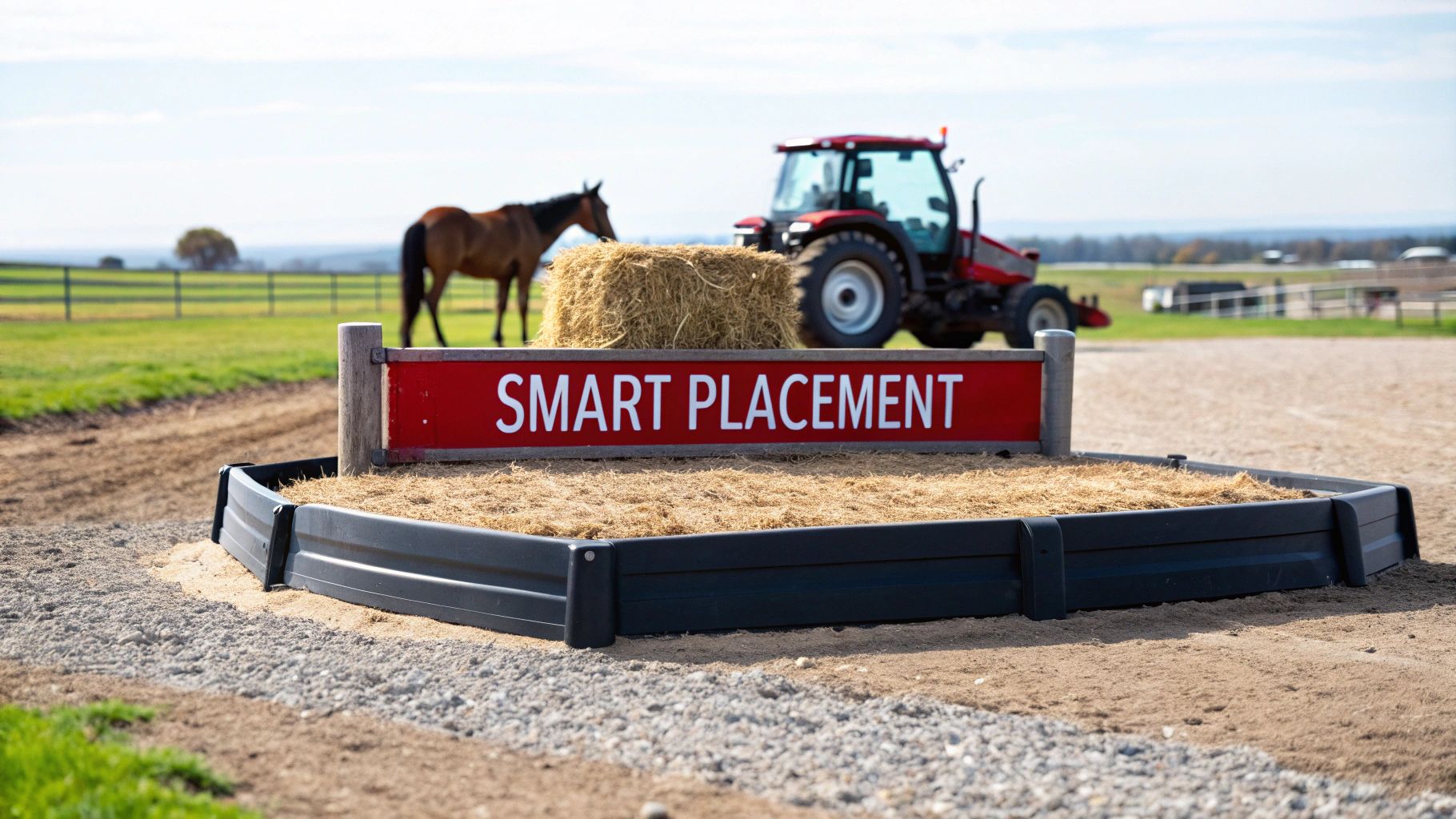
The first rule of thumb? Stay away from low-lying, boggy areas. Dropping a feeder in a spot with poor drainage is just asking for a mud pit. All that hoof traffic churning up the ground will create a messy, hazardous bog that can lead to hoof issues like thrush.
Always aim for a well-drained spot in the paddock. Look for ground that’s naturally a bit higher or has a gentle slope to help water run off. If your whole paddock is flat and tends to get soggy, think about putting down a base of gravel or crusher dust to create a solid footing around the feeder.
This small step makes a massive difference, especially during the wet season. It helps keep your horses' hooves healthy, stops good hay from being trampled into the muck, and makes your life a lot easier when it’s time to refill.
Herd dynamics really come into play at feeding time. A bossy horse can easily corner a more timid one if the feeder is stuck in the wrong spot. Placing it in a tight corner or right up against a fence line creates a trap, stopping less assertive horses from getting their fair share.
Instead, position the feeder in an open area with plenty of room on all sides. This gives every horse space to approach and leave without feeling hemmed in. If you have a particularly dominant horse, using a few smaller feeders spread out is a great strategy to keep the peace. For a truly secure setup, it’s worth looking over comprehensive farm safety guidelines that cover all potential risks on a rural property.
Think about your own workflow here. How are you going to get hay to the feeder? Lugging heavy bales across a huge paddock is back-breaking work. You want to place your feeder where you can get to it easily with a ute, tractor, or quad bike.
Consider setting up a dedicated laneway or just make sure a gate is close by. A bit of foresight now will save you a ton of time and effort down the track. This same logic applies to your whole yard layout; well-designed cattle yard panel gate accessories can give you ideas for creating smart access points all over your property.
When it comes to our horses, nothing matters more than their safety. An equine hay feeder is a brilliant tool for cutting down on waste, but a badly made one can quickly become a serious hazard. You really need to know what to look for, as some of the biggest dangers are easy to miss.
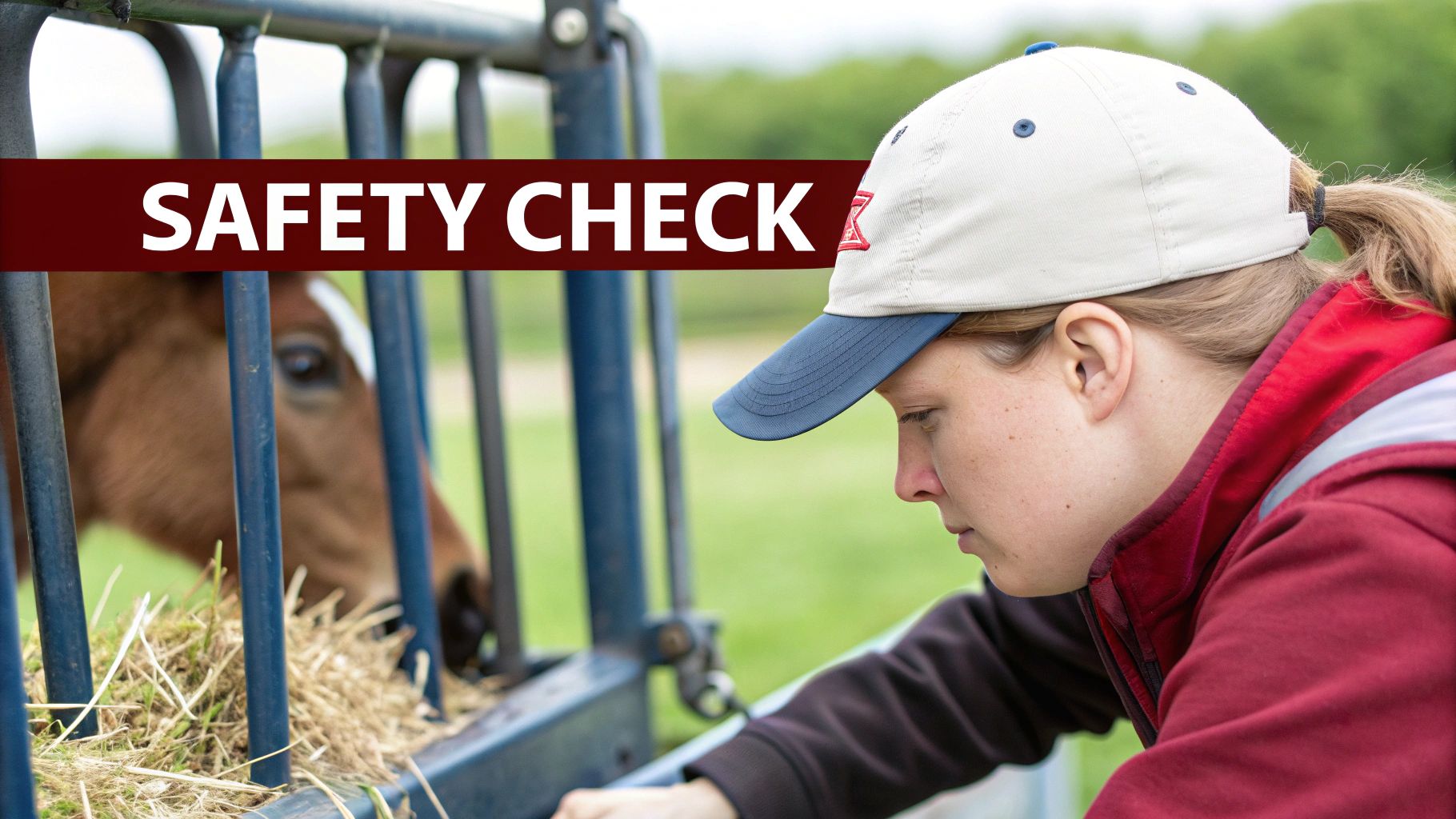
Many common risks are things you wouldn't notice at a glance. We’re talking about sharp metal edges from rushed manufacturing, weak welds that haven’t been ground smooth, or gaps that are just the right size for a curious hoof to get stuck. Even a simple design flaw that could snag a halter is a genuine threat to a panicking horse.
Before buying a feeder, run through a quick safety check. Thinking about these small details beforehand can save you from a heartbreaking and costly vet bill down the track. You don’t need to be an engineer—just look for signs of solid, horse-aware construction.
Here’s a simple list of what to check:
A well-built feeder is designed with a horse’s natural behaviour in mind. It anticipates their tendency to push and lean, ensuring there are no weak points or dangerous features that could lead to injury.
Imagine you have a mare and her young, inquisitive foal sharing a paddock. You've just bought a large round bale feeder designed for fully grown horses. While the bar spacing is fine for the mare, those same gaps are the perfect size for the foal to slip a hoof through and get hopelessly stuck. It’s a classic example of why a one-size-fits-all approach rarely works with horses of different ages.
This is exactly where well-designed, adaptable solutions make all the difference. For yards and enclosures, using the right components, like a sturdy mesh panel, allows for safe, size-appropriate setups. The same principle applies to feeders—the design has to suit every animal using it. At Super Rack, our livestock solutions are built with this safety-first mindset, giving you superior quality that protects your animals and your investment.
A quality equine hay feeder does more than just stop good hay from being wasted; it's one of the best tools you can have for proactive health management. Investing in the right feeder can directly improve your horse's well-being, leading to a healthier herd and fewer unexpected vet bills.
It’s all about shifting your mindset from just feeding your horse to nourishing them in a way that supports their natural biology.
The link between how we feed and our horses' health is undeniable. Horses are designed to be trickle feeders, spending most of their day grazing. When we toss big, infrequent meals on the ground, we disrupt this natural rhythm, opening the door to a whole host of problems.
This is where slow-feeder designs really shine. By making horses work a bit for each mouthful, these feeders stretch out eating time and encourage a more natural, head-down posture. That simple change has a massive positive impact.
It stimulates saliva production—essential for buffering stomach acid—and can significantly reduce the risk of painful and expensive gastric ulcers. A slower, more consistent intake of forage also keeps the entire digestive system moving as it should, helping to prevent colic, one of the most feared emergencies for any horse owner.
Beyond digestion, slow feeding offers crucial mental stimulation. A bored horse is often a stressed horse, which can lead to stable vices like cribbing or weaving. An engaging equine hay feeder keeps their mind occupied for hours, promoting a calmer, happier animal.
Keeping the feed itself in top condition is just as important as how you serve it. The Australian climate can be tough on stored hay. For example, unexpected rain during hay-making season can put 25-30% of a crop at risk of damage.
With a 400 kg horse needing about 11 kg of hay daily, it's critical to protect that valuable resource. Feeding on the ground can lead to waste of up to 30%, so using a feeder that shields hay from the elements is a no-brainer. You can discover more insights into the challenges facing the horse feed market.
A good feeder keeps hay clean, dry, and off the ground, where it can get contaminated with mould, dust, and bacteria. Inhaling mould spores from damp hay is a leading cause of respiratory issues like equine asthma. By making sure your horse is eating clean forage, you’re actively protecting their lungs.
At Super Rack, our durable feeders are designed to withstand tough Aussie conditions, keeping your hay protected and your horses breathing easy.
Choosing the right equipment for your farm is more than just a purchase; it’s a business decision. When it comes to long-term efficiency and profitability, investing in a high-quality equine hay feeder is one of the smartest moves an Australian horse owner can make. It’s where smart design and durable materials come together to deliver real benefits, like cutting feed costs and making daily chores easier.
A well-built feeder is made to handle tough local conditions and the daily grind of farm life, ensuring it pays for itself many times over. Think of it as an investment in a smoother, more sustainable operation.
At Super Rack, we get it. This isn't just about buying a piece of steel. It's about finding a reliable, long-term solution that makes your life easier and keeps your animals safe and healthy.
We pair heavy-duty equipment, built tough for Australian farms, with practical advice from people who know their stuff. And while the right gear is essential, so is the right knowledge. Continuing your education through something like a Certificate in Equine Studies is a great way to stay ahead.
With competitive prices and fast, nationwide delivery, Super Rack is your partner in building a more efficient and resilient farm. Ready to upgrade your livestock management? Give our team a call for some friendly guidance.
We get a lot of questions from horse owners across Australia about finding the right feeder. Here are a few of the most common ones, with some practical advice to help you choose the best setup for your property.
The right size really comes down to how many horses you have and how often you want to refill it. If you’ve just got one or two horses, a smaller wall-mounted rack in the stable or a single-bale ground feeder is usually enough.
If you’re dealing with four or more horses, a big round bale feeder starts to make a lot of sense—it’s a huge labour saver. The key is to make sure every horse can get a feed without being bullied. As a rule of thumb, you want to allow about 1.2 to 1.5 metres of feeder space per horse so there’s no competition.
Hay nets can be a good way to mimic grazing, especially for horses on a diet or those that get bored easily. But you have to be careful with them. If they’re not used correctly, a horse can easily get a hoof tangled, which is a real safety risk. Plus, nets with larger holes don’t really slow them down much.
For paddock use, especially when you’re not there to supervise, a solid, well-built slow-feed hay box or a proper equine hay feeder is a much safer and more durable choice for the long haul.
A well-designed rigid feeder gives you all the benefits of slow feeding without the entanglement risks that come with nets. It’s a safer, more permanent solution for your paddock.
Keeping the feeder clean is non-negotiable for your horse’s health. We always recommend pulling out any old, leftover hay every day. It doesn't take long for it to get damp, dusty, and mouldy.
You should give it a proper clean at least once a week. Pull everything out, give it a good brush to get rid of debris, and wash it down. A simple water and vinegar solution works great. The most important part is to let it dry completely before you put fresh hay in. Dampness is a breeding ground for mould, which can lead to serious respiratory problems.
For durable, safe, and efficient livestock management solutions built for Australian conditions, trust the experts at Super Rack. Browse our range of high-quality equipment online or contact our team for advice tailored to your property. Visit Super Rack to learn more.
