
Choosing the right equipment in a warehouse is more than just about storage; it's the foundation of your entire operation's success. For any Aussie business, from a local workshop to a huge national distribution centre, the right tools transform a simple storage space into a high-performance logistics machine.
Building Your Warehouse Foundation With the Right Equipment
Think of your warehouse like a busy restaurant kitchen. To get meals out to hungry customers quickly, you need separate stations for prep, cooking, and plating, each with its own specialised tools. In the same way, warehouse equipment falls into key categories that must work together seamlessly to get orders out the door.
This guide will walk you through how smart equipment choices, from heavy-duty pallet racking to a trusty pallet jack, directly lead to better efficiency, a safer workplace, and a healthier bottom line. We'll break down each category with practical, real-world examples to help you build a warehouse that's not just organised, but truly set up for growth.
Why Your Equipment Choices Matter
Picking the right gear is one of the most important decisions a warehouse manager can make. Get it right, and you create a smooth, efficient workflow. Get it wrong, and you’re looking at constant bottlenecks, safety hazards, and money down the drain.
Imagine a small e-commerce business in Melbourne, swamped with orders. Their stock is currently piled on the floor, making it a nightmare to find anything quickly. By simply investing in a longspan shelving system, they can instantly organise their inventory, slash their picking times, and get more orders processed every day. That one decision has a direct and immediate impact on their profitability.
The Core Pillars of Warehouse Operations
Every piece of equipment in a warehouse serves a purpose, and they generally fall into one of three main categories. Understanding these pillars helps you see how the whole puzzle fits together.
- Storage Systems: This is the skeleton of your warehouse. It covers everything from pallet racking to simple shelving units, all designed to let you safely store goods and make the most of your vertical space.
- Material Handling: These are the tools that get your products from A to B. Equipment like forklifts, pallet jacks, and trolleys are the workhorses for moving goods from receiving to storage, and then on to the packing station.
- Packing and Dispatch: This is the final stop before an order leaves your building. Workbenches, scales, and wrapping machines are crucial for making sure orders are prepared correctly and shipped out efficiently.
A well-equipped warehouse operates like a finely tuned machine. Every component, from the tallest pallet rack down to the humble packing tape dispenser, plays a vital role in keeping your operations moving smoothly and profitably.
At Super Rack, we give you the expert advice needed to select the ideal equipment for your space. With our superior quality products, competitive pricing, and fast nationwide delivery, we help Australian businesses build a solid foundation for success. Making the right investment from the start prevents costly mistakes down the track and ensures your operation is ready for anything.
Maximising Your Space With Core Storage Solutions
Every square metre of your warehouse is prime real estate. Using it well isn't just about being tidy; it's about laying the groundwork for a truly efficient operation. The right storage solutions turn your floor space from a simple holding area into a dynamic, vertical asset, directly impacting how quickly you can find, pick, and ship your products.
This is a big deal for Australian businesses, where getting the most out of your premises is crucial for managing costs. Having versatile and effective storage is vital for companies nationwide, handling everything from electronics in Sydney to building materials in Perth.
Pallet Racking: The Backbone of Bulk Storage
When you picture a warehouse, you probably imagine rows of tall steel frames stacked high with pallets. That’s pallet racking, and it's the undisputed workhorse for any business handling goods on standardised pallets. Its genius is in its simplicity and raw strength, letting you build upwards and multiply your storage capacity without needing a bigger building.
Think of a beverage distributor in Brisbane. They receive huge shipments of drinks, all neatly stacked on pallets. A robust pallet racking system lets them store hundreds of these pallets in a surprisingly small footprint. Forklifts can easily get to any specific pallet, making sure that stock with the nearest expiry date gets shipped first—a system called First-In, First-Out (FIFO). It’s a simple setup that prevents waste and keeps the entire inventory organised. Super Rack offers superior quality steel pallet racking solutions built for exactly this kind of high-density, heavy-duty storage, giving you safety and reliability you can count on.
This flowchart shows how your business goals connect directly to the equipment choices you make.
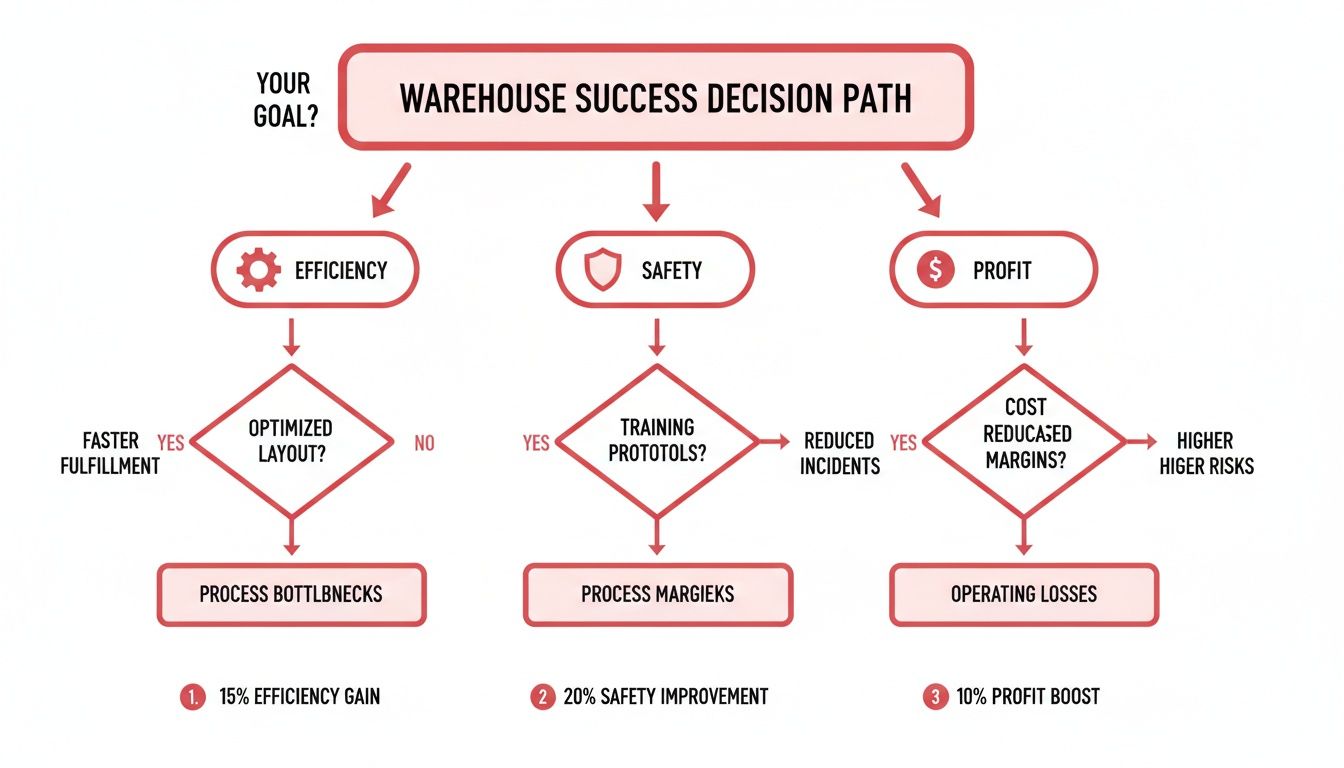
As you can see, whether your priority is boosting efficiency, improving safety, or increasing profit, the path always leads back to choosing the right foundational equipment.
Cantilever Racking: For Awkward and Oversized Items
Of course, not everything fits neatly on a pallet. What do you do with long lengths of timber, steel pipes, PVC tubing, or even bulky furniture? This is where cantilever racking really shines. Unlike pallet racking, it has no front vertical beams getting in the way, which creates long, uninterrupted shelves perfect for those awkward items.
Imagine a hardware supplier in Adelaide trying to store 6-metre lengths of steel beams and large sheets of plywood. Squeezing them onto a standard pallet rack would be impossible and incredibly unsafe. With cantilever racking, they can lay these items flat across strong horizontal arms, making them easy and safe to access with a forklift. This doesn't just keep the products secure and undamaged; it makes the whole storage area safer for staff.
When choosing a cantilever system, you need to consider a few key things:
- Item Length: Are the arms spaced correctly to support the full length of your product without it sagging or bowing?
- Item Weight: The arms and base must be rated to handle the total weight you plan to store on each level. Don't guess this one!
- Accessibility: Think about how you'll load and unload. You'll need to make sure your aisle widths are wide enough for your forklifts to manoeuvre safely.
Longspan Shelving: The Versatile All-Rounder
For all those items that are too small for pallet racking but too heavy for standard office shelves, longspan shelving is the perfect middle ground. Think of it as a heavy-duty version of the shelving in your garage, offering wide, open bays that can be easily adjusted for different product sizes. It’s ideal for manual picking operations where staff access inventory by hand.
A perfect example is an online auto parts retailer in Perth. They stock thousands of different parts, from tiny boxes of spark plugs to heavy brake discs. Longspan shelving lets them organise this diverse inventory in a logical way. Lighter, fast-moving items go at eye level for quick picking, while heavier parts are stored safely on lower shelves. This adaptability makes it a cornerstone for e-commerce fulfilment centres, workshops, and retail stockrooms everywhere. At Super Rack, our longspan solutions deliver this flexibility with the toughness to handle demanding commercial environments, all at great prices with fast, nationwide delivery.
Keeping Your Goods Moving With Material Handling Equipment
If storage solutions are the skeleton of your warehouse, then material handling equipment is the muscle that brings it all to life. A warehouse is all about movement. The right tools are what keep your products flowing seamlessly from the receiving dock to the dispatch bay, day in and day out. This gear does the heavy lifting, letting your team work smarter, not harder.
Putting your money into solid, reliable tools for moving goods isn't just about making life easier; it's fundamental to running a productive and profitable operation. Material handling equipment is a powerhouse segment in Australia's industrial machinery market, driving efficiency in warehouses nationwide.
Forklifts: The Heavy Lifters
When you’re dealing with heavy pallets and high racking, the forklift is the undisputed king. These powerful machines are non-negotiable for any business that needs to lift and shift serious weight, especially upwards. They work hand-in-glove with a well-designed pallet racking system, allowing operators to place and pull stock from heights that are otherwise completely out of reach.
Picture a major distribution centre in Sydney handling bulk groceries. Their entire workflow hinges on forklifts—unloading trucks, moving pallets into storage bays metres high, and retrieving them for order fulfilment. Take away the forklifts, and the whole operation grinds to a halt.
Picking the right forklift comes down to a few key questions:
- Load Capacity: What’s the heaviest pallet you need to lift?
- Lift Height: How high is the top beam on your pallet racking?
- Fuel Type: Do you need a quiet, zero-emission electric model for indoors, or the raw power of a diesel/LPG unit for outside work?
- Aisle Width: Make sure it has enough space to turn and manoeuvre safely. A forklift that’s too big for your aisles is just an expensive obstacle.
Pallet Jacks: The Versatile Ground Crew
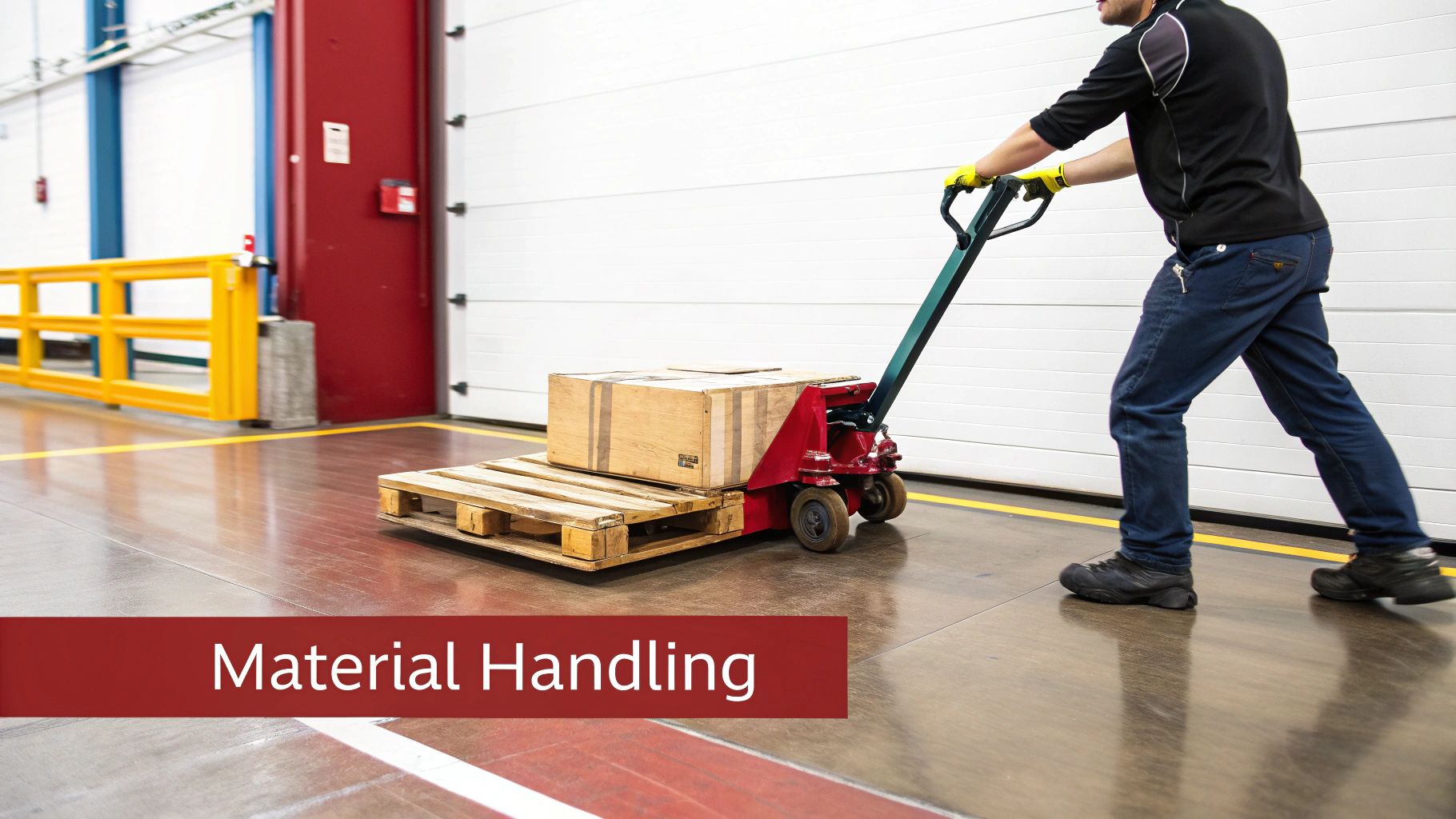
Not every job needs the muscle of a forklift. For zipping pallets across the warehouse floor, the humble pallet jack (or pallet truck) is an incredibly efficient and budget-friendly workhorse. Whether they're manual or electric, these are perfect for unloading trucks at the dock, shifting stock from bulk storage to a packing bench, or just general repositioning.
Think of a small e-commerce business in Melbourne. They might not have the space or the need for a full-sized forklift. A simple hand pallet jack lets them quickly move a new shipment from the loading zone to their longspan shelving. It saves a huge amount of time and prevents back strain on the team, all for a tiny upfront cost.
The right piece of material handling equipment doesn't just move products; it moves your business forward. By matching the tool to the task, you reduce manual handling, minimise product damage, and create a faster, safer workflow for your team.
Trolleys and Carts: For Picking and Packing
When you're moving smaller, individual items instead of whole pallets, trolleys and carts are your best friends. They are essential for order picking, where staff need to grab multiple items from different spots to build a customer's order. They come in all shapes and sizes, from simple flatbed trolleys to multi-tiered picking carts designed for efficiency.
One of the most useful options is the roll cage trolley. These wheeled, enclosed cages are brilliant for transporting a mix of goods securely without anything falling off. To see how they can streamline order picking or moving stock from the back room to the shop floor, you can check out Super Rack’s durable roll cage trolley solutions. They’re a simple but incredibly effective tool for almost any operation.
At Super Rack, we get that efficient movement is the key to warehouse success. Our range of quality material handling equipment is built tough, designed for reliability, and priced competitively. With fast, nationwide delivery and expert advice just a call away, we can help you get the right tools to keep your goods—and your business—on the move.
Designing an Efficient and Safe Warehouse Layout
Having the best equipment in a warehouse is one thing, but how you arrange it is what really unlocks its potential. A smart layout is the difference between a chaotic, inefficient space and a high-performing operation. The goal is simple: design a floor plan that makes your team more productive while putting safety first.
This is about more than just finding a spot for your racks. It’s about creating a logical, seamless flow for your goods from the moment they arrive until they’re dispatched. A great layout cuts down travel time for staff and machinery, minimises handling errors, and builds a safer working environment for everyone.
Creating Clear Pathways and Zones
The first rule of a solid warehouse layout is to establish clear, unobstructed pathways. This is absolutely critical for preventing accidents and keeping the workflow moving. Forklifts, pallet jacks, and order pickers all need wide, well-marked aisles to move freely without risking collisions.
A key strategy here is to create separate zones for different activities. Wherever you can, keep pedestrian walkways distinct from vehicle traffic. This one step can dramatically reduce the chances of accidents between your staff and machinery.
A thoughtfully planned warehouse layout doesn't just organise your stock; it organises your entire workflow. By creating a clear path for goods and people, you reduce wasted movement, speed up order fulfilment, and build a foundation for a safer, more productive operation.
Think about designating specific areas for each core function: receiving, bulk storage, order picking, packing, and dispatch. This separation stops bottlenecks from forming and ensures each stage of the process can run smoothly without tripping over the others.
The 'Fast-Movers' Strategy for Efficiency
One of the most powerful layout principles is organising your stock based on how often it moves. Your most frequently picked items—your 'fast-movers'—should be in the most accessible spots, usually closest to your packing and dispatch areas. It’s a simple change that can shave hours off your pickers' travel time.
For instance, a manufacturing business could place its raw materials on Super Rack's heavy-duty pallet racking right next to the production line. This creates a direct, seamless workflow, making sure the assembly team has what they need without trekking across the warehouse. It’s a small tweak that delivers huge gains in efficiency.
Here's how to put this into practice:
- Analyse Your Sales Data: Get a clear picture of which products are your top sellers or most frequently used materials.
- Map Your Layout: Assign prime real estate (like end-of-aisle spots or lower-level racking) to these fast-moving items.
- Place Slower-Moving Stock Further Away: Items that aren't picked as often can be stored in less accessible areas, like higher shelves or in aisles further from the dispatch zone.
Prioritising Safety in Your Layout
While efficiency is a huge win, safety has to be your number one priority. The design of your layout plays a massive role in creating a safe workplace. Beyond clear pathways, this means making sure your storage equipment itself is structurally sound and properly maintained.
Regular inspections of your pallet racking are non-negotiable. You need to spot any signs of damage from accidental impacts, as even a small dent can compromise the integrity of the whole structure. It’s also vital to give your staff thorough training on how to operate equipment safely within the layout you’ve designed.
At Super Rack, we see ourselves as your partner in building an operation that’s both successful and safe. We offer expert advice not just on our products, but on how to integrate them into your space the right way. With our commitment to superior quality and nationwide service, we help you build a warehouse that truly works for your business and protects your team.
Optimising the Final Step With Packing and Dispatch Equipment
The final moments an order spends in your warehouse are absolutely critical. This is where your accuracy and speed directly hit the customer, making or breaking their experience. Getting your packing and dispatch stations kitted out with the right gear ensures the whole fulfilment process finishes strong.
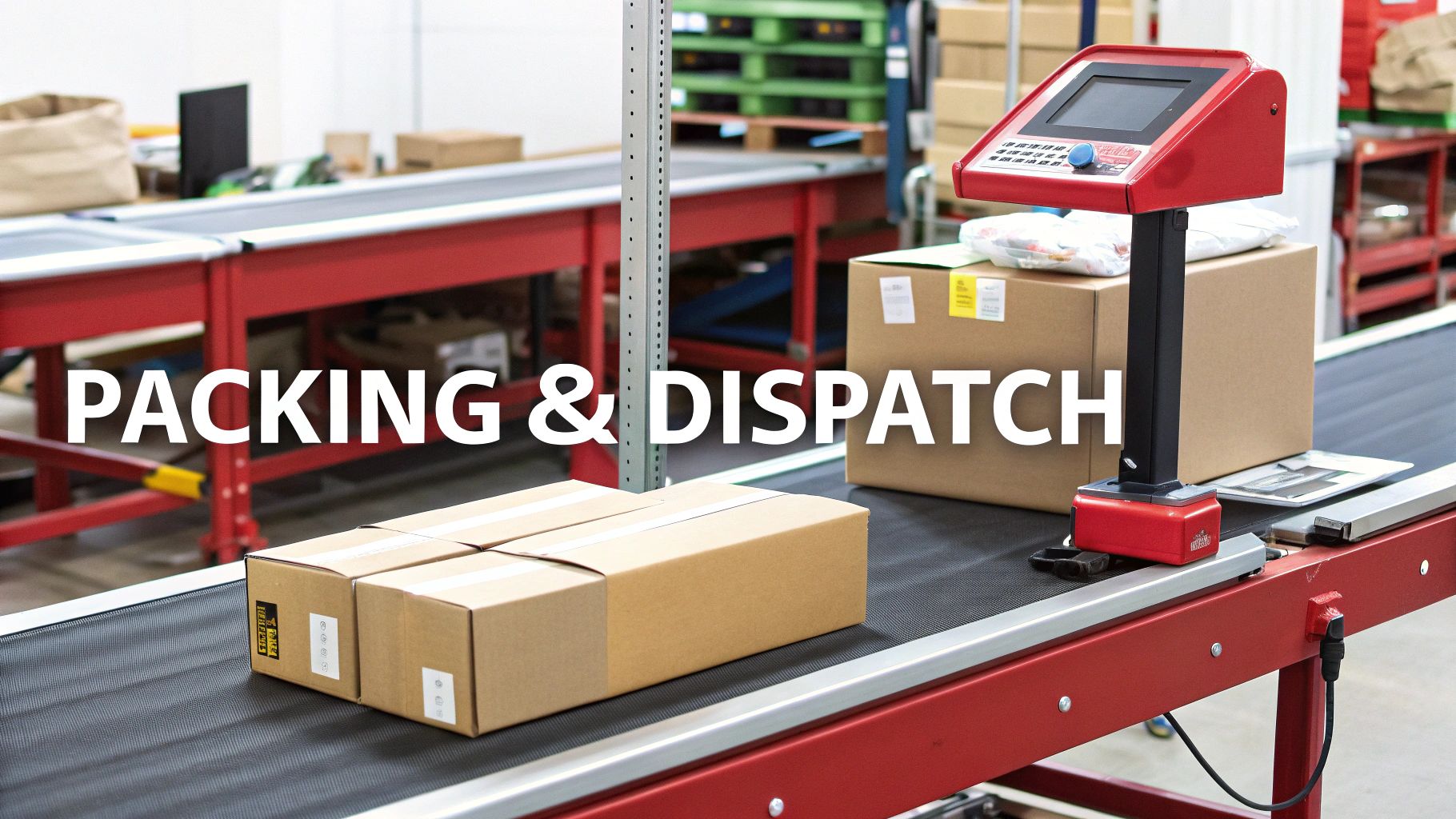
It’s all about creating a seamless handover from your internal workflow to the outside world. The right equipment in warehouse packing areas prevents costly errors, protects your products in transit, and ultimately gets shipments out the door much faster.
Creating an Efficient Packing Station
A well-designed packing station is the heart of your dispatch operation. It’s not just a table; it's a dedicated, organised workspace built for maximum output with minimal strain on your team.
Think about an online retailer in Sydney. They can completely transform their fulfilment by setting up ergonomic workbenches. Benches at the correct height reduce physical fatigue, allowing staff to work more comfortably and for longer. Combine this with easy-to-reach storage for boxes, tape, and void-fill, and you’ve created a slick workflow that slashes mistakes and speeds up dispatch times.
A great packing station isn't an expense; it's a tool for productivity. By bringing everything the packer needs within arm's reach, you eliminate wasted steps and create a faster, more accurate fulfilment cycle.
Key gear for an effective packing area includes:
- Sturdy Workbenches or Packing Tables: You need a stable, dedicated surface for putting orders together. These have to be durable enough to handle the daily grind.
- Industrial Scales: Pinpoint-accurate weight measurements are non-negotiable for calculating shipping costs. A reliable set of scales stops you from overpaying for freight and keeps you compliant.
- Packing Materials Storage: Having quick access to different box sizes, bubble wrap, and tape is a must. Check out our range of quality packing materials to keep your supplies neat and tidy.
Bridging the Gap to Dispatch
Once an order is packed and labelled, the final hurdle is getting it onto the truck safely and efficiently. This is where loading and unloading equipment becomes vital, especially for businesses dealing with higher volumes or heavier goods.
Imagine a wholesale distributor in Melbourne. Their team is loading dozens of pallets onto delivery trucks every single day. Using something like a dock leveller creates a safe, level bridge between the warehouse floor and the truck bed. This lets forklifts drive straight in and out without navigating dangerous gaps or inclines.
Conveyor systems are another game-changer. They can automatically shuttle packed boxes from the packing station right to the loading bay, dramatically cutting down on manual handling. This not only makes the whole process faster but also minimises the risk of staff injury and product damage from accidental drops.
At Super Rack, we get that every single stage of your warehouse operation needs to be firing on all cylinders. We offer expert advice and high-quality, competitively priced equipment to help Australian businesses perfect their workflow from start to finish. With fast, nationwide delivery, we're here to help you get your orders out the door and into your customers' hands.
Making a Smart Investment in Your Warehouse Equipment
Choosing the right equipment in warehouse operations is a massive financial decision. It’s easy to get fixated on the upfront price tag, but the smartest operators think about the long-term return on investment (ROI). The real key to a profitable, sustainable business is seeing your equipment as a strategic asset, not just another expense.
Sure, high-quality, durable new equipment might cost more initially. But it consistently pays for itself over and over again through better efficiency, improved safety, and a much longer service life compared to cheaper options.
Calculating the True Value of Quality Equipment
Investing in top-tier gear, like a well-designed pallet racking system from Super Rack, brings real, tangible returns. For instance, just by making better use of your vertical space, you can store more stock in the same footprint. That simple move could be the difference between staying put and having to fund a costly move to a bigger facility.
Better organisation also has a direct impact on your labour costs. When your team can find and pick items quicker, you get more orders out the door without needing to hire more people. On top of that, quality equipment dramatically cuts the risk of product damage from collapses or poor storage, protecting your inventory and your bottom line.
The Hidden Costs of Cheaper Alternatives
Going for a cheaper, inferior option often turns out to be a false economy. The initial saving feels good, but it almost always leads to bigger costs down the road. Poorly made equipment breaks down more often, causing operational downtime, expensive repair bills, and forcing you to replace it much sooner than planned.
Even more critically, subpar gear can create serious safety hazards for your team, leading to accidents and injuries. The financial and human cost of a single workplace incident can instantly wipe out any money you thought you saved.
You have to see your equipment purchase as a long-term investment in your business’s future. Durable, reliable solutions give you peace of mind and deliver consistent value, while cheaper options often create more problems than they solve.
The push for greater efficiency is being felt across the industry. Automation is shaking things up in Australian warehouses, with some operators slashing labour costs by up to AUD 60,000 per full-time employee while hitting an incredible 99.8% order accuracy. Investing in quality gear now puts you in a prime position to adapt and thrive as technology becomes more accessible.
At Super Rack, we’re all about providing superior quality equipment at competitive prices. With fast, nationwide delivery and genuine expert advice, we help you make a sound investment that supports your business's growth, stability, and long-term success.
Your Warehouse Equipment Questions, Answered
When you're fitting out a new warehouse or upgrading an old one, you're bound to have questions. Getting the right answers is key to building an efficient and safe operation. Here are some of the most common queries we hear from Australian business owners and warehouse managers, with practical, no-nonsense advice.
How Do I Choose the Right Pallet Racking?
There's no one-size-fits-all answer here, but it boils down to four things: what you're storing, your warehouse height, your forklifts, and how you move stock.
Think about your pallets first—their size, and more importantly, their maximum weight. You need racking with a load capacity that comfortably exceeds your heaviest pallet. From there, look at your building. The racking height should maximise your vertical space without interfering with lighting or sprinklers. Finally, your forklifts dictate aisle width. A standard counterbalance needs more room to turn than a narrow aisle machine.
If you're dealing with standard-sized pallets and need easy access to every single one, selective pallet racking is often the go-to choice for its versatility. If you're unsure, the Super Rack team is here to help you nail down the perfect system for your workflow.
What’s the Difference Between a Pallet Jack and a Forklift?
It’s all about moving horizontally versus lifting vertically.
A pallet jack is your ground-level workhorse. It’s perfect for shifting pallets across the floor—think unloading a truck and moving stock to a staging area. They’re small, nimble, and a must-have for any fast-paced receiving or dispatch area.
A forklift, on the other hand, is built to lift. It’s the essential tool for getting heavy pallets up onto high racking systems. While it's a bigger investment, you simply can't run a warehouse that uses vertical storage without one. In reality, most efficient warehouses need both to keep goods flowing smoothly.
How Often Should I Inspect My Warehouse Equipment?
Regular checks are non-negotiable for keeping your team safe and your operation compliant.
For pallet racking, get your staff to do a quick visual check every week. They should be looking for obvious damage like dings, dents, or bent beams from forklift bumps. Anything they spot needs to be reported straight away. Beyond that, you need a thorough inspection by a qualified professional at least once every 12 months.
For machinery like forklifts and pallet jacks, a daily pre-start check by the operator is crucial. This simple habit catches small issues before they become dangerous problems.
At Super Rack, we don’t just sell high-quality equipment; we provide the expert advice you need to build a safer, more productive warehouse. From pallet racking to material handling tools, we deliver superior solutions with fast, nationwide service.
Explore our full range of warehouse solutions at Super Rack today.