

A Complete Guide to Mesh Fence Panels in Australia

Think of mesh fence panels as the heavy-duty building blocks for your property’s boundary. They're made by welding horizontal and vertical steel wires together into a tough, rigid grid, giving you a brilliant mix of strength, visibility, and durability. It's why they’re the go-to solution all over Australia for securing everything from building sites to big warehouses.
What Are Mesh Fence Panels and Why Use Them
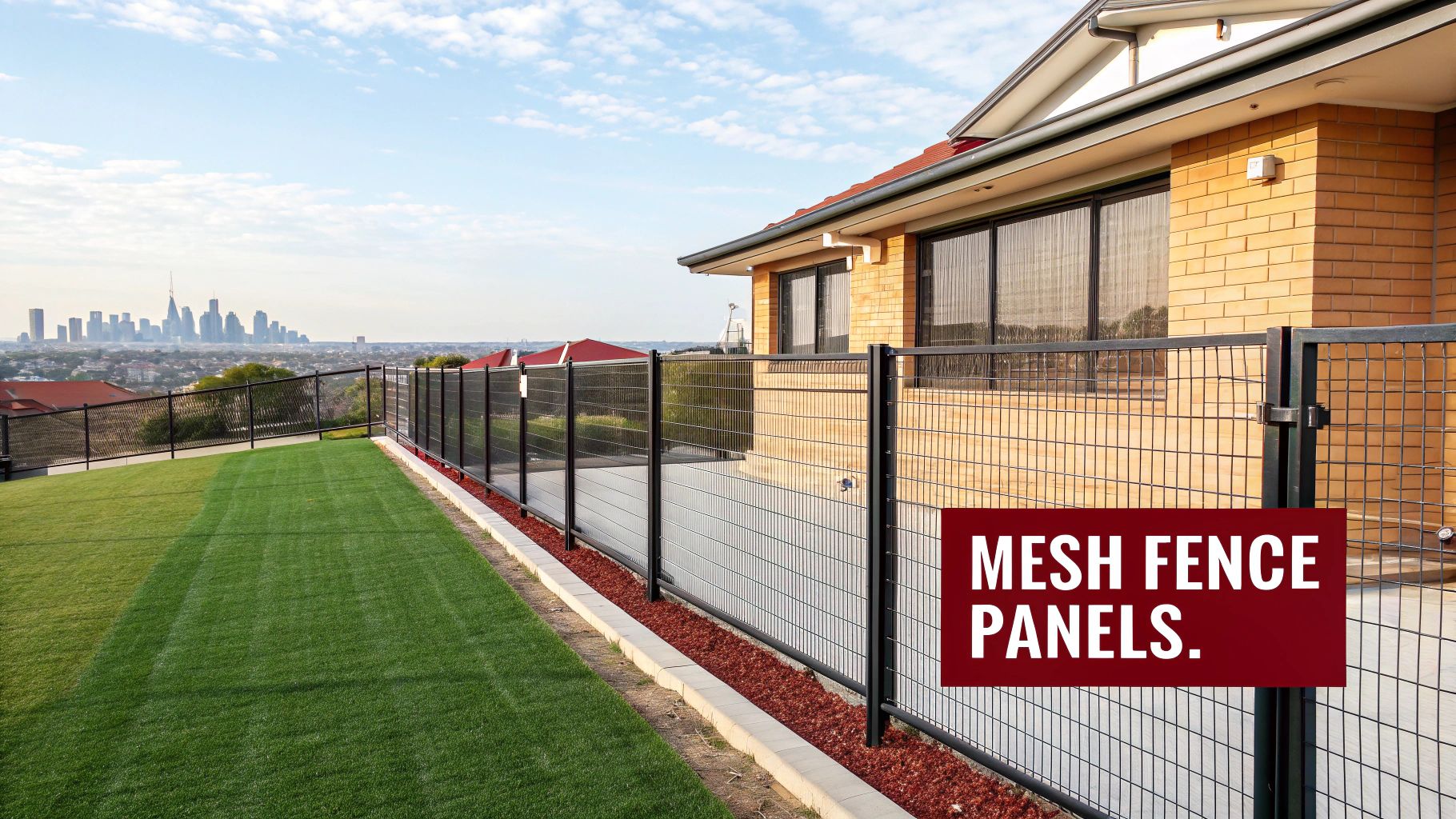
At its heart, a mesh fence panel is a pre-made section of fence built from steel wires. These wires are welded solid at every join, creating a grid-like panel that’s incredibly hard to break, cut, or bend. This rigid design is the main thing that sets welded mesh apart from more flexible fencing like chain-wire.
What you get is a barrier that delivers top-notch security without walling you in. For a lot of businesses and property managers, that’s a massive plus. They need to keep an eye on their site while also keeping it locked down.
For example, a warehouse manager in Melbourne can use mesh fencing to protect their stock but still let security patrols see right across the yard. That kind of visibility is a huge turn-off for would-be intruders.
The Key Benefits of Choosing Mesh Panels
The reason mesh fencing is so popular isn’t just about being tough; it’s about the real-world advantages it offers. The design brings a unique set of features to the table, making it a smart investment for just about any commercial or industrial job.
These panels are valued for their simple but highly effective design, hitting that sweet spot between security and practicality that not many other fences can.
- Exceptional Strength and Durability: The welded build makes for a rigid panel that can take a hit and resist tampering. High-quality galvanised steel, like we use at Super Rack, means it’ll handle Australia's rough weather without rusting out.
- Enhanced Security: The grid pattern is a nightmare to climb, and trying to cut through multiple steel wires is a loud, slow job for any trespasser.
- Clear Visibility: Unlike a solid wall or a timber fence, mesh panels let you see straight through. This is vital for surveillance and keeping an open feel while still securing your perimeter.
- Versatility: From temporary fencing on a Sydney construction site to permanent security around a Perth distribution centre, these panels can be adapted to almost any situation you can think of.
The real value of mesh fence panels is in their long-term performance. When you invest in a high-quality, durable product from the start, you slash your future costs on repairs, maintenance, and potential security headaches.
Built for Australian Conditions
Australia’s diverse and often harsh climate calls for seriously tough materials. This is where the quality of the steel and its protective coating really matters. Super Rack’s commitment to using superior galvanised materials means our mesh fence panels are built to last, giving you reliable security year after year.
This focus on quality means you’re getting a fencing solution you can count on that delivers excellent value. With fast delivery nationwide and expert advice just a phone call away, securing your property with a durable, cost-effective barrier has never been easier.
Exploring the Main Types of Mesh Fencing
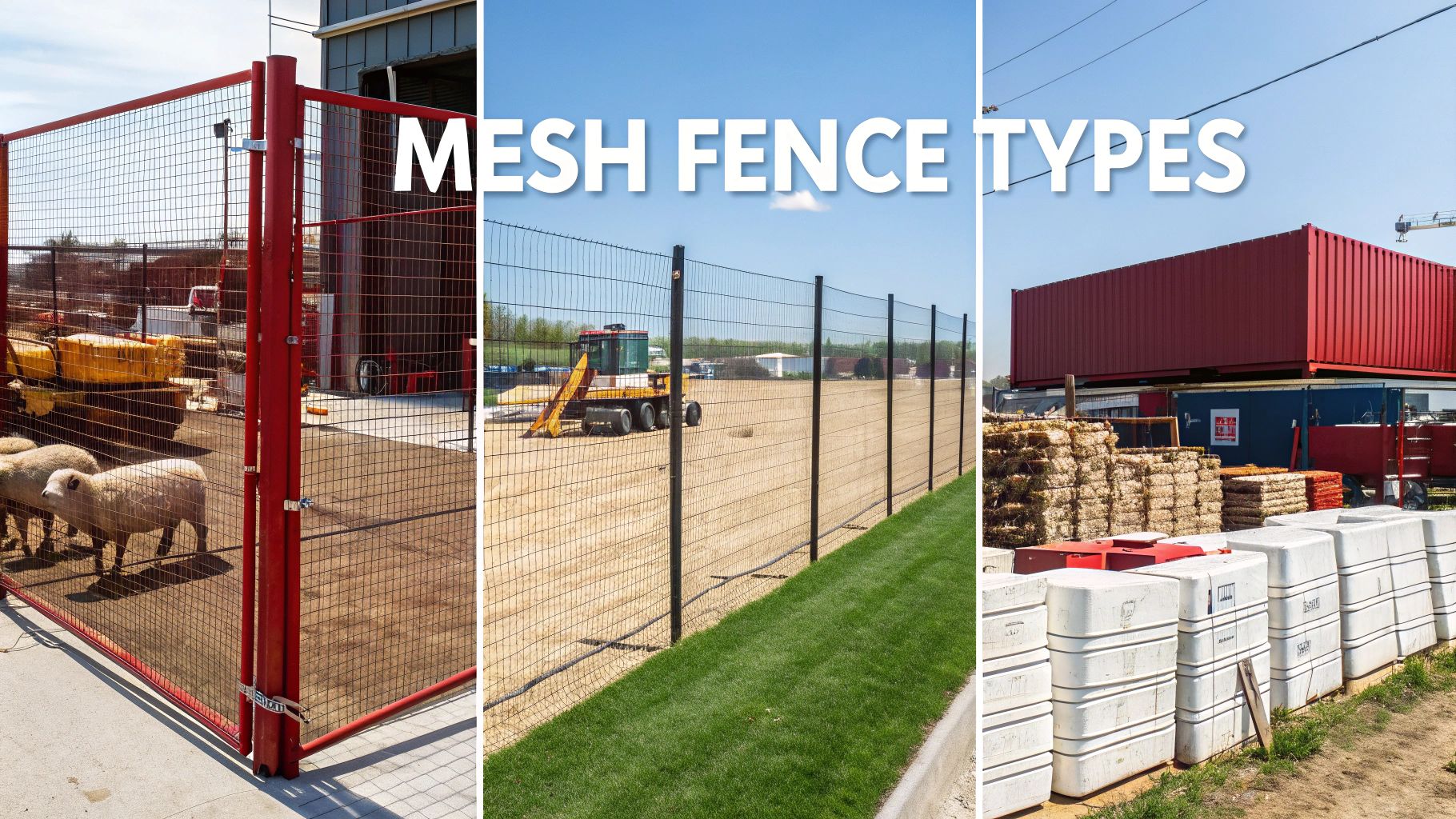
When you start looking into mesh fence panels, you’ll quickly see they aren't all the same. Each style is built for a specific job, whether that's maximum security, on-the-go portability, or keeping livestock safe. Getting to know the main types is the first step in finding the perfect match for your project.
Let’s walk through the three most common categories you’ll find across Australia: high-security 'anti-climb' mesh, versatile temporary fencing, and tough agricultural mesh. Each one solves a very different problem, and picking the right one makes all the difference.
High-Security Anti-Climb Mesh Panels
When protecting valuable assets is non-negotiable, high-security mesh is the go-to solution. You’ll often hear it called 'anti-climb' fencing, and for good reason—these panels are engineered to be a serious deterrent. Their standout feature is a super-tight grid pattern, which leaves openings so small you can't get a foothold or handhold to climb.
That tight mesh also makes it incredibly difficult to attack with tools like bolt cutters; the jaws simply can't get a proper grip on the wires. It's the ideal permanent barrier for any site that needs proper, reliable protection.
Practical Scenario: Imagine a new commercial development in Perth with thousands of dollars of equipment and materials on-site. The project manager needs a permanent boundary that stops unauthorised access, day and night. By installing 1800mm high security fencing, they create a formidable barrier that protects the site from theft and vandalism, giving them total peace of mind.
This type of fencing is perfect for:
- Warehouses and distribution centres
- Data centres and utility substations
- Commercial and industrial properties
- Secure storage yards
Versatile Temporary Fencing Panels
For short-term projects or situations where you need to stay flexible, temporary fencing panels are the answer. These are freestanding panels designed for rapid setup and pack-down without having to dig a single post hole. They’re held up by heavy-duty weighted feet and linked together with simple clamps, letting you secure a perimeter in a matter of hours.
Their portability is their greatest strength. You can easily shift the fence line as a construction project evolves or move the whole setup from one event to the next. And even though they’re temporary, they still provide a really effective barrier for managing crowds and securing a site.
The real beauty of temporary mesh fence panels is how they blend security with adaptability. You get a strong, reliable solution that can be rolled out quickly and adjusted on the fly—making them essential for dynamic places like building sites and public events.
Agricultural Mesh for Rural Properties
Out on farms and rural properties, the fencing challenges are completely different. Agricultural mesh fence panels are built tough to contain livestock safely while handling the rough and tumble of a farm environment. These panels come in different wire thicknesses (gauge) and grid opening sizes (aperture), depending on the animal they’re for.
For instance, mesh for sheep might have smaller gaps at the bottom to stop lambs from slipping through. Cattle panels, on the other hand, will use a much thicker, stronger wire to cope with the sheer force of larger animals. The aim is always the same: create a safe, secure enclosure that’s strong but still lets you keep a good eye on your stock.
Practical Scenario: A farmer in regional NSW needs to fence off a new paddock for her cattle. She needs something strong enough to hold a herd but simple enough to set up without a huge crew. By using heavy-duty agricultural mesh panels, she can quickly build a durable fence that will last for years, knowing her livestock are safe and sound.
Ultimately, understanding these core types of mesh fence panels helps you make a smarter, more informed decision. At Super Rack, we’ve got solutions for every application, all backed by expert advice and fast nationwide delivery.
Decoding Key Panel Specifications
Choosing the right mesh fence panels can feel a bit technical, but once you get your head around a few key terms, it’s actually pretty straightforward. Getting a handle on the specs isn’t just about sounding like you know your stuff—it's about making sure you invest in a fence that does its job properly and lasts for years.
Think of it like buying a car. You wouldn't just pick one based on its colour; you’d look at the engine size, fuel efficiency, and safety rating. Fencing is the same. The material, wire thickness, and grid size are the details that dictate how it performs and stands up to the tough Aussie elements.
The Foundation: Galvanised Steel
The first and most important thing to look for is the material, and for Australian conditions, galvanised steel is the gold standard. This isn't just plain steel; it's steel that has been coated in a protective layer of zinc. This galvanisation process creates a tough barrier against rust and corrosion.
Given our country’s wild weather—from coastal salt spray to inland downpours—this protection is non-negotiable. An unprotected steel fence would start showing rust in no time, but a quality galvanised panel will stand strong for decades. It's the smart, long-term choice that saves you from costly replacements down the track.
Understanding Wire Gauge
Next up is the wire gauge. This is simply a measure of how thick the steel wire is. Here’s the slightly tricky part to remember: a lower gauge number means a thicker, stronger wire.
- A low gauge (e.g., 4mm): This is a thick, heavy-duty wire. You’ll find this in high-security fencing where strength is everything. It's much harder to cut and can withstand serious force.
- A high gauge (e.g., 2.5mm): This is a thinner wire, typically used for lighter-duty jobs like garden fencing or temporary barriers where top-tier security isn't the main goal.
Getting this right is crucial. For a warehouse perimeter, you'd want a low gauge for maximum strength. For a temporary event, a higher gauge might be perfectly fine and more budget-friendly.
Think of wire gauge like the thickness of a moving box. A flimsy box might hold a few light items, but for your heavy valuables, you need thick, reinforced cardboard. The same logic applies to the wires in your fence—thicker is always stronger.
Aperture Size and Its Impact
The aperture is just the size of the holes in the mesh grid, usually measured in millimetres (e.g., 75mm x 50mm). This detail has a massive impact on how secure the panel is. A smaller aperture makes the fence much harder to climb because it offers no decent handholds or footholds.
A tight aperture also makes it nearly impossible for someone to use tools like bolt cutters, as they can't get the jaws around the wire. For a high-security site like a warehouse, a smaller aperture like 75mm x 50mm is ideal. For a farm fence, a larger aperture might be fine, as the goal is containing animals, not stopping determined intruders. You can explore a variety of high-quality mesh panel options to see how these specifications vary.
Finishing Touches: Powder Coating
While galvanising provides fantastic rust resistance, some jobs call for an extra layer of protection or a specific look. That's where powder coating comes in. This process involves applying a dry powder to the galvanised panel and then baking it to create a hard, durable finish.
Powder coating adds another tough barrier against the elements and allows for custom colours, which is great for matching company branding. It’s an optional but valuable addition for boosting both longevity and appearance. This combination of durability and low maintenance is a key reason steel mesh fencing is thriving in Australia's commercial sector. In fact, steel mesh is a major part of a market valued at over USD 321 million, with strong growth projected thanks to its use in the booming construction industry. You can learn more about these Australian commercial fencing market trends.
How to Choose the Right Mesh Panels for Your Project
Feeling a bit overwhelmed trying to pick the right mesh fence panels? You're not alone. It's a common hurdle, but breaking it down into a few simple steps makes the decision much easier. By thinking through what you actually need, you can confidently choose a fence that does the job perfectly without breaking the bank.
The trick is to start with one simple question: what’s the main reason you need this fence? Are you after Fort Knox-level security, a simple temporary boundary for a building site, or a sturdy enclosure for livestock? Your answer will instantly narrow the field and point you in the right direction.
Define Your Primary Goal
Before you even glance at a product page, ask yourself what the fence must achieve. Nailing this down from the start is the most critical step. Your project’s core purpose directly dictates the specs you’ll need, from the thickness of the wire right through to the height of the panels.
Here are the most common goals to think about:
- High-Level Security: Is your number one priority protecting valuable assets from theft or vandalism? You'll need a tough, anti-climb design.
- Temporary Site Demarcation: Do you just need to safely cordon off a construction site or event space for a limited time? Flexibility and speedy installation are what matter most.
- Animal Containment: Is the goal to keep livestock securely within a paddock? Strength, height, and animal safety are the main concerns.
Once you’ve locked in your primary objective, you can start digging into the finer details of your site and its surroundings.
Assess Your Environment and Site Conditions
Where you plan to install your fence plays a massive role in choosing the right panels. A fence near the coast faces a constant battle with salty air, a challenge completely different to one in a dry, inland region. A quick assessment of your site will save you headaches down the track by ensuring you pick a product built to last.
Think about the ground itself. Is it flat and stable, or are you dealing with slopes and uneven terrain? For permanent fences, the posts need a solid footing. For temporary ones, the weighted bases must sit securely without wobbling. Don't forget the local climate—high humidity or salt spray means a high-quality galvanised finish isn't just a nice-to-have; it's essential for stopping rust in its tracks.
This flowchart breaks down how your project's purpose should guide your choice of panel specs.
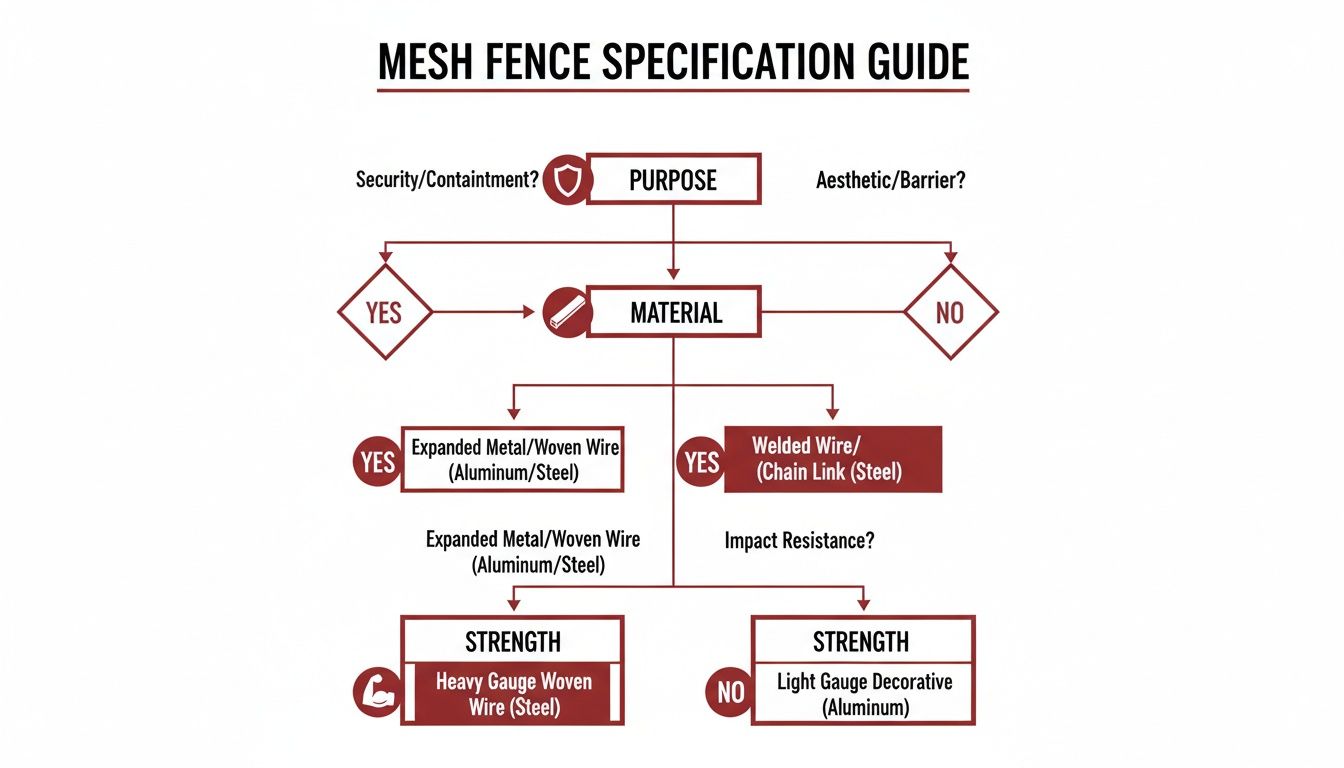
As you can see, there’s a direct link between the level of security you need and the strength and specifications of the materials required.
Practical Scenarios to Guide Your Choice
Let’s put this all into practice with a couple of real-world examples. Seeing how these decisions play out can make your own choice much clearer.
Scenario 1: The Construction Site Manager
A site manager in Brisbane needs to secure a multi-month building project. The site perimeter will shift as work progresses, and theft of tools and materials is a major risk.
- Primary Goal: Temporary site security and demarcation.
- Environment: An urban area with a flat but evolving footprint.
- Best Choice: Temporary mesh fence panels. They are quick to set up, can be moved around as the site changes, and provide a strong visual deterrent. Better yet, their durability means they can be packed up and reused on the next job, offering fantastic long-term value.
For a deeper dive, site managers can find great resources on security in construction that explain the role of physical barriers like mesh panels.
Scenario 2: The Warehouse Logistics Manager
A logistics manager needs to upgrade the permanent perimeter fence at a national distribution centre. The facility holds millions of dollars in stock, so preventing unauthorised access is non-negotiable.
- Primary Goal: High-level, permanent security.
- Environment: A large, static commercial property needing 24/7 protection.
- Best Choice: Anti-climb security mesh panels. The smart move here is panels with a thick wire gauge (like 4mm) and a small aperture (e.g., 75mm x 50mm). This combination makes them extremely difficult to cut or climb, creating a formidable and lasting barrier.
Choosing the right fence is about matching the product's strengths to your project's specific risks and requirements. Don't pay for features you don't need, but never cut corners on the specifications that matter most for your security.
The demand for these types of fencing solutions is growing fast. In fact, Australia's wire mesh market—which is closely tied to mesh fence panels—saw a huge 19.41% jump in imports from 2023 to 2024. This just goes to show how vital these products are for the nation’s infrastructure and commercial growth.
Getting Expert Advice
Still not 100% sure which way to go? Don't hesitate to ask for help.
The team at Super Rack has years of experience guiding customers to the perfect fencing solution. We can walk you through the options, explain the technical specs in plain English, and make sure you get a product that fits both your needs and your budget.
With our focus on quality, competitive pricing, and fast delivery Australia-wide, you can be confident you’re making a smart investment. Give us a call today for friendly advice and a no-obligation quote to get your project started right.
A Simple Guide to Installation and Maintenance
Once you've picked out the perfect mesh fence panels for your job, the next step is getting them in the ground and making sure they last. While it might seem like a big task, the process is surprisingly straightforward. In fact, one of the best things about a quality mesh fence is just how little attention it needs over the years.
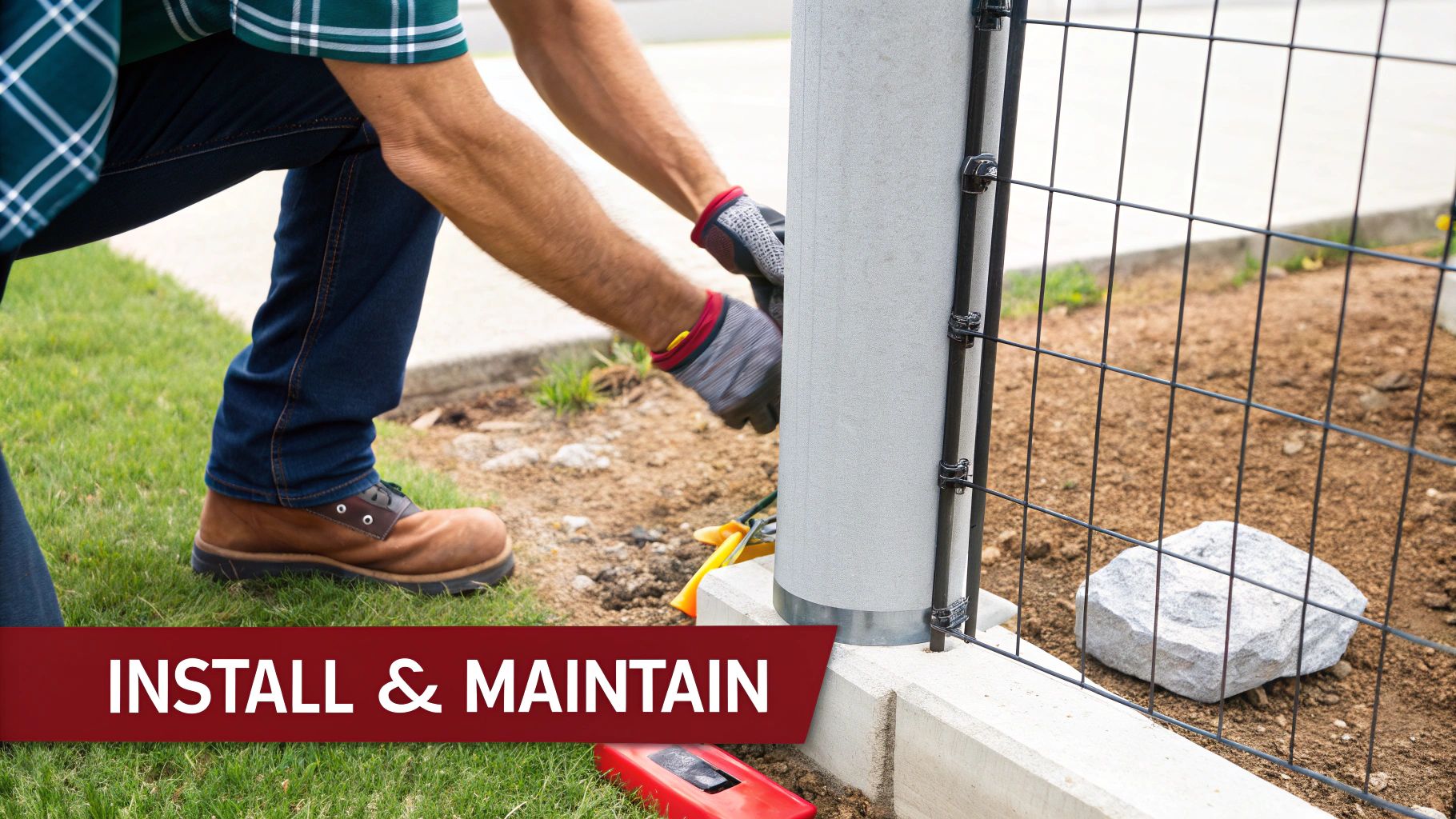
This guide isn't a step-by-step DIY manual, but it will give you a solid idea of what's involved. Knowing the basics helps you see the real, long-term value you get from a well-made product.
An Overview of the Installation Process
How your mesh panels go up really depends on one thing: are they for a temporary gig or a permanent fixture? Each method is designed with a specific goal in mind, balancing stability with either flexibility or brute strength.
For temporary setups, it’s all about speed and simplicity. The panels slide straight into heavy-duty feet that sit flat on the ground—no digging required. These weighted bases keep everything stable. Panels are then locked together with tough clamps, creating a secure perimeter that can be assembled, moved, or completely reconfigured in a matter of hours.
The real beauty of a temporary fencing system is how modular it is. You can secure a construction site or event space in no time and adjust the boundary as needed, making it a must-have for any dynamic project.
Permanent fencing, on the other hand, is all about creating a fortress. This means digging post holes and setting the posts in concrete for maximum stability. A rock-solid foundation is non-negotiable if you want a fence that will stand tall for decades. For a truly durable result, the job starts with proper ground prep. You can dive deeper with this expert guide to site preparation excavation. Once those posts are set solid, the mesh panels are bolted on, forming a boundary that’s built to last.
Keeping Your Mesh Fence in Top Condition
Now for the best part: looking after your mesh fence is incredibly simple, especially when you start with a high-quality, galvanised product. That tough steel is already built to fight off rust and corrosion right out of the gate. Your maintenance checklist is short and sweet.
The main thing is to give it a quick visual once-over every few months. Just take a walk along the fence line and keep an eye out for a few key things:
- Check the connections: On a temp fence, are the clamps tight and the feet sitting properly? For a permanent one, are all the fittings to the posts secure?
- Look for damage: Scan for any dents or bends from accidental bumps with vehicles or machinery. Super Rack panels are tough as nails, but it’s always smart to catch any issues early.
- Clear away debris: Make sure grass, weeds, or dirt aren't piling up against the base of the fence, as this can trap moisture.
A quick hose down every now and then is all it takes to wash off dirt and keep your panels looking sharp and professional. Because the galvanised coating does all the hard work protecting the steel, you won't have to worry about painting or treating it.
When you invest in top-tier mesh fence panels from Super Rack, you’re not just buying a product; you’re buying peace of mind. Our gear is designed for minimal fuss and maximum lifespan, saving you time, money, and headaches for years to come. Check out our range of temporary fencing panels and accessories to find the perfect low-maintenance solution for your site.
Why Super Rack Is Your Ideal Fencing Partner
Picking the right mesh fence panels is a big call. It’s a major investment in the security of your site, your stock, and your equipment. That’s why you need to partner with a supplier who gets what you need and actually delivers on their promises.
At Super Rack, we’re not just another supplier; we’re your project partner. We know a good fence is one of the most critical parts of any operation, and we’re committed to providing solutions that are built for real-world performance and give you outstanding value for money.
Our Commitment to Quality and Value
The backbone of any reliable fence is the quality of its materials. We build our mesh panels from top-grade, heavy-duty galvanised steel, making sure they can stand up to Australia’s tough climate and resist rust and corrosion for years. This focus on durability means you get a lower total cost of ownership, with fewer headaches from repairs and replacements down the track.
But quality shouldn’t break the bank. We believe in providing top-tier products at genuinely competitive prices. By keeping our own costs down and focusing on efficient service, we make sure you get the best possible return on your investment without ever compromising on strength or longevity.
Investing in a Super Rack fence isn’t just about securing your perimeter today. It’s about buying long-term peace of mind, knowing your assets are protected by a product that’s built to last.
Nationwide Service You Can Count On
A great product is only half the story if you can't get it when and where you need it. Super Rack has that sorted with a solid nationwide delivery network. Whether your site is in a busy metro hub or out in a remote regional spot, we offer fast and reliable delivery Australia-wide.
This means less downtime waiting around and lets you get your site secured without delay. Our logistics are geared to handle orders of any size, ensuring your mesh panels arrive on time, every time.
Expert Advice to Guide Your Decision
Not sure which panel is the right fit for the job? Our team is here to help. We give practical, expert advice to help you sort through the options. We'll listen to what you need, get our heads around your project's challenges, and point you to the ideal solution for your specific requirements and budget.
From figuring out the right wire gauge for a security fence to choosing the best temporary panels for a construction site, we provide clear, straightforward guidance.
Your project deserves a fencing solution that is strong, dependable, and makes financial sense.
Ready to secure your site with confidence? Contact the Super Rack team today for a personalised quote and expert advice on your fencing needs.
Your Questions Answered
When you're looking at investing in mesh fence panels, it's only natural to have a few questions. We get it. To make sure you feel 100% confident in your choice, we’ve answered some of the most common queries we hear from customers every day.
Our goal is simple: to give you the practical info you need to find the right fencing for your property—one that delivers on security, performance, and long-term value.
How Long Do Galvanised Mesh Fence Panels Last in Australia?
Properly installed, high-quality galvanised steel mesh panels are built tough for Australia's harsh climate and can easily last for decades. Think of the galvanised zinc coating as heavy-duty armour against rust and corrosion.
This isn't just a fence; it's a long-term investment. That built-in durability means you’re not spending money on replacements down the track.
Can I Get Mesh Fence Panels in Different Sizes or Colours?
Absolutely. We stock panels in a range of standard heights, usually from 1.8 to 2.4 metres, to suit different security needs.
And while the classic galvanised silver finish is popular, the panels can also be powder-coated in various colours. It’s a great way to match your company branding or the look of your property. Just ask our team at Super Rack, and we can run you through the customisation options for your project.
A powder-coated finish does more than just look good. It adds an extra layer of protection against the elements, giving your fence an even longer life.
Are Mesh Fence Panels a Cost-Effective Solution?
Yes, without a doubt. They are one of the smartest long-term fencing investments you can make. The initial cost is competitive, but the real savings come from their incredible durability and near-zero maintenance needs.
Their sheer strength also means they can take a beating, reducing the risk of damage from accidental impacts or break-in attempts. That means fewer surprise repair bills, making them a predictable and financially sound choice for any business owner.
What Is the Difference Between Welded Mesh and Chain-Wire Fencing?
The biggest difference comes down to how they're built, which has a massive impact on their strength and security.
Welded mesh is exactly what it sounds like—every single wire intersection is welded together. This creates a solid, rigid panel that’s incredibly difficult to cut, climb, or bend out of shape.
Chain-wire, on the other hand, is woven into a diamond pattern. This makes it flexible but also creates a weak point—it can be snipped and unravelled far more easily. For any situation where you need a serious, rigid security barrier, welded mesh fence panels are the clear winner.
At Super Rack, we're all about providing top-quality fencing that delivers real strength, durability, and value. Our expert team is always ready to help you find exactly what you need.
Explore our full range of storage and fencing solutions or get in touch for a personalised quote by visiting https://www.superrack.com.au.