

Your Complete Guide to Choosing a Metal Shelf Storage Unit

Choosing the right metal shelf storage unit can be the difference between a cluttered, chaotic space and one that’s organised, safe, and efficient. But with so many options out there, where do you even begin? This guide will walk you through everything, whether you're finally sorting out the home garage, fitting out a commercial warehouse, or organising a retail stockroom.
Your Guide to Selecting the Perfect Metal Shelf Storage Unit
A metal shelf storage unit isn't just a place to dump your stuff; it's a fundamental tool for bringing order to your space, making it safer, and boosting your productivity. Getting this choice right from the start saves you a world of time, money, and headaches down the track. The best decision really boils down to understanding a few key things that separate a wobbly, short-term fix from a rock-solid, long-term asset.
Steel is almost always the material of choice for its sheer strength and durability, but it's a mistake to think all steel shelving is the same. The perfect solution for you depends entirely on what you plan to store, where it’s going to live, and how often you’ll need to access it. For example, a home workshop that needs to hold heavy toolboxes and power tools demands a very different setup from a retail storeroom holding boxes of lightweight inventory.
Key Factors to Consider
To make a smart choice, you need a clear plan. Before you even start looking at specific products, take a moment to map out what you actually need. A little bit of planning upfront stops you from buying a unit that’s too weak for your gear or, just as bad, one that’s completely over-engineered (and overpriced) for your needs. As you think about your requirements, it can also be useful to explore different self-storage options, which might be a great supplement to your on-site storage or even an alternative.
Start by asking yourself these essential questions:
- Load Capacity: How much weight does each shelf really need to hold? Always be realistic and add a bit of a safety buffer.
- Material and Finish: Is the unit going into a dry office or a damp, unheated shed? The finish—whether it's powder-coated or galvanised—is what protects it from rust and wear.
- Assembly and Adjustability: Are you looking for a quick, tool-free setup like a boltless system, or do you need the bombproof rigidity that comes with a bolted unit?
By thinking through these elements first, you shift from simply buying a product to investing in a solution. A well-chosen metal shelf storage unit from a trusted supplier like Super Rack not only meets your immediate needs but also provides lasting value and safety for years to come.
With our focus on superior quality and competitive pricing, we make sure you get a reliable system that won't let you down. We offer expert advice nationwide to help you find the perfect fit, backed by fast delivery to get your space organised sooner.
Getting to Grips with Different Metal Shelving Types
When you first start shopping for a metal shelf storage unit, it’s easy to think they’re all cut from the same cloth. But you’ll quickly find that’s not the case. Getting to know the key differences is the first step in making a smart buy that will serve you well for years.
From how they snap together to the protective finish they wear, every feature has a purpose. Choosing the right one is like picking the right tool for a job—you wouldn't use a sledgehammer to hang a picture frame. The shelving you’d pick for a dry, climate-controlled office storeroom is worlds away from what you’d need in a damp coastal workshop.
Let's break down the important stuff.
Boltless vs. Bolted Assembly
One of the first decisions you'll make is how the unit actually goes together. This choice doesn't just affect how long it takes to set up; it also determines the unit's overall sturdiness and how easily you can tweak it down the track.
Boltless Rivet Shelving is the champion of speed and simplicity. These systems use a clever interlocking design—rivets slide into keyhole slots and lock into place, usually with a few taps from a rubber mallet. No fiddly nuts and bolts.
- Quick Build: You can often get a full bay assembled in minutes.
- Easy to Adjust: Need to change a shelf height? It's fast and tool-free, perfect for when your storage needs change.
- Super Versatile: It’s the go-to choice for home garages, retail backrooms, and light commercial use where you need flexibility.
Traditional Bolted Shelving, on the other hand, is all about brute strength and rock-solid stability. Every single joint is locked down with nuts and bolts, creating an incredibly rigid structure.
- Maximum Rigidity: Bolted connections pretty much eliminate any wobble, making it a safer bet for very heavy or unbalanced loads.
- Set and Forget: Once built, these units are made to stay put, giving you total peace of mind in tough industrial or workshop environments.
- The Heavy-Hitter: Got engine blocks, heavy tools, or dense materials to store? If it's seriously heavy, bolted is almost always the way to go.
Open vs. Enclosed Shelving Designs
Next up, you need to think about access. Do you need to grab things from all sides, or do your items need a bit more protection?
Open Shelving (you might hear it called open-back shelving) is all about maximum access and visibility. With no back or side panels, you can see what you’ve got and grab it from multiple angles. This design is perfect for fast-moving stock in a warehouse or for tools you need to get to in a hurry.
Enclosed Shelving comes with steel panels on the back and sometimes the sides. This isn’t just for looks; it offers some real advantages:
- Keeps Things in Place: The panels stop items from being pushed off the back, which is a big win for both safety and organisation.
- Cleaner Storage: They help keep dust and workshop grime off your stored goods—a huge plus for long-term archives or clean environments.
- Extra Strength: The panels, or cladding, add to the unit's structural integrity, making the whole thing even more robust.
This infographic breaks down the main things to weigh up when you're making your choice.
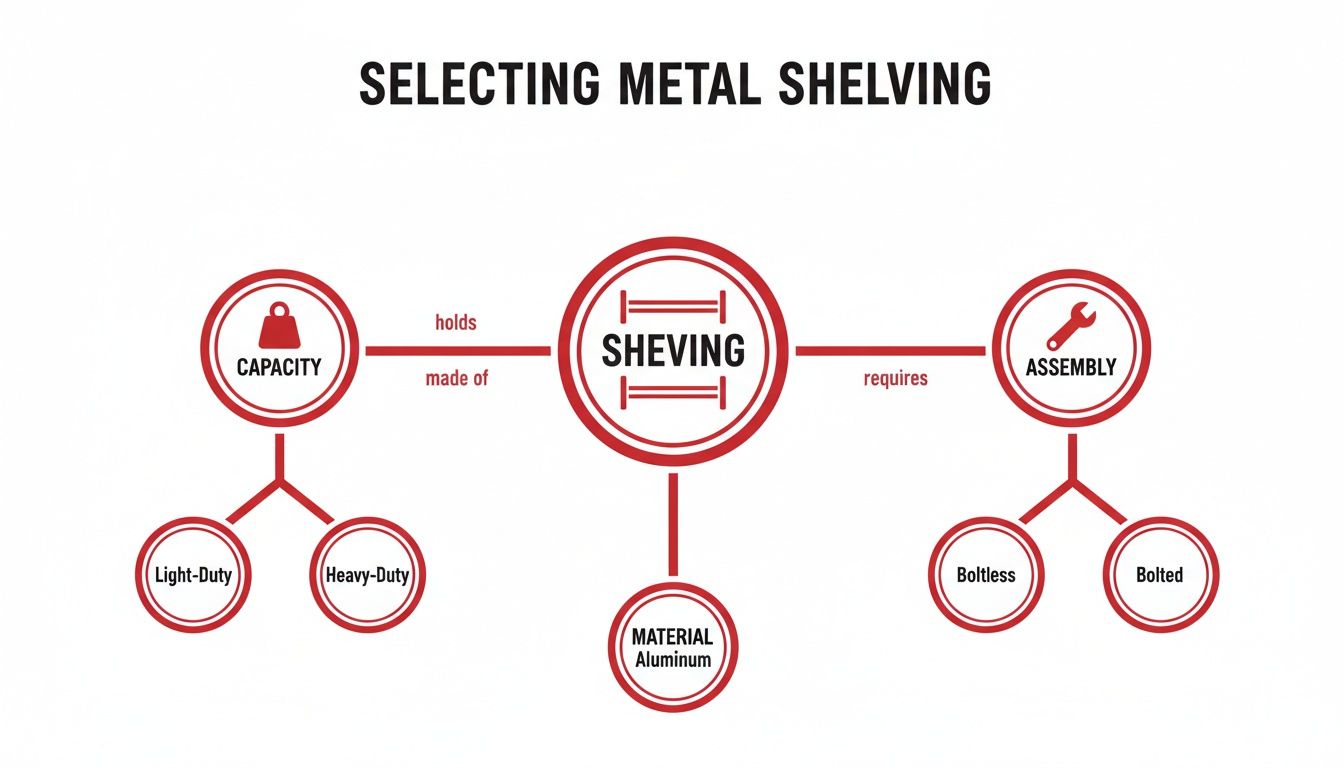
As you can see, the sweet spot is finding the right balance of capacity, finish, and assembly style for what you need to do.
Powder-Coated vs. Galvanised Finishes
The finish on your metal shelf storage unit is its armour. It’s the first line of defence against the elements, and a good one will stop rust in its tracks and make your investment last much longer.
Powder-Coated Steel is what you’ll find on most indoor shelving, and for good reason. A dry powder is applied electrostatically to the steel and then baked on. This creates a hard, smooth finish that’s way tougher than regular paint. It’s fantastic at resisting scratches, chips, and everyday wear and tear, making it perfect for garages, warehouses, and office storerooms.
Galvanised Steel is built for the tough jobs. The steel is dipped in molten zinc, creating a protective layer that is incredibly resistant to rust. This is your non-negotiable choice for any environment where moisture is in the air—think damp sheds, cool rooms, farm buildings, or any coastal area with salty sea breezes.
Decoding Load Ratings and Prioritising Safety
When you’re looking at a metal shelf storage unit, there’s one number that matters more than any other: its load capacity. Getting this wrong isn't just an inconvenience; it's a massive safety risk. Understanding what those load ratings actually mean is the first step to building a storage system that works hard and keeps everyone safe.
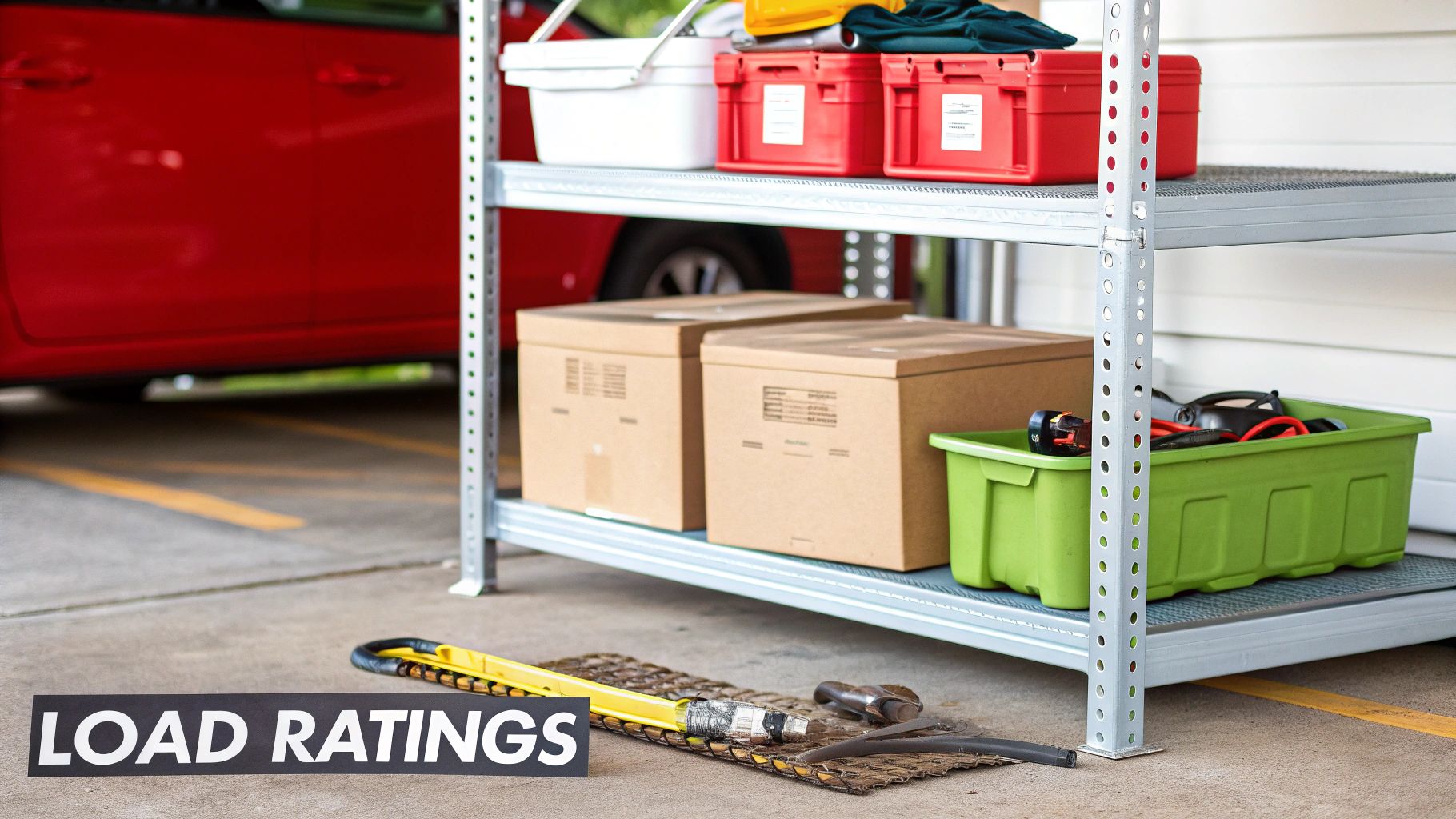
Most shelves specify a UDL, which stands for Uniformly Distributed Load. This number tells you the absolute maximum weight a shelf can handle, but only if that weight is spread evenly across the whole surface. It’s a critical detail that’s easy to get wrong.
Think of it this way: storing ten light archive boxes side-by-side is completely different from dropping one heavy engine block right in the centre. Even if the total weight is identical, the concentrated load creates a single, intense point of stress. That’s how shelves bend, buckle, or collapse.
Always respect the UDL rating. It's not a suggestion—it's a structural limit calculated for safety. Exceeding it or concentrating weight in one spot compromises the integrity of the entire unit and puts people and property at risk.
How to Calculate Your Weight Needs
Before you even think about buying, you need a solid idea of how much weight your shelves will be holding. A bit of simple maths upfront can save you a world of trouble later.
Here’s a quick way to figure it out:
- List Your Heaviest Items: Think about what you plan to put on a single shelf. We’re talking full paint tins, bags of concrete mix, toolboxes, or spare parts.
- Estimate the Total Weight: Add up the weight of everything on your list. If you're not sure, always err on the side of caution and overestimate.
- Build in a Safety Margin: Take your total and add at least 25% on top. This buffer gives you a crucial safety cushion and accounts for any extra gear you might add later. For example, if your items weigh 150 kg, you should be looking for a shelf with a capacity of at least 188 kg.
This simple check takes the guesswork out of it, ensuring you choose a unit that's genuinely up to the task. For anyone storing seriously heavy equipment in a garage or workshop, a heavy-duty option like our 1600kg capacity garage shelving unit is the only way to get real strength and peace of mind.
Non-Negotiable Safety Practices
A top-quality metal shelf storage unit is only as safe as the person who installs and uses it. Following a few basic safety rules isn't optional—it's essential for preventing accidents.
Start with a Level Foundation
Always set your shelving up on a flat, level floor. If the ground is uneven, the unit can lean, putting uneven stress on the frame and joints. Over time, that's a recipe for instability.
Load From the Bottom Up
This is the golden rule of storage. Always, always put your heaviest, bulkiest items on the bottom shelves. This creates a low centre of gravity, making the entire unit far more stable and much less likely to topple over. Keep the lighter, less-used stuff up top.
Anchor It to the Wall
For any tall shelving unit, securing it to a wall is non-negotiable. It’s the single best way to prevent tipping, whether it’s from an accidental bump, an uneven load, or even minor tremors. Reputable suppliers like Super Rack provide the expert advice you need to ensure your unit is installed safely and meets Australian standards. That commitment to quality materials and sound engineering is your best guarantee of a secure storage setup.
Matching Your Shelving to Your Space
The best metal shelf storage unit is one that feels like it was made just for your space. It’s not about buying the biggest or strongest unit you can find; it’s about matching the design, material, and features to what you actually need. A system that’s a hero in a dry retail stockroom could be a rusty mess in a damp farm shed.
Getting this choice right turns your storage from a dumb rack into a smart productivity tool. You’ll find things faster, keep your inventory safe, and just make your whole workflow smoother. Let's walk through a few common scenarios and see which shelving fits best.
For Home Garages and Workshops
The classic Aussie garage is a jack-of-all-trades. It’s part storage locker, part repair shop, and part weekend project zone. That means your shelving needs to be tough, versatile, and seriously good at making the most of every square metre.
Here’s what you should be aiming for:
- Go Vertical: Most garages have decent ceiling height. Tall, sturdy units are a game-changer for getting clutter up and off the floor.
- Fight the Damp: Concrete floors and big temperature swings can mean moisture. A galvanised finish is often a much smarter long-term bet than powder-coating to keep rust at bay.
- Handle Anything: You’re storing everything from light paint tins to heavy toolboxes. Shelves with a solid UDL (Uniformly Distributed Load) rating are a must.
Here’s a real-world example: Think of a home mechanic living near the coast. They need a metal shelf storage unit that can hold heavy spare parts while also standing up to salty, humid air. A heavy-duty, galvanised steel unit is the perfect fix. Better yet, add an integrated workbench section to create a seamless setup where tools and parts are always within reach. At Super Rack, we live for helping homeowners find these kinds of practical, long-lasting solutions.
For Retail Stockrooms and Small Businesses
In retail or a small business, a messy stockroom costs you money. An efficient one means you can fill orders quicker, count stock easily, and stop wasting time hunting for things. The right shelving here is all about access, visibility, and flexibility.
Key features to look for are:
- Adjustable Shelves: Your inventory is always changing. Boltless shelving systems let you shift shelf heights in minutes—no tools needed—to accommodate new products as they arrive.
- Easy Access: Open-back shelving is often the way to go. It lets your team see and grab stock from multiple angles, which really speeds up picking and packing.
- A Clean Look: A powder-coated finish doesn’t just protect the steel; it gives you a clean, smooth surface that’s easy to wipe down. This is a big deal for keeping your storage area looking professional.
For a small e-commerce business, every second counts. A well-organised stockroom with clearly labelled, adjustable shelving can cut order processing time significantly, improving customer satisfaction and operational efficiency.
For Warehouses and Agricultural Operations
When you get to the scale of a commercial warehouse or farm, the game changes. Here, a metal shelf storage unit isn’t just shelving anymore; it's a critical piece of your logistics infrastructure. It has to stand up to forklifts, harsh conditions, and non-stop use.
This is where you bring in the industrial-grade gear.
- Heavy-Duty Pallet Racking: Built for forklift access, pallet racking is the backbone of any serious warehouse operation. It’s engineered for massive weights and lets you turn your vertical space into a high-density storage asset.
- Extreme Durability: On a farm or in a machinery shed, shelving is constantly exposed to moisture, dust, and chemicals. Galvanised steel is non-negotiable here to prevent corrosion and make sure it lasts.
- Smart Workflow: Your racking layout needs to create a logical flow for goods, from receiving to dispatch. This takes proper planning and a system built to handle the specific size and weight of your pallets.
The need for these heavy-duty systems is only growing. The Australian warehousing and storage market is set to hit $8.78 billion by 2030, a trend that directly fuels the demand for industrial metal shelving. These systems can make up as much as 20% of a warehouse fit-out cost, which shows just how vital this investment is. Discover more insights about Australia's growing logistics market.
No matter the space, the goal is the same: find a solution that works for you, not against you. By matching the shelving to its purpose, you’re investing in a system that boosts your productivity and is built to last.
At Super Rack, we pride ourselves on offering superior quality products for every application, from home garages to large-scale warehouses. Our nationwide service and fast delivery mean you get the right solution, right when you need it. Contact our team today for expert advice on a metal shelf storage unit that’s a perfect match for your space.
Planning Your Layout and Installation
A great storage system doesn't just happen when you start clicking beams together. It begins much earlier, with a bit of thoughtful planning. This is what separates a cluttered, frustrating space from one that’s safe, efficient, and makes the most of every last centimetre. Proper planning ensures your new metal shelf storage unit doesn’t just fit—it actually improves how you work.
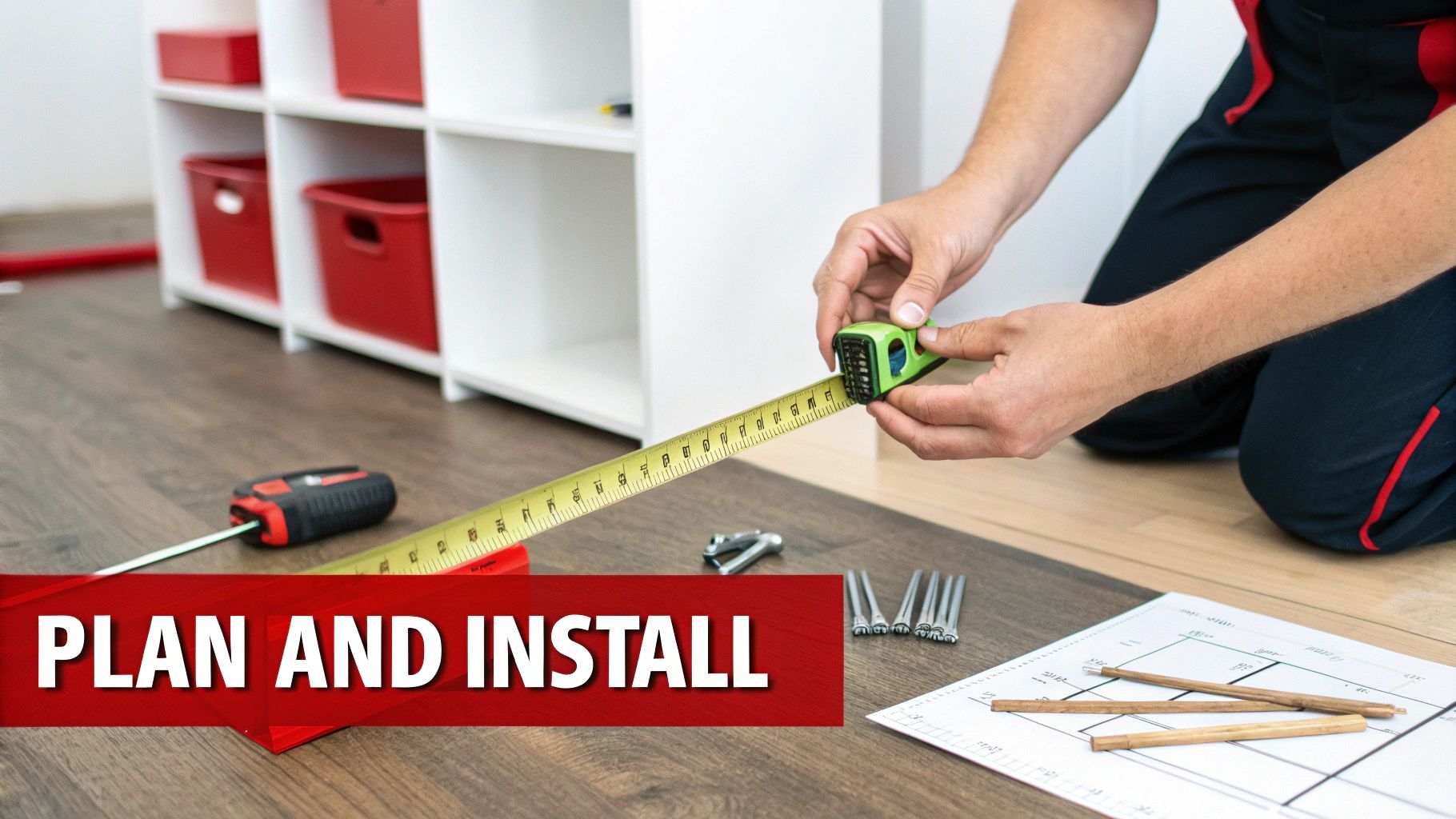
This isn’t just about measuring the length and width of the floor. It’s about thinking in three dimensions to create a plan that works in the real world, accounting for all those little obstacles that can throw a spanner in the works later on.
Measuring Your Space Accurately
First things first: grab a tape measure and get the true story of your space. Don't just eyeball it—getting the numbers right from the start is the secret to a smooth installation.
- Measure Everything: Jot down the exact length, width, and ceiling height.
- Map Out Obstacles: Take note of where power points, light switches, windows, and any pesky pipes or support columns are. You’ll need clear access to these.
- Think About Flow: How do your doors swing? Where are the main pathways? You need enough room to walk, carry things, and, in a workshop or warehouse, move equipment like pallet jacks. A good rule of thumb is to leave at least 90cm for main walkways.
A classic mistake is forgetting about overhead clearance. Always measure from the floor to the lowest point above—that might be a light fitting or a garage door track, not the ceiling itself. This is what guarantees your shelving unit will actually slide into place.
Your Pre-Installation Checklist
With your measurements and layout sorted, it’s time to get ready for the build. A little prep work now will make the whole process faster and a whole lot safer.
Here’s a quick checklist to tick off before you begin:
- Clear the Decks: Completely empty the area where the shelving will live. This gives you a clean slate to work on and removes any tripping hazards.
- Check Your Footing: Is the floor level? A spirit level will tell you. An uneven floor can make the whole unit wobbly and compromise its strength.
- Round Up Your Tools: For most boltless shelving, a rubber mallet is your best friend. If you’ve got a bolted unit, have the right-sized spanners or a socket set ready. And of course, safety gloves and glasses are always a smart move.
- Do a Parts Audit: Unpack everything and check it against the instruction manual. Make sure you have all the uprights, beams, and connectors before you build the first section.
Anchoring Your Unit for Maximum Safety
This is the final, and most important, step. Anchoring your metal shelf storage unit to the wall isn't just a suggestion; it’s a non-negotiable safety measure. It’s what stops the unit from tipping over, especially when it's tall or loaded up with heavy gear.
The process is simple but has to be done right. You’ll need to fix the shelving uprights to the wall studs using the right fasteners. What you use depends on your wall—grab some sturdy lag bolts for timber studs, or masonry anchors for brick and concrete.
Proper anchoring transforms your shelving into a rock-solid system, giving you total peace of mind that your gear, and your family, are safe. For extra stability or unique layouts, you can also explore a range of shelving accessories made to connect multiple bays or add bracing.
At Super Rack, safety is at the core of everything we do. Our team is here to give you expert advice on installation and anchoring, and our nationwide service means you’ve always got support. With top-quality shelving and fast delivery, we help you build a storage solution that’s not just organised, but truly secure.
Budgeting for Quality and Long-Term Value
When you’re investing in a new metal shelf storage unit, it’s always a balancing act between the upfront price tag and its long-term performance. It’s tempting to grab the cheapest option you can find, but that path often leads to hidden costs you weren't expecting.
A suspiciously low price can be a dead giveaway for thinner steel, a basic finish that won't last, or a flimsy load capacity. All of these things compromise not just durability, but safety too.
The real value isn’t in the initial saving; it’s in what that shelf will cost you over its entire life. A well-made unit will stand its ground for years, handling the daily grind without bending or rusting. A cheap one? You might find yourself replacing it much sooner than you think, which means you end up paying more in the long run.
Understanding What Drives the Cost
The price of a metal shelf storage unit is tied directly to what it's made of and how it's built. Once you understand these factors, you can see exactly where your money is going and why spending a little more upfront is such a smart move.
- Steel Gauge and Quality: The thicker the steel (which means a lower gauge number), the more it costs. But what you get in return is far greater strength and the ability to shrug off knocks and bumps.
- Dimensions and Capacity: Taller, deeper units with higher load ratings need more raw material and smarter engineering to stay stable. That extra muscle is naturally reflected in the price.
- Protective Finish: A galvanised finish, which is made to fight off rust in damp or outdoor environments, is a more involved process and costs more than a standard powder-coated finish designed for indoor use.
A top-quality unit from a trusted supplier like Super Rack is an investment in safety and total peace of mind. Our competitive pricing means you get incredible value without us ever cutting corners on the materials that keep your gear secure.
New vs. Second-Hand: The Smart Financial Choice
Buying a new metal shelf storage unit from a reputable supplier gives you a guarantee that it meets Australian safety standards and comes with a proper manufacturer's warranty. You get a product with a clean history, clear load ratings, and the confidence that it’s free from hidden damage or structural fatigue.
Second-hand shelving might seem cheaper at first glance, but it's a huge gamble. There’s no way to know if it's been overloaded, dropped during a move, or left to rust in a damp corner. That unknown history could mean a seemingly minor dent is actually a critical weak point waiting to fail.
The Australian metal furniture manufacturing scene is a clever mix of imported parts and local production, all aimed at hitting that sweet spot between quality and cost. This ensures you get durable, well-engineered products. You can learn more about how these industry dynamics influence product availability.
By choosing a new unit from Super Rack, you’re not just buying a shelf. You’re investing in guaranteed quality, expert advice, and support that stretches right across the country.
Ready to find a storage solution that offers true long-term value? Explore our range or get in touch with our team for a quote today. We offer fast delivery across Australia to help you get organised sooner.
Your Metal Shelving Questions Answered
We get a lot of great questions about picking and using the right metal shelf storage unit. To make sure you're completely confident in your choice, here are some straight answers to the things we're asked most often. This should clear up any last-minute uncertainties you might have.
How Do I Figure Out the Weight Capacity I Need?
It’s simpler than it sounds. Start by figuring out the absolute heaviest load you’d ever put on a single shelf. Tally up that weight, and then add a safety buffer of at least 25% to be safe.
So, if all your gear adds up to 120kg, you’ll want shelving with a Uniformly Distributed Load (UDL) of at least 150kg per shelf. If you’re ever on the fence or think you might store heavier items down the track, always go for the higher capacity. It’s the smart way to ensure your setup stays safe and dependable for years.
What Is the Real Difference Between Powder-Coated and Galvanised Finishes?
The main difference really just boils down to where you'll be using the shelves. Each finish is designed to thrive in a different environment.
- Powder-coating is your go-to for dry, indoor spaces. It creates a tough, scratch-resistant surface that looks great in an office, retail stockroom, or your garage.
- Galvanised steel, on the other hand, is coated in a protective layer of zinc. This gives it fantastic protection against rust and corrosion, making it the only real choice for damp or humid spots like sheds, cool rooms, or properties near the coast.
Is It Really Necessary to Anchor My Shelving Unit to the Wall?
Yes, one hundred percent. Any time your shelving unit is more than four times taller than it is deep, anchoring it to a wall is a non-negotiable safety step.
It’s a simple job that prevents the whole unit from tipping over from an accidental knock, unevenly stacked items, or any other unexpected force. Anchoring is all about stability and peace of mind for you and anyone else using the space. For even more detailed answers, you can check out these additional frequently asked questions about metal shelving.
Ready to find the perfect storage solution built on quality, safety, and value? At Super Rack, we provide superior products backed by expert advice and fast, nationwide delivery.
Explore our extensive range of metal shelving solutions online today.