

8 Practical Rural Fencing Ideas Australia Can Use

Choosing the right fence for your rural Australian property is a big decision. It’s not just about marking a boundary; it’s a key investment in protecting your assets, managing livestock, and looking after your land. A good fence has to stand up to the tough Aussie climate—from scorching sun and heavy rain to bushfires and wildlife. With so many options, from traditional post and wire to modern electric systems, it can be hard to know where to start.
This guide to rural fencing ideas in Australia is here to make it simple. We’ll walk you through eight of the most practical fencing solutions, breaking down their pros, cons, and best uses. We'll cover everything from cost and maintenance to which fence is right for certain animals and tricky terrain.
Whether you're running a huge outback station, a small hobby farm, or a commercial agricultural business, this guide offers clear, actionable advice. Our goal is to give you the knowledge to choose a fence that’s not just fit for purpose, but also durable, cost-effective, and built to last. A solid fence is the backbone of any productive rural property, and getting it right from the start means security and peace of mind for years to come.
1. Post and Wire Fencing
Post and wire fencing is the classic Aussie farm fence, and for good reason. It's one of the most affordable and versatile rural fencing ideas Australia has. The design is simple: sturdy timber or steel posts are set in the ground, and strands of plain or barbed wire are stretched tightly between them to create a secure barrier.
This traditional method is the workhorse of Australian agriculture. You’ll see it stretching for kilometres across cattle stations in Queensland, marking boundaries on sheep properties in New South Wales, and enclosing farms in Victoria. Its adaptability makes it great for containing all sorts of animals, from large cattle to smaller sheep.
Why Choose Post and Wire Fencing?
The main advantage is its balance of cost and effectiveness for large areas. It provides a reliable stock-proof barrier without the high material cost of solid panels or mesh. Plus, its open design handles wind well, making it very durable in Australia's unpredictable weather.
When installed properly, a post and wire fence needs very little maintenance, just the odd check on wire tension and post condition. This makes it a great "set and forget" option for long boundary lines or big paddocks.
Key Implementation Tips
To make sure your post and wire fence lasts, focus on a solid setup and quality materials.
- Anchor it Well: Your corner, end, and strainer posts are the anchors of your fence line. Make sure they are much more solid than your standard line posts to handle the tension.
- Suit Your Soil: In soft, sandy, or flood-prone ground, use concrete footings for your strainer posts. This stops them from pulling out or leaning, which would make the whole fence sag.
- Use the Right Wire: Go for high-tensile wire. It might cost a bit more upfront, but its strength means you can space your posts further apart. It's also less likely to stretch over time, saving you maintenance headaches.
- Space Posts for Your Stock: For bigger animals like cattle, spacing posts 4-5 metres apart is usually fine. For smaller stock like sheep, you'll want them closer, between 2.5 and 4 metres, to stop them pushing through.
2. Temporary Portable Fencing Systems
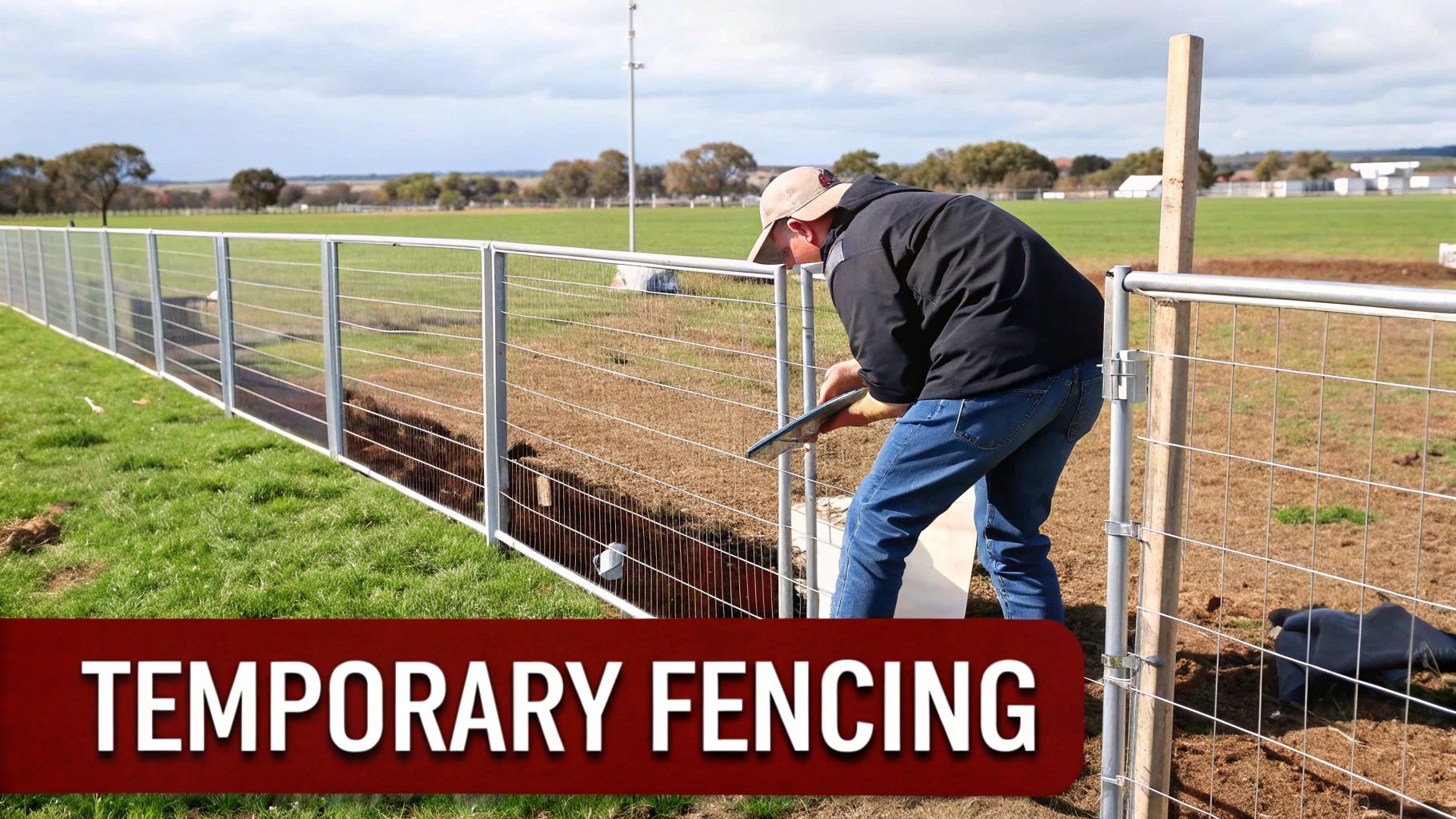
Temporary portable fencing offers a flexible way to manage livestock, proving that not all rural fencing ideas in Australia need to be permanent. These systems are made of lightweight steel panels and gates that can be quickly set up, changed around, and moved. This makes them a vital tool for modern farms.
From setting up rotational grazing on a dairy farm in Victoria to creating mobile yards for mustering cattle in NSW, portable fencing provides containment exactly where you need it. It’s perfect for short-term jobs like separating stock, making temporary laneways, or securing animals at ag shows.
Why Choose Temporary Portable Fencing?
The biggest benefit is its adaptability. It lets you manage pastures and livestock with precision, which is key for improving soil health and getting the most out of your feed. You can move stock around easily, giving paddocks time to recover without the cost of permanent fences.
These systems are a smart investment that can be used all over the property. Super Rack offers an extensive range of tough, galvanised temporary fencing panels and gates built for Australian conditions. Our superior quality and competitive pricing mean you get a long-lasting solution that offers excellent value.
Key Implementation Tips
To get the most out of your portable fencing, proper setup and regular checks are essential.
- Pin it Down: On windy properties, always use heavy-duty ground pins to anchor the panel feet. In very windy spots, adding weights gives extra stability.
- Add a Deterrent: For animals that like to test fences, like sheep, run a hot wire using stand-off insulators along the inside. This gives them a strong reason to keep their distance.
- Store it Smart: Even though they're galvanised, storing panels off the wet ground and under cover when not in use will stop rust and make them last much longer.
- Find Level Ground: Set up your temporary yards on flat, well-drained ground. This stops panels from getting stuck in the mud and ensures gates can swing freely.
3. Electric Fencing Systems
Electric fencing is one of the smartest and most flexible rural fencing ideas Australia offers. It relies on a psychological barrier rather than pure physical strength. The system sends a regulated, high-voltage pulse through wires. When an animal touches the fence, it gets a short, sharp, but safe shock, quickly teaching it to respect the boundary.
This technology is incredibly versatile. It's used to keep predators out on sheep stations in Western NSW, manage strip-grazing on Victorian dairy farms, and provide safe, portable containment for horses in Queensland. It's a key tool in modern farming, allowing for precise pasture management that improves soil and animal health.
Why Choose Electric Fencing Systems?
The main advantage is that it works as both a permanent and temporary solution. It's very effective at containing stock and keeping out feral animals like dingoes and foxes, often at a lower cost than traditional fences over large areas. The lightweight parts make it easy to install, change, or move.
Because animals learn to avoid the fence, there's less physical pressure on it. This means you can use lighter materials and space your posts further apart, reducing both material and labour costs.
Key Implementation Tips
A good electric fence relies on a perfect circuit. Paying attention to detail during setup is key.
- Get Your Earth Right: The earth stake is the most important part. Install at least one galvanised steel stake 1.5-2 metres deep into moist soil. In dry areas, you might need a longer stake or an earth-return wire system.
- Keep it Clean: Grass and weeds touching the hot wire will drain power and weaken the shock. Regularly mow or spray under the fence line to keep it clear and effective.
- Test it Often: Don’t just guess if it's working. Use a digital fence tester to check the voltage along the fence each week. This helps you find and fix problems before your stock gets out.
- Use Warning Signs: Always put up highly visible warning signs, especially where the public might access the area. This is a legal requirement in many places and a common-sense safety measure.
4. Cattle Yard and Loading Race Fencing
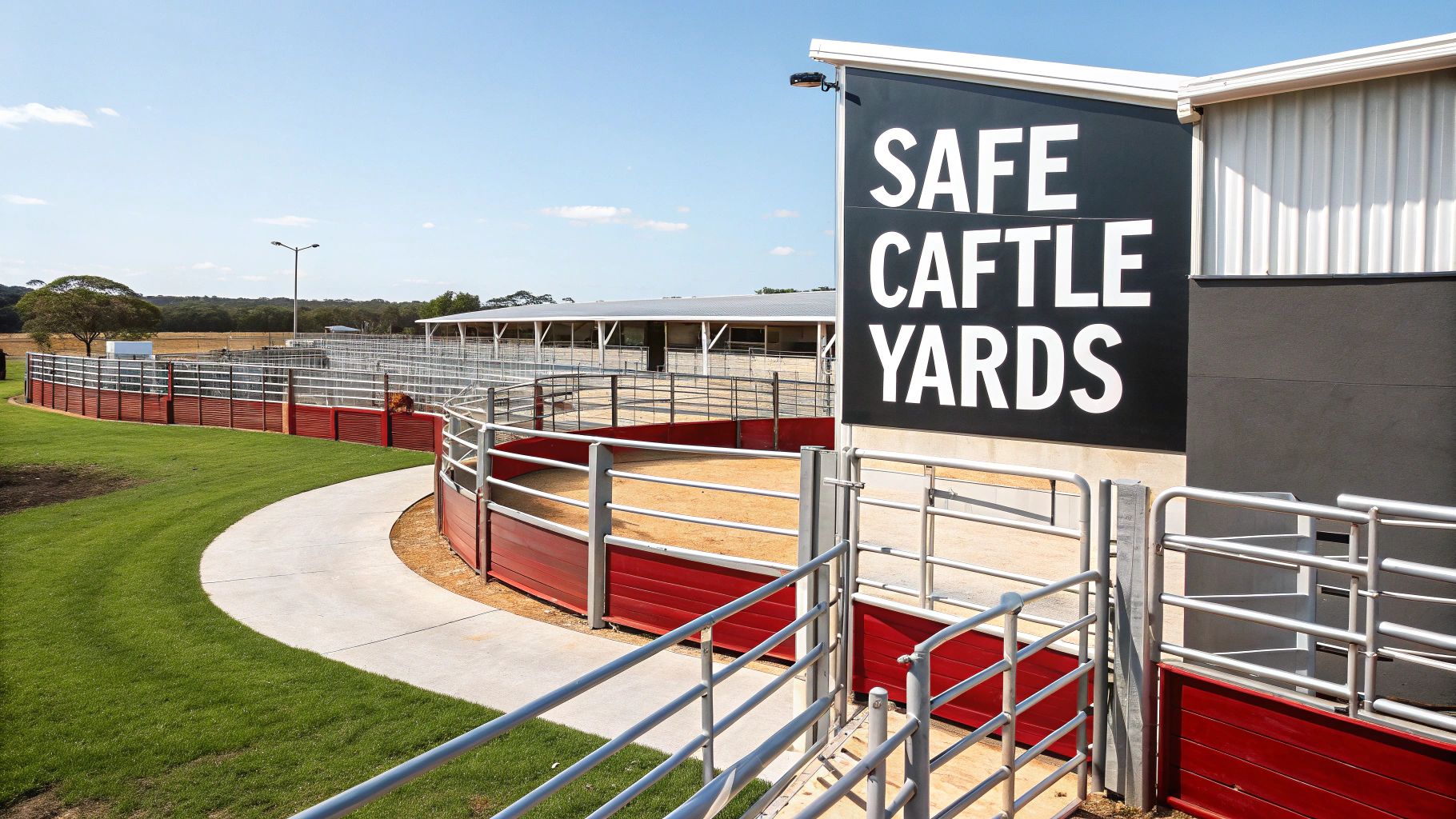
Fencing for cattle yards and loading races is more than just containment—it's a critical investment in safety and efficiency. This is a specialised system of heavy-duty panels, gates, and races designed to guide cattle calmly and safely during handling, like drafting, drenching, or loading onto a truck. Good design reduces stress on both the animals and the handlers.
These systems are the heart of any serious cattle operation, from huge stations in Queensland to feedlots across the country. A well-designed yard uses animal psychology, like the fact cattle prefer to follow a curve, to create a smooth, low-stress flow of stock. The components must be incredibly strong to withstand pressure from heavy animals.
Why Choose Specialised Yard Fencing?
The main benefit is safety and control. A purpose-built system minimises the risk of injury by getting rid of gaps, sharp edges, and weak points. It turns a potentially chaotic job into a streamlined process, saving time and labour.
Reducing animal stress is also important, as it directly affects meat quality and weight gain. A well-designed yard is better for animal welfare and leads to a better end product. At Super Rack, we offer superior quality Cattle Yard Panel, Gate & Accessories that are built tough. With our expert advice and nationwide service, we can help you design a system that’s both efficient and safe.
Key Implementation Tips
A successful yard design focuses on cattle behaviour and safety.
- Get the Race Width Right: A single-file race should be between 750mm and 850mm wide. This is wide enough for big cattle but narrow enough to stop them from turning around.
- Use Curves: Cattle move more easily through a curved race with solid sides because they can't see what's at the end and are encouraged to follow the animal in front.
- Focus on Footing: Use non-slip flooring, like grooved concrete or rubber mats, in the race and forcing pen. This prevents slips and injuries, especially when it’s wet.
- Plan for Handler Safety: Always include escape routes or man-gates at key points. This allows handlers to get out of the way quickly if an animal becomes aggressive.
5. Mesh, Welded Panel and Security Fencing
For rural properties that need a higher level of security, prefabricated mesh or welded panel fencing is a strong, modern solution. This type of fencing is more than just stock containment; it’s a serious barrier against theft, trespassers, and unwanted animals. It combines the strength of steel with good visibility.
This style of fence is a popular choice for horse studs, where both safety and looks are important. It's also used to protect high-value breeding animals, secure equipment sheds, and enclose operations like dairies or feedlots where biosecurity is critical.
Why Choose Mesh and Security Fencing?
The main advantage is superior strength and security. The rigid, welded construction is very hard to cut or bend, and the small gaps in anti-climb designs make it almost impossible to get a foothold. This provides great peace of mind.
While the upfront cost is higher than post and wire, its long life and low maintenance offer excellent long-term value. Super Rack provides a range of high-quality mesh and panel options that are built to last in the tough Australian climate, backed by competitive pricing and fast delivery Australia-wide.
Key Implementation Tips
Proper installation is key to getting the most security out of this fencing.
- Choose the Right Mesh Size: The size of the mesh holes is important. Use smaller mesh, like 50mm x 50mm, for smaller animals like goats or to stop predators. Larger mesh might be fine for cattle.
- Add Security Features: Don’t just rely on the fence. Add motion-activated lights around the perimeter and consider CCTV cameras for better security.
- Keep it Clear: Keep the fence line clear of long grass, shrubs, and trees. This maintains clear sightlines and gets rid of hiding spots for intruders.
- Learn from Other Industries: Seeing how other sectors use physical barriers can be useful. For example, understanding common security construction site fencing mistakes can help you avoid similar weak spots on your own property.
6. Dingo and Predator-Exclusion Fencing
In many parts of Australia, good livestock management is as much about keeping predators out as it is about keeping stock in. Dingo and predator-exclusion fencing is a specialised, high-security solution designed to protect valuable livestock from wild dogs, dingoes, and foxes. This fencing is taller, has smaller mesh, and often includes barriers below ground to create a fortress for sheep, goats, and calves.
This type of fencing is a vital investment in areas with high predator numbers, such as western NSW and the pastoral lands of Queensland, SA, and WA. It has been proven to dramatically reduce stock losses, making it one of the most important rural fencing ideas Australia has for protecting its livestock industries.
Why Choose Dingo and Predator-Exclusion Fencing?
The main reason is to protect your assets. Losing stock to wild dogs can be financially devastating. By creating a secure perimeter, you can significantly cut mortality rates, improve lambing percentages, and reduce stress on your animals. It provides long-term economic stability.
While the initial cost is high, the return on investment from saved livestock is huge. It’s a proactive way to manage predators that provides 24/7 protection once it’s built, allowing you to use paddocks that were previously too risky.
Key Implementation Tips
Building a fence to stop smart and persistent predators needs careful planning.
- Go Below Ground: A key feature is stopping predators from digging underneath. Install a "lap wire" or buried apron of mesh that extends at least 400mm out from the base of the fence on the predator side.
- Height is Key: Make sure the fence is tall enough to stop predators from jumping over. A total height of 1.8 metres is generally recommended for wild dogs and dingoes.
- Maintain a Clear Zone: Keep a cleared buffer zone of at least 3 metres on both sides of the fence. This stops vegetation from giving predators cover and makes it easier to spot any breaches.
- Combine Your Defences: For the best protection, combine the physical barrier with other deterrents. Using livestock guardian animals like Maremma dogs inside the fence creates a powerful, multi-layered defence.
7. Split-Rail and Timber Post-and-Rail Fencing
For property owners who want a fence that looks great and does the job, split-rail or post-and-rail fencing is a timeless, classic choice. This style offers rustic charm and strong construction, making it a standout among rural fencing ideas Australia has for lifestyle properties and horse studs. It uses sturdy vertical timber posts connected by two, three, or four horizontal timber rails.
This fencing is very popular on premium properties where looks matter. You'll often see it on horse studs in the Hunter Valley, framing the driveways of lifestyle properties in the Victorian highlands, and enclosing showgrounds. It provides a secure and highly visible barrier that is safe for horses, who are less likely to run into solid rails than thin wires.
Why Choose Split-Rail and Timber Post-and-Rail Fencing?
The main appeal is its looks. It creates a defined, stately boundary that can significantly improve a property's visual appeal and value. While the material and labour costs are higher than wire fences, the investment pays off in curb appeal and a strong enclosure, especially for horses.
Beyond its good looks, post-and-rail fencing is incredibly strong and durable when built with quality timber. The solid rails provide a clear boundary that discourages animals from testing it. It gives a property a sense of permanence and tradition.
Key Implementation Tips
Building a beautiful and long-lasting post-and-rail fence requires attention to detail.
- Choose Durable Timber: Use treated, high-quality Australian hardwoods like Ironbark, Spotted Gum, or Cypress, as they resist rot and termites. For a unique look and extra durability, some timber treatments like charred larch fencing can be an excellent option.
- Get the Spacing Right: For the best strength and to stop rails from sagging, space your posts between 1.8 and 2.4 metres apart.
- Protect the Wood: Apply a quality exterior sealant, oil, or paint every few years. This protects the timber from UV damage and moisture, stopping it from cracking or rotting.
- Secure Your Posts: Make sure there is good drainage around the base of each post to prevent rot. Setting posts in concrete provides the most secure and long-lasting foundation.
8. Water Crossing and Riparian Zone Fencing
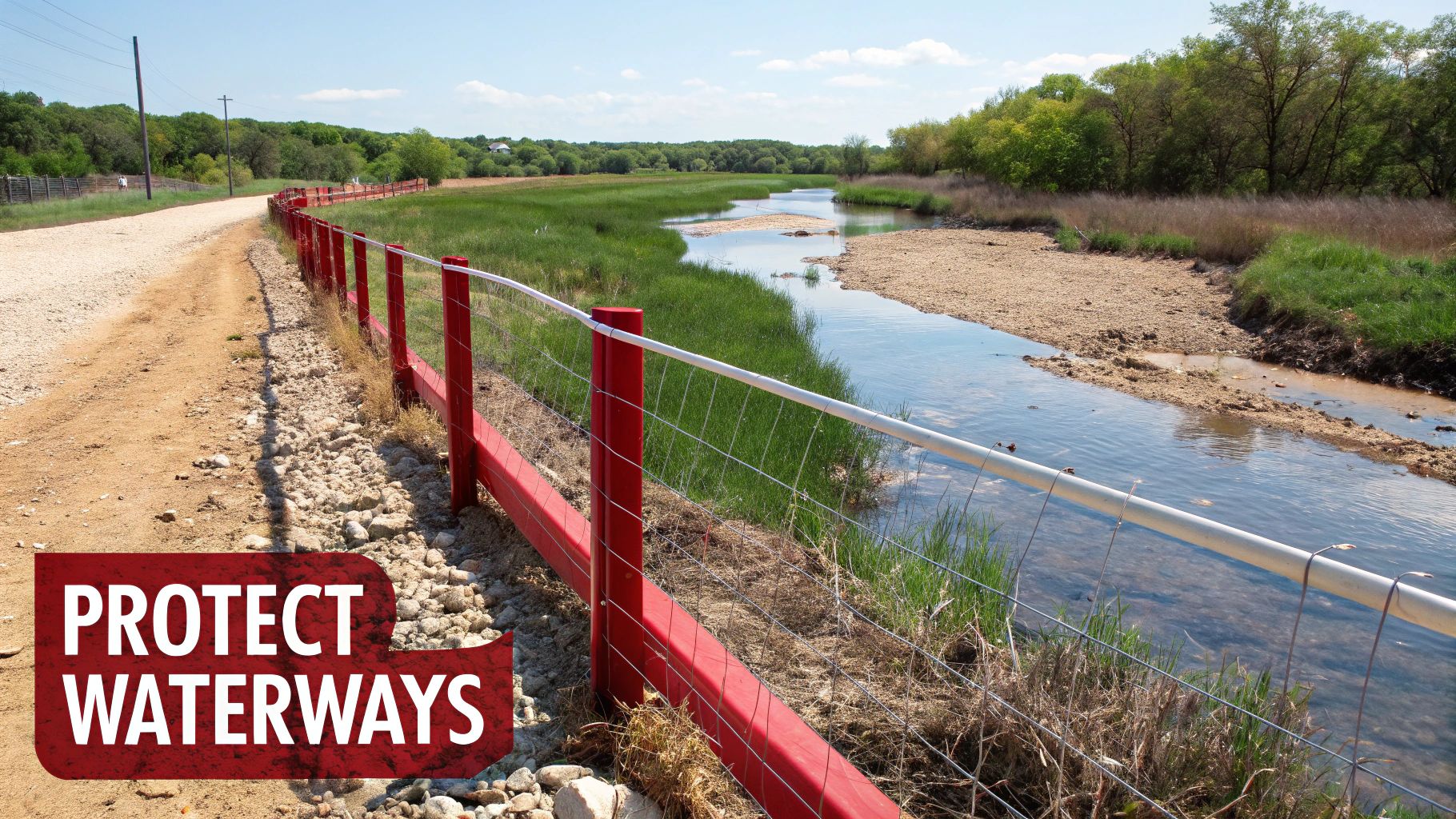
Managing livestock access to waterways is a key part of sustainable farming in Australia. Riparian zone fencing is a specialised approach designed to protect rivers, creeks, and dams by controlling where stock can drink. It involves creating a fenced-off buffer zone along the waterway to prevent bank erosion, reduce water contamination, and let native plants grow back.
This is an important practice right across the country, from protecting the Murray-Darling Basin to restoring creek banks on Victorian dairy farms. By creating controlled access points or providing alternative water troughs, you can keep your stock healthy while protecting your water sources.
Why Choose Riparian Zone Fencing?
The main benefit is environmental protection, which leads to long-term farm health. Healthy riparian zones act as natural filters, improving water quality for your stock and for people downstream. Fencing stops bank degradation, which can cause you to lose valuable land.
Many state government and local land services offer grants or financial help for farmers who install riparian fencing. This makes it a smart choice that improves your property value and demonstrates good land management. It's one of the most impactful rural fencing ideas Australia has for sustainable farming.
Key Implementation Tips
Successful riparian fencing requires careful planning.
- Talk to Local Authorities: Before you start, contact your local council or Catchment Management Authority. They can give you specific guidelines on how far the fence needs to be from the waterway.
- Build Hardened Crossings: If stock need to cross the waterway, create a designated crossing point using rock, concrete, or special fabric. This concentrates traffic to one durable area and prevents widespread erosion.
- Provide Other Water Sources: The best strategy is often to fence off the waterway completely and install water troughs. This gives stock clean, reliable water and removes their impact on the sensitive riparian zone.
- Look for Grants: Check for state and federal grants for waterway protection. These programs can help cover the cost of materials and installation.
- Plan for Recovery: Once the area is fenced off, plant native vegetation to stabilise the banks. This will help the area recover and thrive.
Making Your Final Fencing Decision
Choosing the right rural fence is one of the biggest long-term investments you'll make in your property. It’s more than just a boundary; it's a tool for managing your land, protecting your livestock, and making your operation more efficient. As we've seen, the range of rural fencing ideas Australia has can seem large, but the best solution comes from looking at your specific needs.
The main thing to remember is that there is no single "best" fence. The ideal choice is always a tailored one. A farmer in the NSW high country has different needs from a grazier on the flat plains of Western Queensland. One might need dingo-proof mesh, while the other needs strong cattle yards.
A Quick Checklist for Your Fencing Project
Before you buy a single post or roll of wire, think about these key points.
- Purpose First: What is the main job of this fence? Is it for an internal paddock, a secure boundary, predator protection, or stock handling? The function determines the design.
- Know Your Livestock: Match the fence to the animal. A single hot wire might be fine for cattle but useless against a flock of sheep, which might need netting or mesh.
- Consider Your Land: A rigid panel fence that’s great on flat ground will be a nightmare on rolling hills, where a more flexible post-and-wire system is better. Also, think about fire risk (steel vs. timber) and your soil type when choosing posts.
- Think Long-Term Cost: Look beyond the initial price. A cheaper fence might seem like a good deal, but if it needs constant repairs, it will cost you more in time, materials, and lost productivity. Investing in quality, like heavily galvanised wire and durable steel posts from a reputable supplier like Super Rack, pays off for years.
A well-planned fence is an asset that adds value through the security and efficiency it provides. By thinking through these points, you move from just putting up a fence to designing a smart land management system. You might use heavy-duty cattle panels for your yards, electric fencing for rotational grazing, and a strong mesh boundary fence for security. This integrated approach ensures every dollar you invest is working hard for you.
For a comprehensive range of durable and reliable rural fencing solutions designed for Australian conditions, trust the experts at Super Rack. From heavy-duty cattle panels and gates to versatile livestock equipment, we provide the high-quality components you need to build a fence that stands the test of time. Explore our fencing and livestock handling solutions at Super Rack and secure your property with confidence.