

A Practical Guide to Shelving Storage Units
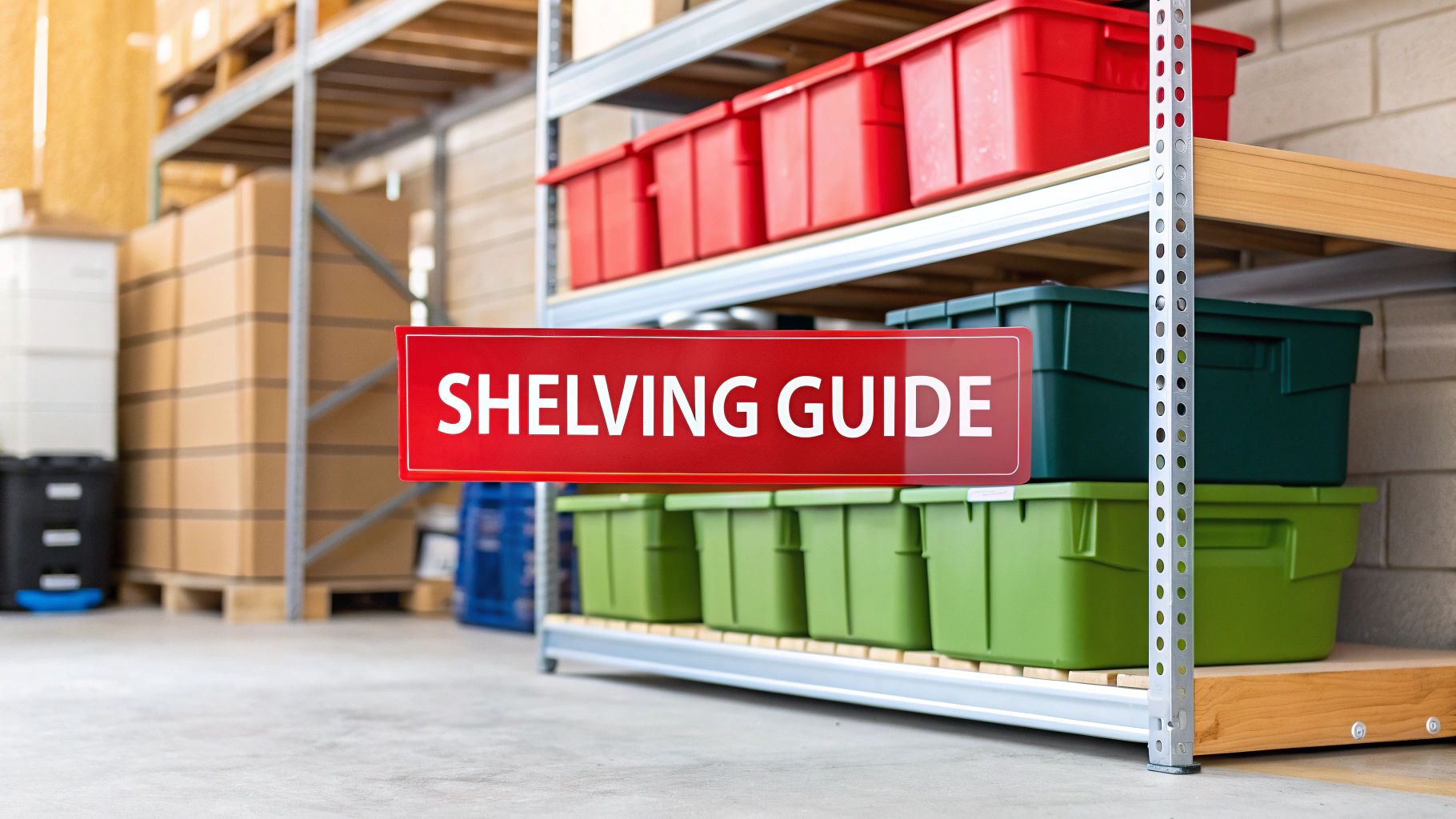
Sick of tripping over clutter in your garage, warehouse, or stockroom? Let's be honest, disorganisation is more than just an eyesore—it wastes time, creates stress, and can be a genuine safety hazard. High-quality shelving storage units are the single best way to reclaim your space and create an environment that's efficient, safe, and works for you, not against you.
This guide will walk you through everything you need to know to pick the perfect shelving. Whether you're a homeowner looking to finally sort out the shed or a business owner needing to get your stockroom under control, the right system can completely change the game.
Why Quality Shelving is a Smart Investment
Investing in proper shelving is about so much more than just being tidy. It's about creating a space that actually functions properly. For a business, that means faster order picking and smarter inventory control. For a homeowner, it means you can find that one tool you need without emptying three different boxes.
Think about the real-world benefits:
- Maximise Your Space: Shelving lets you go vertical. You can dramatically increase your storage capacity without needing a bigger footprint.
- Improve Safety: Getting things off the floor and onto sturdy shelves eliminates tripping hazards and stops things from toppling over, preventing injury and damage.
- Boost Efficiency: When everything has a proper home, you stop wasting time searching. It smooths out your workflow, whether that's in your workshop or the warehouse.
In a commercial setting, the stakes are even higher. For a deeper dive into the specific requirements for professional environments, this guide to commercial kitchen shelving is a great resource that highlights the key factors for any specialised space.
Here at Super Rack, we live and breathe this stuff. We're here to offer expert advice and top-quality products to get you sorted. With competitive pricing and fast, nationwide delivery, getting the right storage solution has never been easier.
Finding The Perfect Type of Shelving Unit
Choosing the right shelving storage units is never a one-size-fits-all job. The perfect system comes down to what you need to store, where you’re storing it, and how you plan on using the space. You wouldn't use a filing cabinet to store a lawnmower, right? The same logic applies here.
Let's break down the main types of shelving to find the perfect match for you. Each one is designed for a specific job, offering unique strengths that make it ideal for certain situations. From a packed suburban garage to a bustling commercial warehouse, the right choice makes a world of difference.
This decision tree can help you quickly figure out which shelving category is right for your needs, whether you're sorting out your home or business.
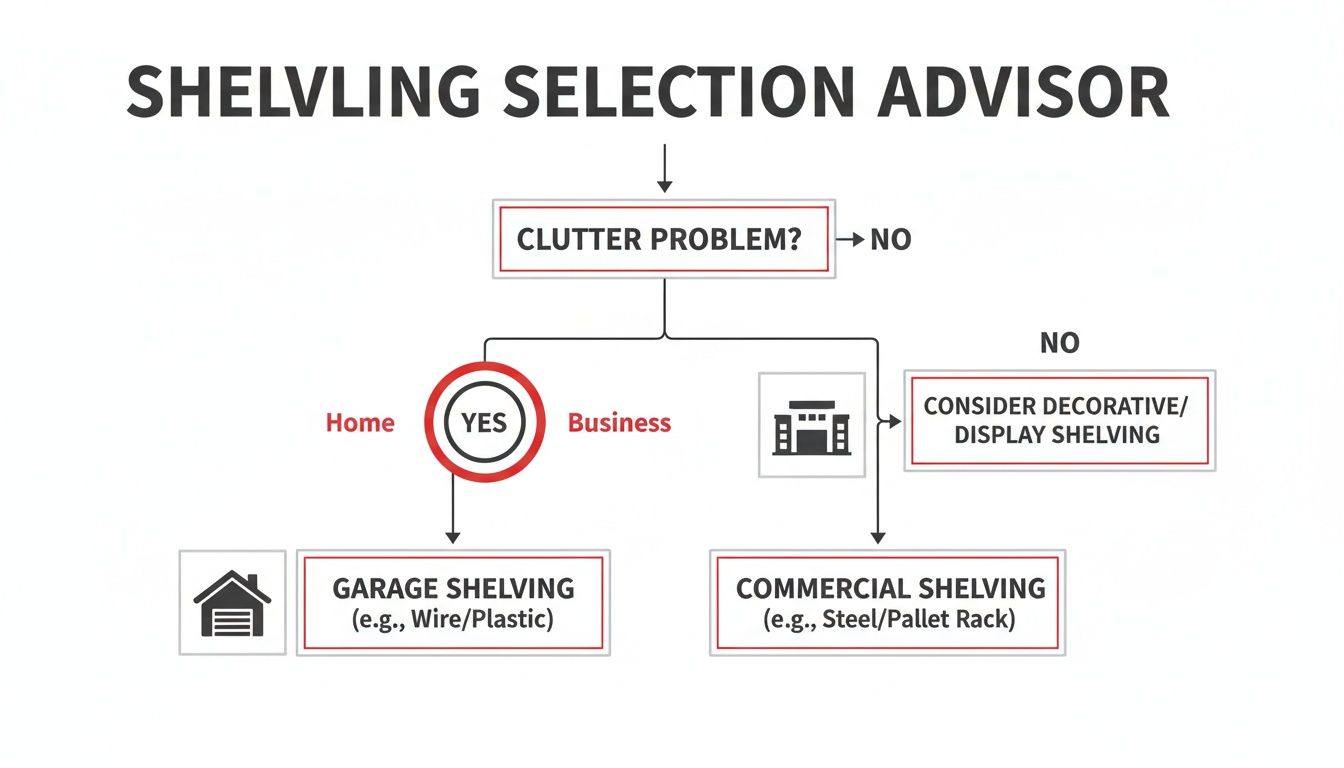
The flowchart simplifies things by asking a few key questions about your space and what you're storing, pointing you towards a practical recommendation.
For Homes and Garages
For most homes, garage shelving is the versatile workhorse you're looking for. It’s built to be sturdy, a breeze to assemble, and perfect for things you can load by hand. This is your go-to solution for finally clearing that floor clutter and organising everything from toolboxes and paint tins to sporting gear and Christmas decorations.
Think of it as the ultimate utility player for your home. It’s strong enough for heavy items but flexible enough to adapt to whatever you throw at it. Its whole purpose is to make your space functional and accessible again.
For example, a family could use a few bays of shelving to get camping gear off the floor, create a dedicated spot for sports equipment, and safely store gardening chemicals out of reach of kids and pets.
For Warehouses and Bulk Storage
When you step into the world of commercial logistics, you need a heavy-hitter. Pallet racking is the structural backbone of any modern warehouse or distribution centre. It's engineered specifically to store entire pallets of goods, which are loaded and unloaded using forklifts.
It’s an essential system for any business dealing with bulk inventory, allowing for high-density storage that makes the most of your vertical space. At Super Rack, our systems are built with superior quality materials to ensure they meet strict Australian safety standards, giving you total peace of mind.
For Long and Awkward Items
What about those things that just won't fit on a standard shelf? For items like timber, steel pipes, PVC conduit, or rolls of carpet, cantilever racking is the specialist you need. This system features long, unobstructed arms extending from a central column, creating the perfect storage for long, bulky, or oddly shaped materials.
A builder, for example, could use cantilever racking to keep different lengths of timber organised and safely off the ground, preventing damage and making it easy to grab exactly the right piece for the job.
For All-Round Commercial Use
From farm sheds and retail stockrooms to light industrial workshops, industrial shelving offers a tough and adaptable solution. It's a step up in strength from standard garage shelving but more versatile than pallet racking for items you'll be loading by hand.
Many businesses use this type of shelving for organising parts, managing inventory, or storing equipment. A small e-commerce startup, for instance, could use our longspan shelving to neatly organise its products, making order picking and packing much faster. Similarly, retail businesses often use systems like our versatile gondola shelving to create organised and attractive product displays. With fast delivery and expert advice available nationwide, we help businesses get set up quickly and efficiently.
Understanding Materials and Load Capacity
Choosing the right materials for your shelving storage units is a critical decision. It directly impacts their strength, how long they'll last, and whether they're actually right for the job. You're trying to find that sweet spot between brute strength, practical use, and your budget. Get it right, and your storage won't just be tidy—it'll be safe and reliable for years to come.
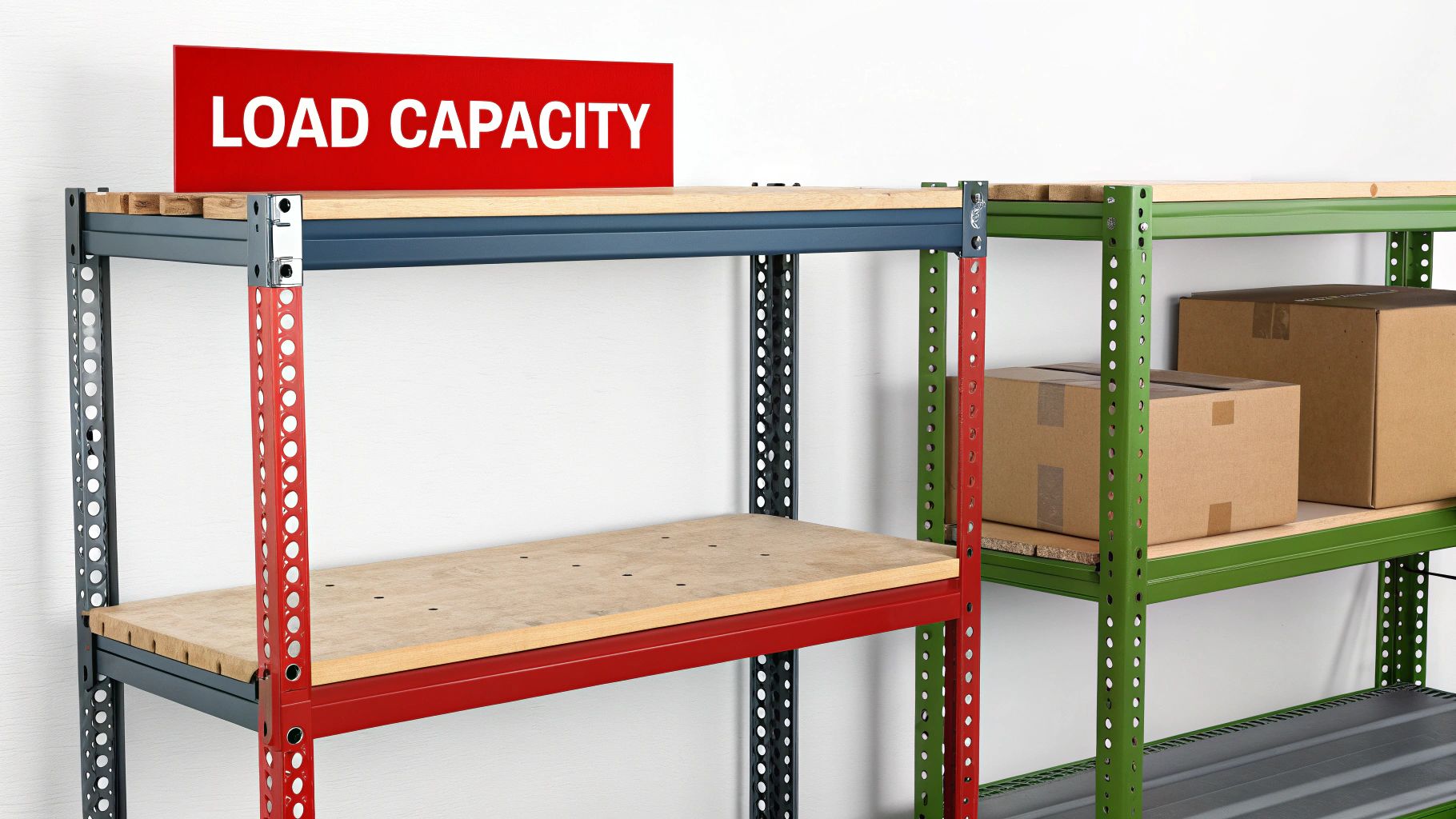
Think of it like picking tyres for a car. You wouldn't put standard road tyres on a heavy-duty truck heading for a mine site. In the same way, your shelving material has to match the weight and type of items you plan to store.
Common Shelving Materials and Their Best Uses
Steel Shelving: When it comes to pure strength and durability, steel is the undisputed king. It’s the go-to material for almost every industrial, warehouse, and heavy-duty garage setup. High-quality steel shelving, like the systems we supply at Super Rack, is properly engineered to handle serious weight without buckling or warping.
Imagine steel shelving as the foundation of a house—it's built to bear a massive load and last for decades. This makes it perfect for storing heavy toolboxes, machine parts, or bulk inventory.
Wire Shelving: For certain jobs, wire shelving offers a brilliant mix of strength and practicality. While it isn't as beastly as solid steel, its open-grid design provides fantastic ventilation and visibility. This is why it’s so popular in commercial kitchens, pantries, and medical supply rooms where air circulation is a big deal.
It’s a bit like a security screen door; it's strong and secure, but you get airflow and can see what’s on the other side. That's a huge plus when you need to quickly spot your stock or stop moisture from building up.
Demystifying Load Capacity and UDL
Every single shelf has a maximum weight it can safely hold. We call this its load capacity, and it’s usually specified as a Uniformly Distributed Load (UDL). Don't worry, understanding UDL is much simpler than it sounds, and it’s absolutely critical for safety.
A Uniformly Distributed Load (UDL) means the total weight is spread evenly across the entire shelf surface. Piling everything in one spot creates a concentrated load, which puts immense stress on that single point and dramatically lowers the shelf's real capacity.
Here’s a simple way to think about it: imagine carrying your weekly groceries. If you distribute the weight evenly between two bags, one in each hand, it’s easy enough. But try to carry it all in one hand, and you’ll struggle. The exact same principle applies to your shelving. Spreading the load is everything.
For really big operations where you need maximum load efficiency, you need to understand systems like our specialised pallet racking.
How to Estimate Your Weight Needs
Before you buy anything, take a minute to work out how much weight your shelves actually need to handle. Trust us, it’s always safer to overestimate than to underestimate.
Just follow these simple steps:
- List Your Items: Jot down the heaviest things you plan to put on a single shelf. In a garage, that might be toolboxes, bags of potting mix, and spare car parts. For a business, it could be boxes of paper or product inventory.
- Estimate the Total Weight: Add up the approximate weights of those items to get a total for one shelf. If you’re not sure, always round up.
- Add a Safety Buffer: A good rule of thumb is to add an extra 25% to your total estimate. This safety margin covers you for any future items or miscalculations, making sure your system is never pushed to its limit.
By running through this quick process, you can confidently choose shelving storage units that don't just meet your needs today but also comply with Australian safety standards for a secure and dependable solution. And if you're ever in doubt, our experts at Super Rack are always ready to help you find a system with the perfect capacity.
How To Plan Your Layout for Efficiency and Safety
Choosing the right shelving storage units is a great first step, but how you arrange them is what makes all the difference. A smart layout is the secret to unlocking the true potential of your space, turning a cluttered area into a smooth, efficient, and safe operation.
A well-planned layout can transform a chaotic storeroom into a high-functioning asset.
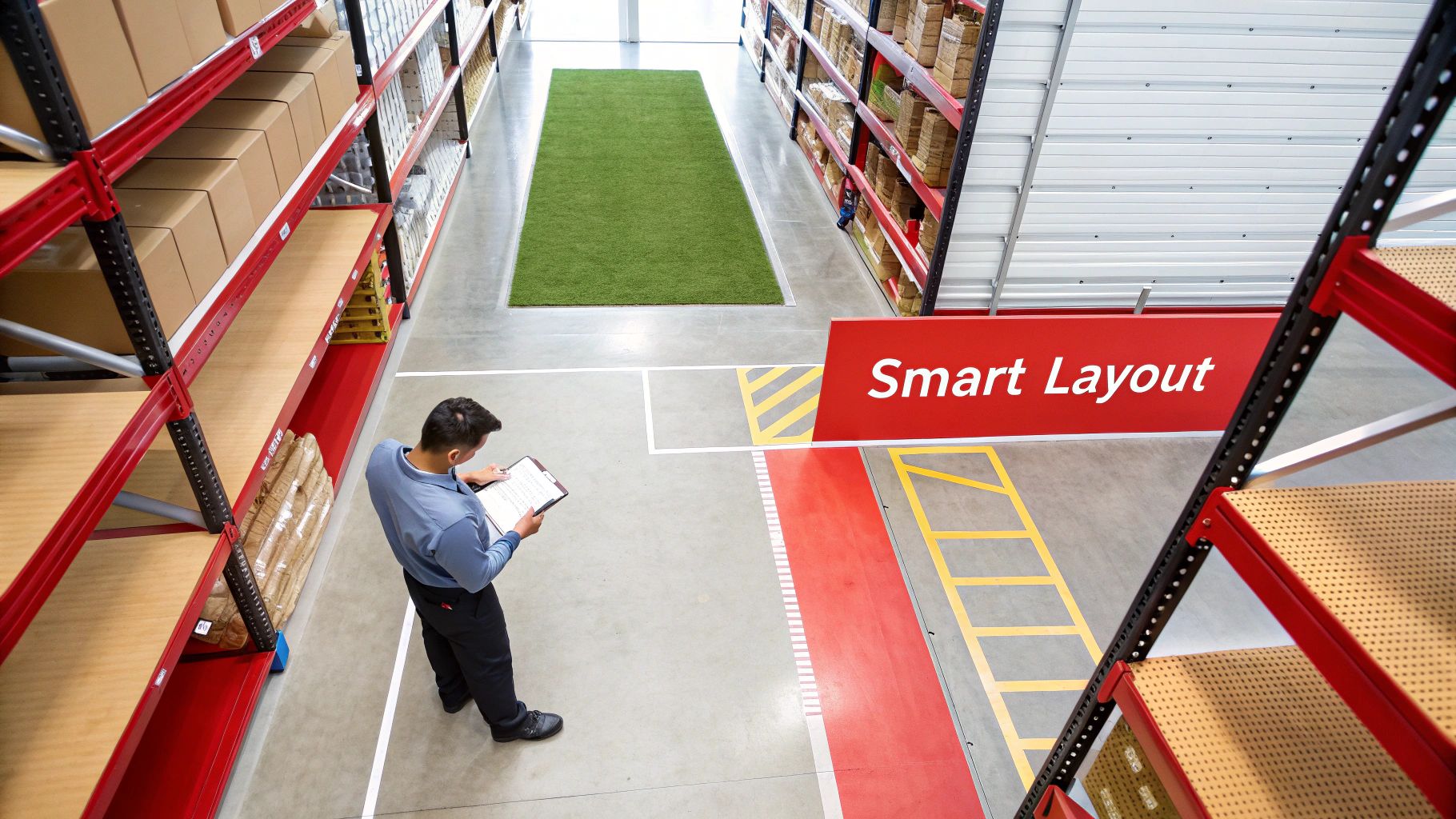
Whether you're fitting out a double garage or a full-scale warehouse, the core principles stay the same. It all starts with really understanding your space and how you need to move around in it.
Measure Twice, Cut Once
Before you even think about adding shelves to your cart, grab a tape measure. Get the exact dimensions of your area, because the small details you miss now can derail the entire project later. It’s an old saying for a reason.
Make sure you map out any and all obstacles. We’re talking about things like:
- Power points and light switches you’ll need to get to.
- Doors and windows, including the space they need to open fully.
- Support pillars or columns that you have to work around.
- Uneven floors or slopes that could affect the stability of your units.
Getting this right from the start saves you the massive headache of realising your brand-new shelving blocks a crucial doorway or covers the only power outlet in the room.
Designing Safe and Functional Aisles
Once you know your usable space, it’s time to think about aisles. Aisle width is probably one of the most critical factors for both safety and efficiency, and it's no place to cut corners just to squeeze in an extra shelf.
Aisle space is not wasted space; it’s active space. It’s what allows people and equipment to move freely, safely, and efficiently, preventing accidents and bottlenecks.
In a home garage, you need enough room to open your car doors without hitting a shelf. In a business stockroom, you need enough width for two people to pass by each other. For a warehouse, your aisles must be wide enough for a forklift to turn and manoeuvre safely—that’s non-negotiable.
The Power of Thinking Vertically
One of the biggest mistakes we see is people only thinking about floor space. Your vertical space is a huge, often untapped, resource. Going tall with your shelving storage units lets you multiply your storage capacity without eating up another square metre of floor.
This is a game-changer in smaller spaces where every bit of room counts. Instead of spreading outwards and cluttering up the floor, build upwards. It keeps your pathways clear and makes the whole area feel more open and organised.
For businesses looking to seriously scale up their storage, thinking vertically can lead to even bigger solutions. For instance, integrating a mezzanine floor with your shelving can literally double your usable space without the huge expense and hassle of moving to a bigger building.
Practical Layout Scenarios
Let's put these ideas into practice with a couple of common examples:
- The Home Garage Workshop: A homeowner could run tall, heavy-duty shelving along one wall to keep tools, camping gear, and seasonal items neatly stored. They’d plan the layout to leave plenty of room for the car, a workbench, and clear access to the garage door.
- The Small Business Storeroom: An e-commerce business might set up parallel rows of shelves to create a logical "pick-and-pack" workflow. They’d put the fastest-selling products on shelves at waist height, right near the packing station, to cut down on walking time and speed up every order.
By taking the time to plan your layout properly, you ensure your new shelving storage units from Super Rack don't just hold your stuff—they actively make your space work better for you. Our team is always on hand to help you choose the best units for your plan, with fast, nationwide delivery to get your project moving.
Installation and Maintenance for Long-Term Use
Your new shelving storage units are a serious investment in getting your space organised and safe. To make sure they last for years, a solid setup and a bit of ongoing care are non-negotiable. Think of it like servicing your car—a little preventative maintenance goes a long way.
Getting the installation right from the very start is the single most important thing you can do. A secure setup doesn't just protect your gear; it prevents accidents and keeps your workshop or garage safe for everyone.
The Essentials of a Safe Installation
A safe installation really boils down to a few key principles. While we design many of our Super Rack units for straightforward DIY assembly, you can't cut corners on the fundamentals if you want a stable, secure result.
First up, always build on a solid, level surface. An uneven floor can throw the whole unit out of whack, causing it to lean or become unstable over time.
Next, anchoring is everything. For taller shelving storage units or any rack holding heavy items, you absolutely must anchor it securely to a wall or the floor. This simple step is your best defence against tipping, one of the biggest safety risks with any freestanding shelving.
Finally, if your system has adjustable shelves, double-check that every safety pin or clip is pushed in properly and locked tight. These little parts are what take the full weight, so making sure they're secure is critical to stop a shelf from giving way.
A Simple Maintenance Checklist
Once your shelving is up and running, a quick look-over every few months will keep it in top shape. It only takes a few minutes but can catch small issues before they turn into major headaches.
- Regular Visual Checks: Once a month, just walk around your units. Keep an eye out for any signs of stress like bending beams, dings from a forklift bump, or any rust starting to form.
- Check All Connections: Give the bolts and fasteners a quick check to make sure nothing's worked itself loose. This is extra important in places with a lot of vibration, like a workshop.
- Respect The Load Limits: Every so often, take a look at what you’re storing. Are you still well within the Uniformly Distributed Load (UDL) capacity? Shuffling items around can lead to accidentally overloading a single shelf.
Your shelving's load capacity is a hard limit, not a suggestion. Consistently exceeding it compromises the unit's safety and will drastically shorten its lifespan, putting both your gear and your people at risk.
At Super Rack, we build our products tough, using high-quality materials designed for Aussie conditions. By following these simple installation and maintenance tips, you're making sure your shelving gives you safe, reliable storage for years. If you ever have a question about setting up or looking after your units, our team is always here to give you practical, expert advice.
Real-World Examples in Different Industries
The true value of high-quality shelving storage units really comes to life when you see them solving everyday problems across different Australian sectors. From a small suburban business to a massive rural operation, the right storage system is a key ingredient for success.
Let's look at how these solutions actually work in the real world. You’ll quickly see that smart storage isn’t just about being tidy—it’s a direct investment in productivity, safety, and efficiency, no matter what industry you're in.
The E-commerce Startup
Imagine a small e-commerce business running out of a garage. In the beginning, inventory is just piled up in boxes, making it a slow and frustrating process to find products when an order comes through. This kind of disorganisation leads to packing delays and, even worse, risks sending out the wrong items.
By installing a few bays of our versatile longspan shelving, the owner can transform that chaotic space into a streamlined mini-warehouse. Suddenly, each product has a designated spot, clearly labelled and easy to grab. This simple change dramatically cuts down picking and packing times, reduces errors, and makes stocktakes a breeze. For businesses looking to take the next step, applying effective inventory management strategies becomes much simpler.
The Commercial Warehouse
Now, picture a large distribution centre. This facility is the heart of a national logistics chain, responsible for moving huge volumes of goods every single day. Here, our heavy-duty pallet racking becomes the backbone of the entire operation.
Engineered for forklift access, the racking allows for the safe and efficient storage of thousands of pallets. This maximises vertical space, keeps the warehouse floor clear for machinery, and ensures that inventory can be located and moved with absolute precision. It's a system built for high-volume, high-stakes environments where every minute counts.
The Family Farm
Think about a typical farm in regional Australia. The workshop shed is often home to a wide mix of items, from heavy tools and spare machinery parts to bags of seed and containers of chemicals. Without proper organisation, these valuable assets are at risk of damage from moisture or just being run over.
Robust industrial shelving provides a tough, reliable solution. It gets everything off the damp concrete floor, creating a designated home for each item. Tools are protected, spare parts are easy to find during a critical repair, and hazardous materials can be stored safely. It’s all about protecting your assets and making the farm run that much smoother.
At Super Rack, we see these scenarios play out every day. Our advantage lies in providing superior quality products at competitive prices, backed by fast, nationwide delivery. Whether you're a small startup or a large enterprise, our expert team is here to help you find the perfect shelving storage units to boost your efficiency. Reach out today to discuss your storage needs.
Frequently Asked Questions About Shelving
To make sure you're feeling 100% confident about your choice, we've rounded up a few of the most common questions we hear from customers. Here are some straight-to-the-point answers to clear up any lingering questions.
How do I know what weight capacity I need?
Figuring this out is easier than you think. Start by making a quick list of the heaviest things you plan to put on a single shelf. Tally up their estimated weights to get a baseline number.
Now for the important part: always add a 25% buffer on top of your total. This simple step gives you a safe minimum weight capacity to aim for and makes sure your shelves are never dangerously overloaded.
Can I assemble Super Rack shelving myself?
Absolutely. Most of our shelving, including our hugely popular longspan shelving, is designed for simple, DIY assembly. If you can handle a few basic tools, you'll have it sorted in no time.
For the big stuff, like pallet racking, we strongly recommend bringing in the pros. Professional installation is non-negotiable for guaranteeing safety and ensuring the whole system is compliant with Australian workplace standards.
What is the difference between pallet racking and longspan shelving?
The easiest way to get your head around this is to think about scale and how you'll be loading your items.
Longspan shelving is your go-to for anything you can load by hand. We’re talking archive boxes, tools, spare parts, or retail stock. It’s incredibly versatile and perfect for getting quick access to your gear in garages, workshops, and storerooms.
Pallet racking is in another league entirely. It's a heavy-duty system built to hold fully loaded pallets, designed to be accessed with a forklift. This is the structural backbone of a proper warehouse or large-scale logistics hub.
Choosing the right system is all about efficiency. Longspan is for fast, manual access. Pallet racking is for high-density, machine-handled bulk storage. Matching the system to the job is the secret to a well-run space.
At Super Rack, we’re all about delivering top-quality shelving at great prices, backed by fast, nationwide delivery. Our expert team is always on hand to offer practical advice and help you find the perfect storage setup for your space. Explore our range and get organised today at https://www.superrack.com.au.