Think of a multi-level car park, but instead of cars, it’s packed with pallets. That’s the easiest way to get your head around drive-in pallet racking. It’s a seriously high-density storage solution that lets you cram in huge quantities of the same product by getting rid of most of the aisles in your warehouse. The result? A massive boost in storage capacity without needing a bigger building.
Unlike standard racking with aisles between every row, drive-in pallet racking creates deep, continuous storage lanes. A forklift operator literally drives right into a storage lane to place a pallet, starting at the very back and filling the lane towards the front. It’s a system built purely for maximum space efficiency, making it perfect for businesses that move bulk quantities of just a few different products.
At its core, this system runs on a Last-In, First-Out (LIFO) principle. When you need to retrieve stock, the forklift goes back into the same lane and pulls out the last pallet that was put in. Because of this, drive-in racking is a fantastic match for non-perishable goods or any product with a long shelf life where the picking order isn’t critical.
The structure itself is surprisingly simple but incredibly robust. It’s made up of upright frames that form the lanes, with guide rails running along each side to hold the pallets. This clever design does away with the need for traditional horizontal beams, giving the forklift the freedom to move inside the structure. What you get is a solid, dense block of storage that can completely change your warehouse’s potential.
For example, a beverage company can store thousands of identical pallets of soft drinks by stacking them five or six deep in a single lane—something that would be impossible with regular racking. This simple infographic below shows how it all comes together.
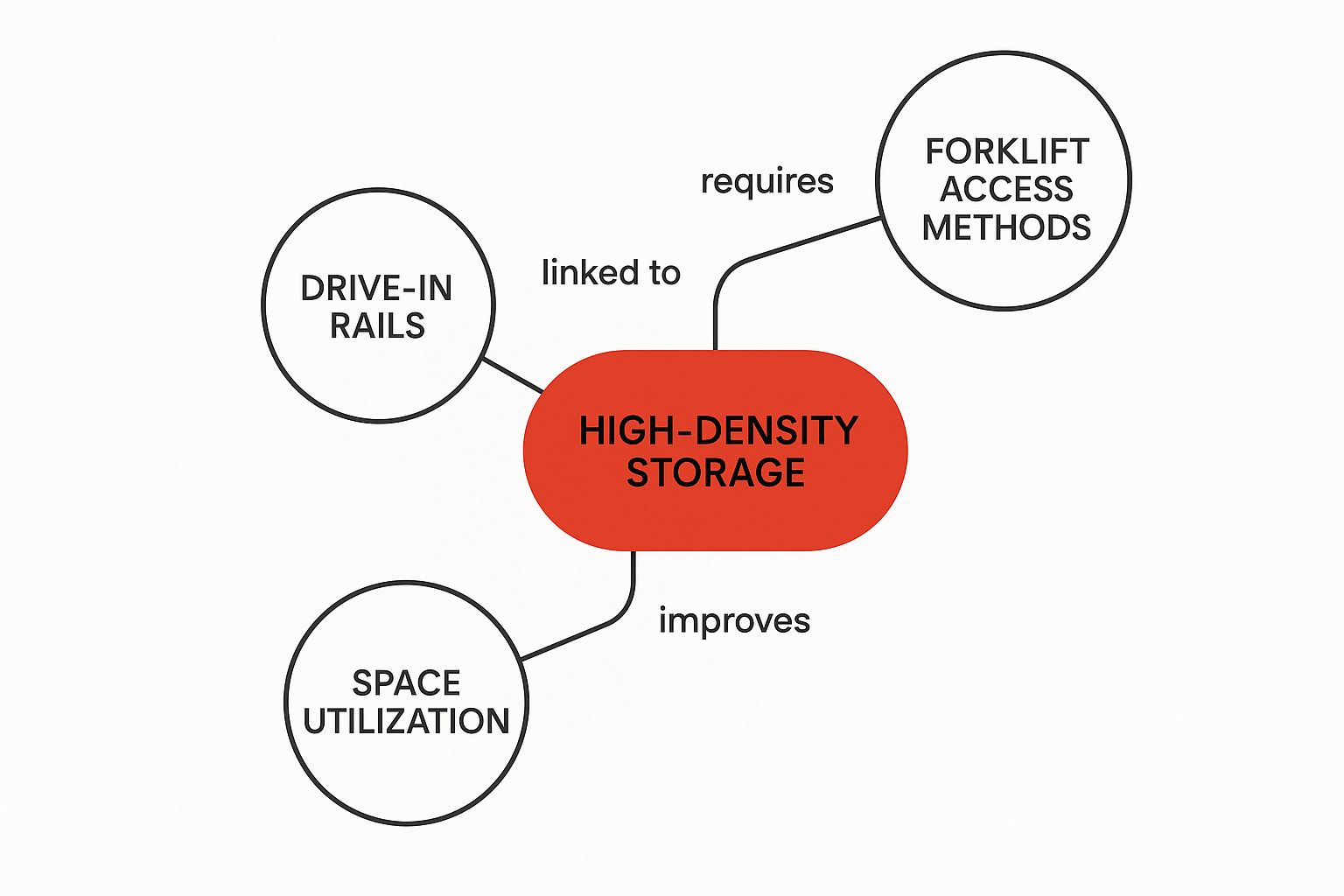
As you can see, achieving this level of density is all about using specialised guide rails and a unique forklift access method to make the most of every last inch of space.
By cutting down aisle space to only the essential forklift entry points, businesses can see storage density jump by up to 75% compared to conventional selective racking systems.
Here at Super Rack, our experts can help design a drive-in system that’s tailored to your products and workflow, making sure you get the absolute most out of every square metre. To see how this compares with other high-density options, feel free to explore our guide to pallet and warehouse racking solutions. For warehouses where space is at a premium, this approach is a genuine game-changer.
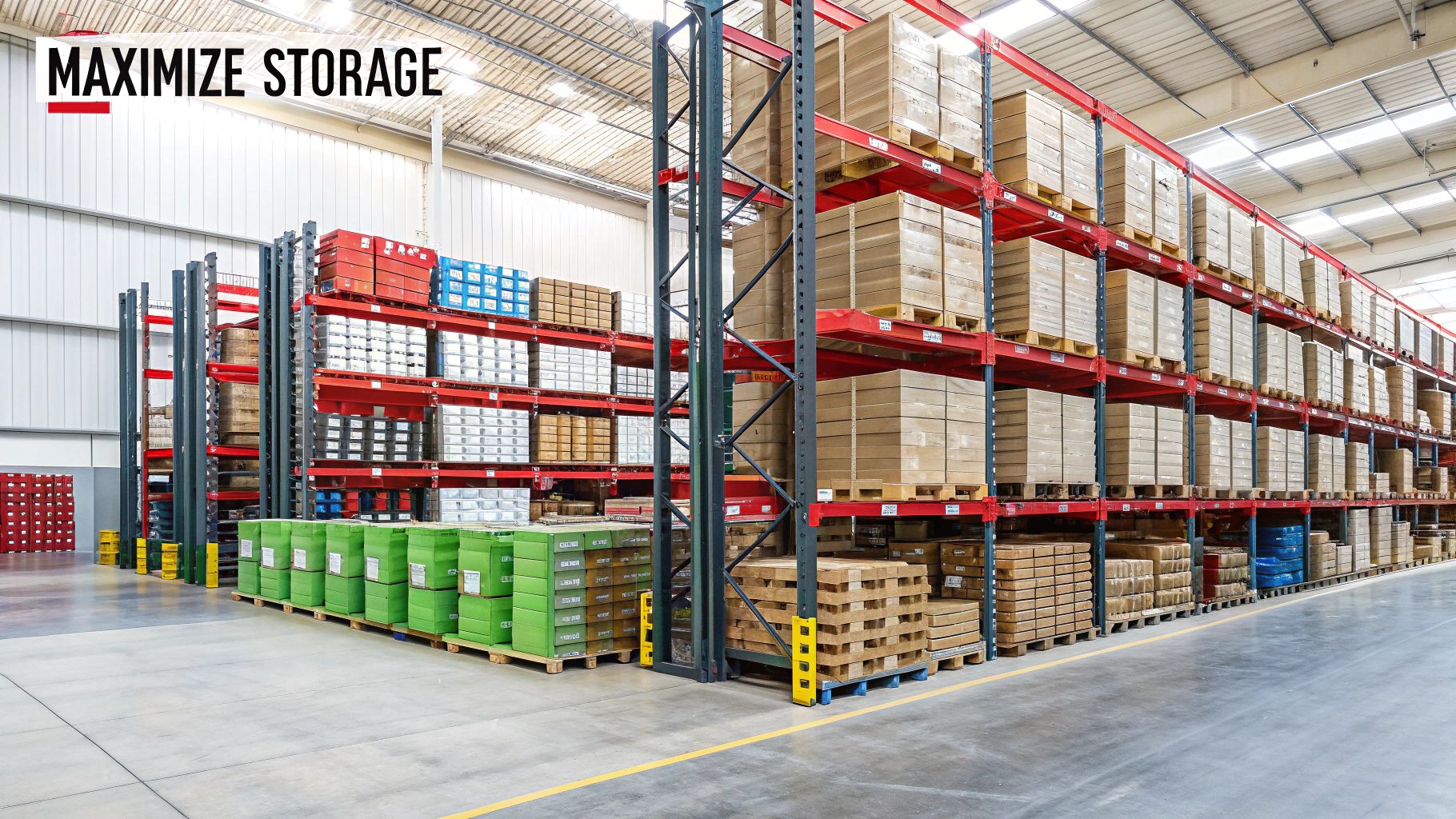
When you make the switch to a drive-in pallet racking system, the biggest win is the immediate and massive jump in storage capacity. By getting rid of most of the access aisles that conventional racking needs, you suddenly unlock a huge amount of usable floor space. It’s a simple equation: same warehouse footprint, way more product.
This leap in density has a direct impact on your costs. For any business paying high rent or facing steep land prices—which is pretty much standard across Australia—squeezing value out of every square metre is non-negotiable. Instead of hunting for a bigger, pricier facility, you can simply fit more into the space you already own or lease. That’s a serious reduction in overheads that goes straight to the bottom line.
It’s not just about cramming more in. Drive-in racking brings a new level of order to your warehouse, especially if you’re handling large volumes of the same few products. You can dedicate each deep lane to a single product code (SKU), creating a brilliantly simple system for managing bulk goods. It’s a game-changer for industries like cold storage or beverage distribution where efficiency is everything.
But the real test of any storage system is how it performs over the long haul. The initial setup cost is only one part of the story.
A well-designed racking system isn’t just an expense; it’s a long-term asset. Investing in superior quality ensures it withstands the daily demands of a busy warehouse, providing safety and reliability for years to come.
This is where the quality of the steel really counts. At Super Rack, we use only high-grade steel in all our systems. This commitment means our drive-in pallet racking isn’t just tough and safe, but it also delivers a much stronger return on your investment over time. Cheaper alternatives might look good on the initial invoice, but they often lead to expensive repairs and early replacement down the track.
Ultimately, the payoff from high-density storage is felt right across your business. A properly implemented drive-in system creates real-world results that are far more valuable than just having extra pallet positions.
It’s clear that a high-quality drive-in pallet racking solution is more than just shelving—it’s a strategic move for any growing business. As a trusted supplier like Super Rack, with nationwide service and the right advice, we can help you unlock the true potential of your warehouse.
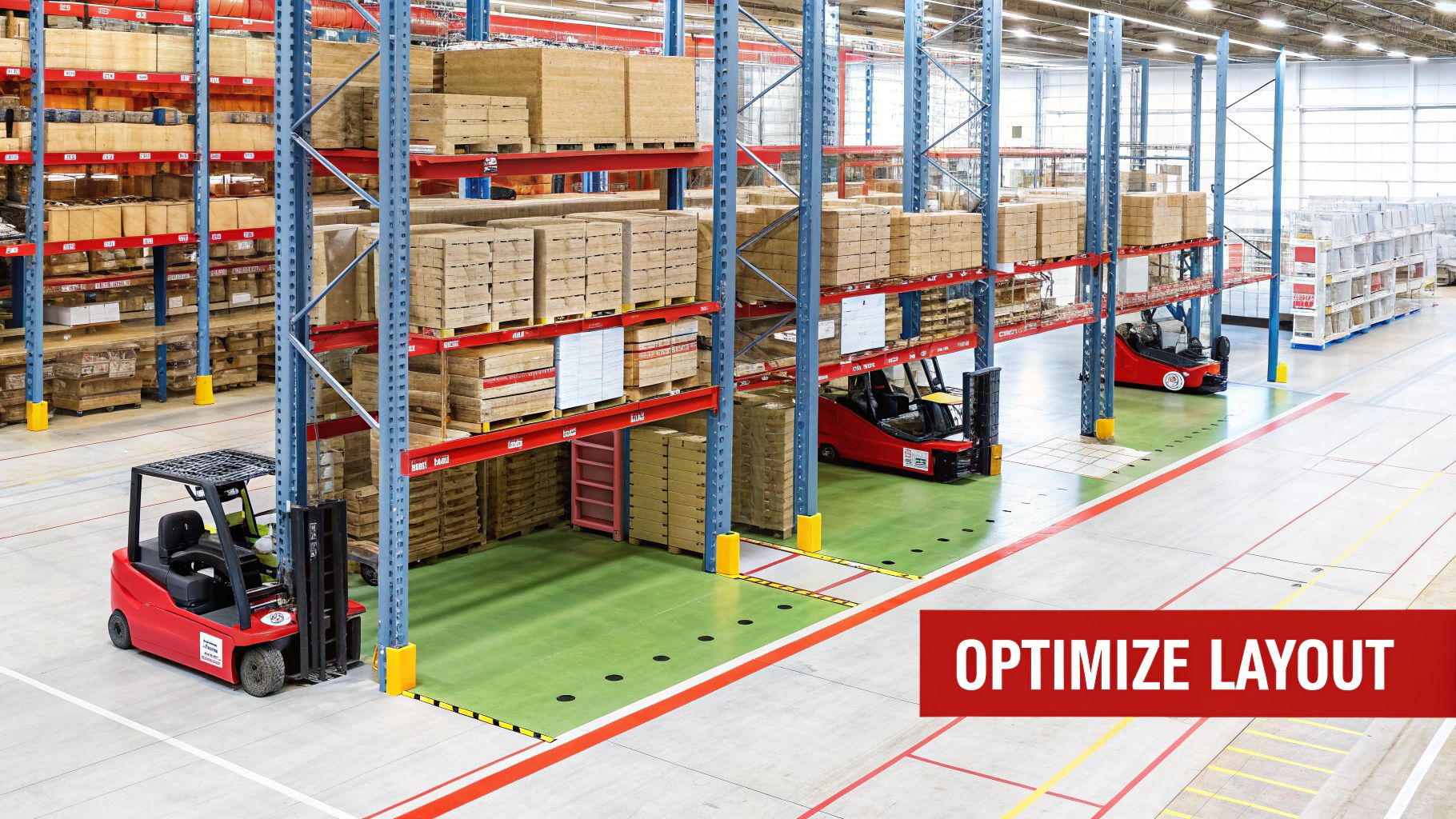
Putting together a drive-in pallet racking system is much more than just filling an empty space. Think of it as building a high-performance storage engine, tuned specifically for your operation. A smart layout is everything—it’s the difference between a good investment and a great one. The first step is always a hard look at your inventory and how it moves.
Before you go all-in, you need to be dead certain this high-density approach is right for you. Ask yourself a few critical questions: Are you storing huge quantities of only a few product lines? Are the goods non-perishable with a decent shelf life? If your stock is uniform and you don’t need strict first-in, first-out access, drive-in racking is likely a perfect fit.
Once you’ve confirmed it’s the right system for your stock, it’s time to get down to brass tacks: the physical dimensions of your warehouse and your equipment. This is where precision is non-negotiable for both safety and smooth operation.
Your forklift is a massive piece of the puzzle. The specific model you use directly sets the aisle width and the entire layout of the racking lanes. Australian drive-in racking is designed with this in mind, with typical aisle widths falling between 2.8 to 5.5 metres, depending on whether you’re using reach trucks or standard counterbalanced forklifts. Knowing this upfront helps you squeeze out every last bit of storage space without compromising safety.
Next, look up. Your building’s clear height—the measurement from the floor to the lowest hanging obstruction like a sprinkler head or beam—will tell you how many pallet levels you can safely stack. Making the most of this vertical space is the key to unlocking the incredible storage density that drive-in racking is famous for.
While you can sketch out a basic plan, designing a drive-in system involves some pretty complex calculations around load capacity, structural integrity, and meeting Australian safety standards. This is where getting a professional involved pays off big time.
A DIY approach might look like it’s saving you money at first, but a poorly designed system can create operational headaches, damaged stock, and serious safety risks down the track. Expert advice ensures your racking is not just efficient, but 100% safe and compliant.
Bringing in experts from the beginning saves you time, money, and a lot of potential trouble. Here at Super Rack, our team provides nationwide service, offering the practical advice you need to get it right the first time. We’ll help you map out a custom design that works with your specific products, forklifts, and warehouse layout.
A well-thought-out plan, followed by a professional setup, is how you unlock the true potential of your warehouse. To make sure your system is built correctly from day one, it’s worth checking out the best practices for safe and compliant pallet racking installation. Partnering with a trusted supplier means you can be confident your new system will deliver from the get-go.
While the incredible storage density of drive-in pallet racking is its biggest selling point, its Last-In, First-Out (LIFO) operation creates a unique puzzle. This operational quirk is often called the ‘honeycombing’ effect, and it’s something you need to manage to get the most out of your system.
So, what is honeycombing? It’s what happens when you end up with empty pallet spaces trapped deep inside a storage lane. Because you can only get to the pallet at the very front, those empty slots become dead space until the whole lane is cleared out. This can seriously eat into your actual occupancy rate, meaning you’re not using your expensive warehouse space as well as you think.
The good news is that with a bit of smart planning, you can easily work around this. The best strategy by far is to dedicate entire lanes to a single, high-volume SKU (product code) that you know turns over at a steady, predictable rate.
Take a food manufacturer, for instance. They could dedicate several deep lanes just for their top-selling pasta sauce. By filling and emptying these lanes in complete cycles, they make sure no empty spaces get trapped, keeping the warehouse floor running like clockwork. It’s a simple approach that ensures you actually get the high-density benefits you paid for.
Another practical tip is to be disciplined with your stock levels. Try to avoid topping up a partially full lane with new stock. Instead, wait until the existing stock is completely gone. This simple rule stops older products from getting stuck at the back where they can’t be reached.
Many of Australia’s smartest warehouses have figured out that putting all your eggs in one basket isn’t the best approach. They create powerful hybrid systems, blending the strengths of different racking types to perfectly match their inventory.
Combining drive-in racking for bulk, slow-moving goods with selective racking for faster-moving items creates a balanced system that maximises both storage density and operational flexibility. This hybrid approach is a hallmark of a truly efficient warehouse.
This kind of balanced setup lets you pack away large, uniform batches of product in your dense drive-in system, while your high-turnover items stay in easy-to-reach selective racks. It really is the best of both worlds, giving you a layout that’s both space-savvy and agile.
Managing occupancy is a big deal. In Australia, a warehouse storing 1,000 pallets in a drive-in system might only hit a 70% true occupancy rate because of these operational quirks. That means they actually need space for over 1,400 pallets to meet their storage goals. By mixing racking types, many facilities can push their overall utilisation up to between 85% and 90%, slashing the amount of wasted space. You can learn more about how Australian warehouses are optimising drive-in racking suitability.
At Super Rack, our experts have the hands-on experience to help you design a system that fits your unique product mix. With our top-quality racking and nationwide service, we can help you build a solution that truly optimises every square metre of your space and workflow.
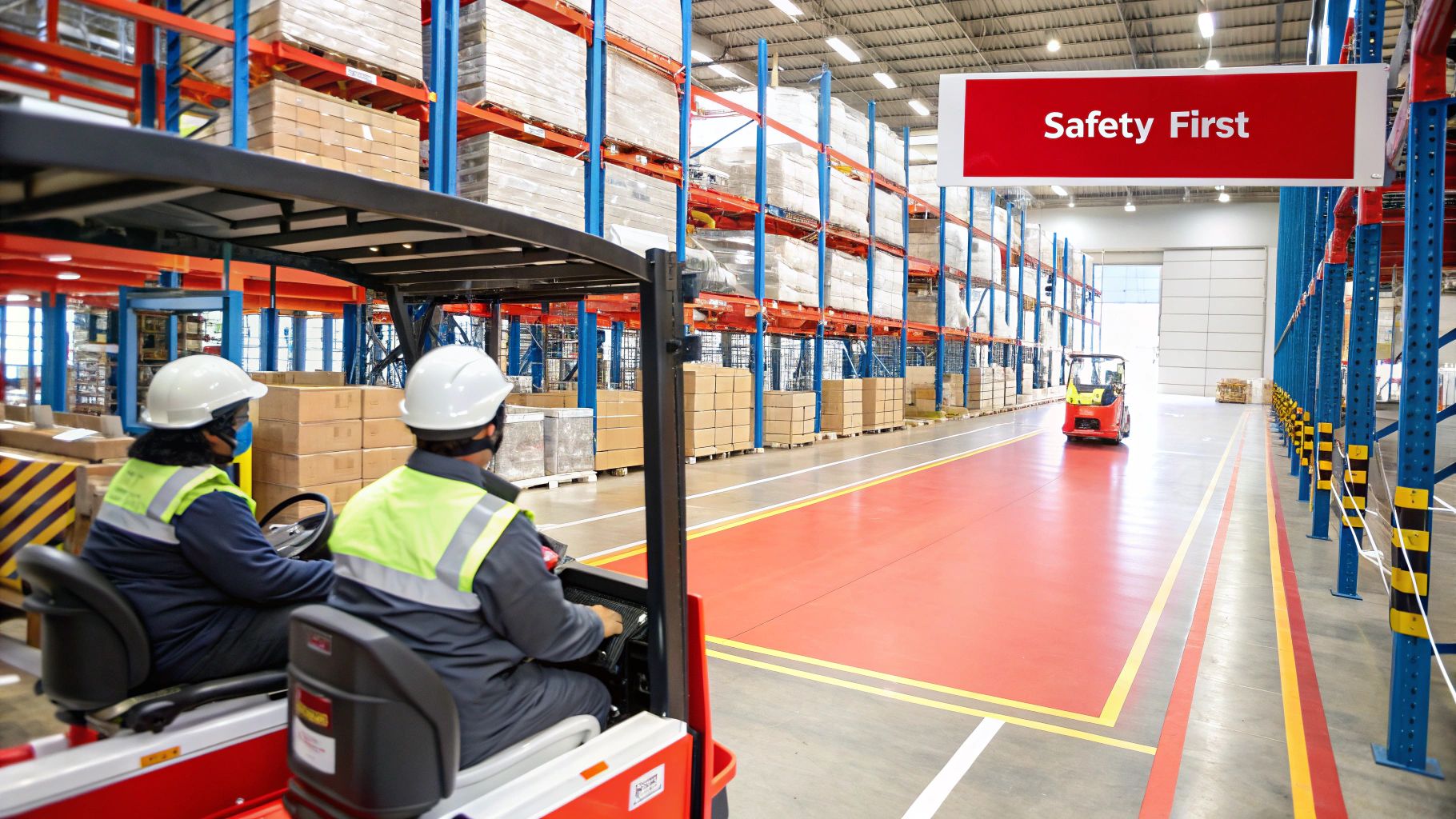
Safety is non-negotiable in any warehouse, and with drive-in pallet racking, the stakes are even higher. Because your forklifts are driving inside the racking itself, the chance of accidental bumps and scrapes goes way up. Even a small knock can compromise an upright, creating serious risks down the line.
The best way to keep your drive-in system safe is to get on the front foot. This is all about creating a safer environment for your team and protecting your racking from the daily grind. It’s a proactive mindset that dramatically cuts the risk of expensive damage or, worse, a serious accident.
One of the simplest and most effective ways to beef up protection is by installing physical guards. These add-ons can make a world of difference:
Beyond physical guards, specialised driver training is a must. Navigating a forklift through the tight confines of a drive-in lane demands more skill and spatial awareness than cruising down an open aisle. You need to ensure your operators are specifically trained on how to safely enter, load, unload, and back out of these deep storage lanes.
Regular inspections are the backbone of any safe racking system. It’s all about spotting the small issues before they have a chance to turn into major structural failures. Keeping a detailed inspection log is also vital for staying compliant with Australian safety standards. To get this right, you’ll need a routine check-up process—you can learn more about what a professional pallet rack inspection and safety audit involves.
A regular, documented inspection routine isn’t just a ‘nice-to-have’—it’s a fundamental part of running a safe warehouse. It gives your team ownership of safety and empowers them to flag risks before they can cause any harm.
Your forklift operators should be doing quick visual checks for any obvious damage before they start their shift. On top of that, a more thorough weekly check should be carried out, looking specifically for:
This commitment to safety is exactly why the quality of your racking matters from day one. Super Rack’s systems are built using superior-grade steel, giving you a more robust and resilient structure from the start and a much safer foundation for your entire operation.
So, after weighing up the pros and cons, how do you make the final call? The decision really boils down to a few straightforward questions about your stock and how you operate day-to-day. If your answers click with what this system does best, you could be looking at some serious efficiency gains.
This high-density solution is a clear winner for certain industries. Think cold storage facilities, beverage distributors, and bulk food manufacturers—they all handle huge volumes of just a few product lines, making them perfect candidates for a LIFO (Last-In, First-Out) setup.
Run through these key questions. If you find yourself nodding “yes” to most of them, it’s a strong sign that drive-in racking is on the right track for your warehouse.
If you answered “no” to that last one because you absolutely need FIFO, then you’d be much better off looking at a different system, like pallet flow or standard selective racking.
The demand for smarter storage is growing fast here in Australia. Drive-in systems are a big piece of the global pallet racking market, which is tipped to grow to nearly AUD $30 billion by 2031. It’s no surprise, as Aussie warehouses are increasingly turning to high-density solutions to keep costs down. You can explore the full research on pallet racking growth to see where the industry is headed.
Choosing the right racking isn’t just about storage; it’s a long-term investment in your business’s efficiency. It’s about building a smarter, more profitable operation from the ground up.
At Super Rack, we’re here to be your partner in that decision. With our top-quality racking, competitive pricing, and fast nationwide delivery, we offer solutions that deliver real, measurable value. Our experts are on hand with practical advice to make sure you get the perfect system for your specific needs.
Ready to see if drive-in pallet racking could unlock your warehouse’s true potential? Get in touch with our team today for a free, no-obligation chat and quote.
Still have a few things you’re wondering about drive-in pallet racking? We’ve put together answers to the most common questions we hear from customers.
The big difference here really just comes down to access. A drive-in system has a single entry and exit point, which means your forklift operator drives in to drop a pallet off and backs out the same way. This creates a Last-In, First-Out (LIFO) system—the last pallet you put in is the first one you’ll be taking out.
A drive-thru system, on the other hand, is open at both ends. Forklifts can drive in one side to load pallets and straight out the other side to retrieve them. This design naturally creates a First-In, First-Out (FIFO) workflow, making it the better choice for goods with an expiry date or where stock rotation is critical.
There’s no single answer for this—the ideal lane depth depends entirely on your products, your forklifts, and how quickly you turn over stock. While you could technically design incredibly deep lanes, most warehouses in Australia find that two to ten pallets deep is the practical limit.
Pushing much deeper than that often leads to problems with ‘honeycombing’, where you end up with lots of empty, unusable pallet spaces. It also makes managing your inventory a lot more complex.
The perfect lane depth is all about balancing pure storage density with day-to-day operational efficiency. You want to maximise your space without bogging down your pick and pack teams.
Because the operator has to physically drive into the racking structure, you need a machine that’s nimble and has a slim profile. A counterbalance forklift with a compact chassis or a reach truck is usually the right tool for the job.
The most important thing is that the forklift must be narrower than the lane itself, with enough clearance on each side to avoid bumping into the uprights. Safety is paramount here, so a little extra wiggle room goes a long way.
Ready to get the most out of every square metre of your warehouse? The team at Super Rack offers expert advice, top-quality racking, and fast nationwide delivery to help you build the perfect storage solution.
