

Mezzanine Floor Kits: Your Guide to Quick Space Expansion

A mezzanine floor kit is a complete, pre-engineered solution for adding a second level inside your existing shed, warehouse, or commercial space. Think of it as the ultimate flat-pack system for expanding your usable area—but one that's designed for the tough demands of an industrial environment. It’s a clever way to gain valuable floor space without the huge cost and disruption of moving premises or starting major construction.
What Are Mezzanine Floor Kits?
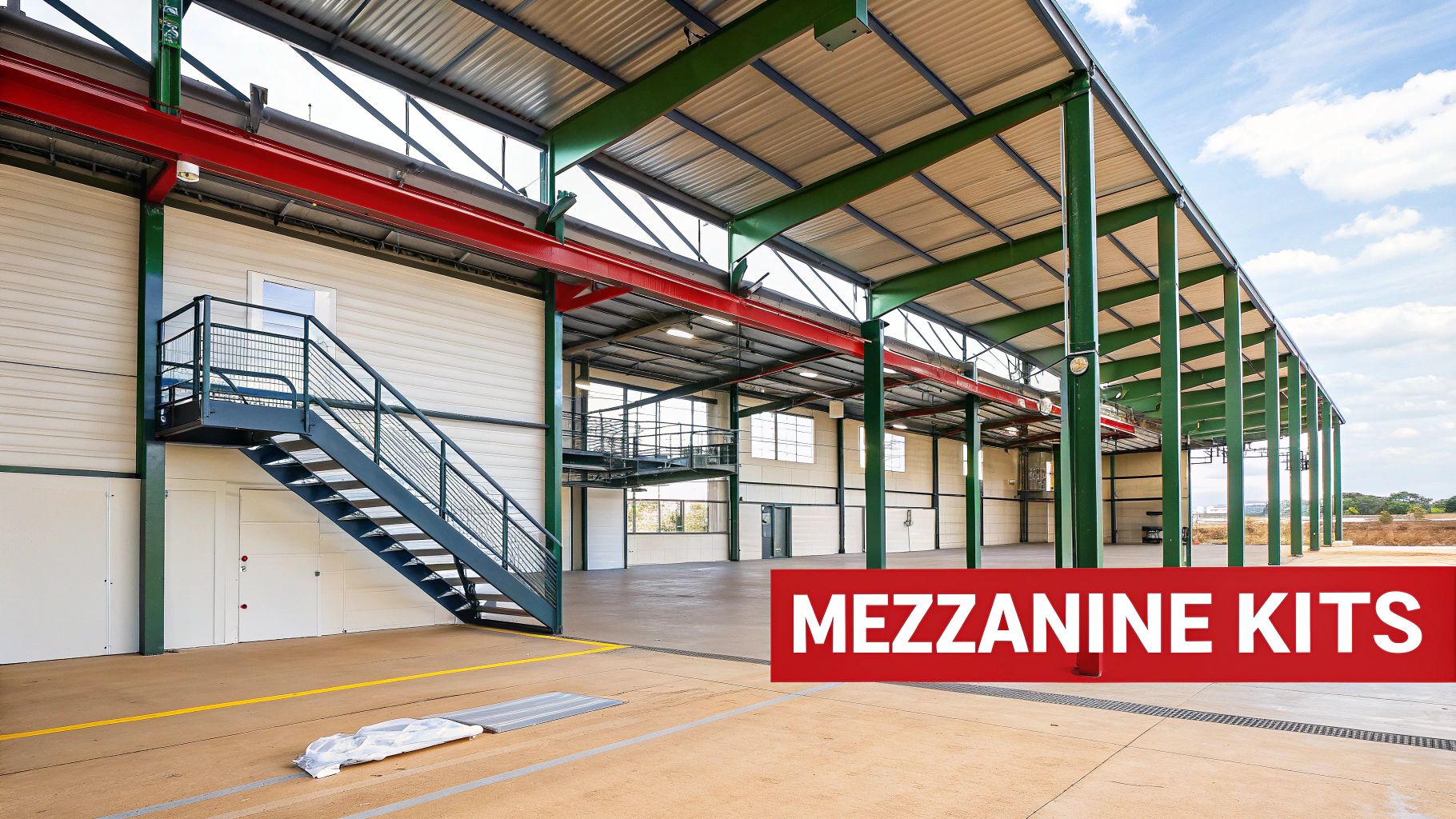
Picture this: your business is growing, but your floor space isn't. You're constantly shuffling things around, running out of room for stock, packing stations, or even a small office. Before you start looking at expensive new properties, just look up. That unused vertical space in your building is often your most overlooked asset, and mezzanine floor kits are designed to help you claim it.
Unlike a custom-built structure that needs extensive on-site fabrication and welding, a kit arrives with all the necessary parts pre-engineered and ready to assemble. This modular approach makes the entire process faster, simpler, and much more predictable. For a deeper dive into the basics, you can explore our guide that explains in detail what a mezzanine floor is and how it works.
These systems are typically built from high-strength structural steel, ensuring they can handle serious loads safely and reliably for years to come.
A Practical Solution for Space Expansion
The main goal of a mezzanine floor is simple: create more usable area within the footprint you already have. This new level can serve all sorts of purposes, instantly transforming how you operate.
- Extra Storage: It’s a perfect spot for storing inventory, archives, or equipment, freeing up your ground floor for more active, day-to-day operations.
- Office Space: You can build a quiet, elevated office area right above the busy workshop or warehouse floor, improving both focus and oversight.
- Production or Packing Areas: A mezzanine can be used to set up extra assembly lines, quality control stations, or dedicated packing zones, helping to streamline your entire workflow.
By building upwards, you effectively double a portion of your floor space without your rent or mortgage going up. This makes it an incredibly cost-effective strategy for expansion, especially in Australia's competitive commercial real estate market.
More Than Just a Raised Platform
It's crucial to understand that a mezzanine floor kit is a complete structural system, not just a simple platform on legs. A properly designed kit from a reputable supplier like Super Rack is engineered from top to bottom for safety, durability, and compliance. This means every component, from the main support beams to the nuts, bolts, and handrails, is designed to work together perfectly.
A mezzanine floor isn't just about adding square metres; it's about optimising your operational efficiency. It lets you logically separate functions—storing goods above while processing orders below, for example—which can lead to huge improvements in productivity.
This idea of creating elevated, functional spaces isn't unique to warehouses. For a different perspective on similar structures, check out this complete guide to metal buildings with lofts, which explores how lofts serve a comparable purpose in other types of buildings. Here at Super Rack, we provide expertly engineered solutions with fast, nationwide delivery, helping Australian businesses unlock their vertical potential.
The Key Benefits of Installing a Mezzanine Floor
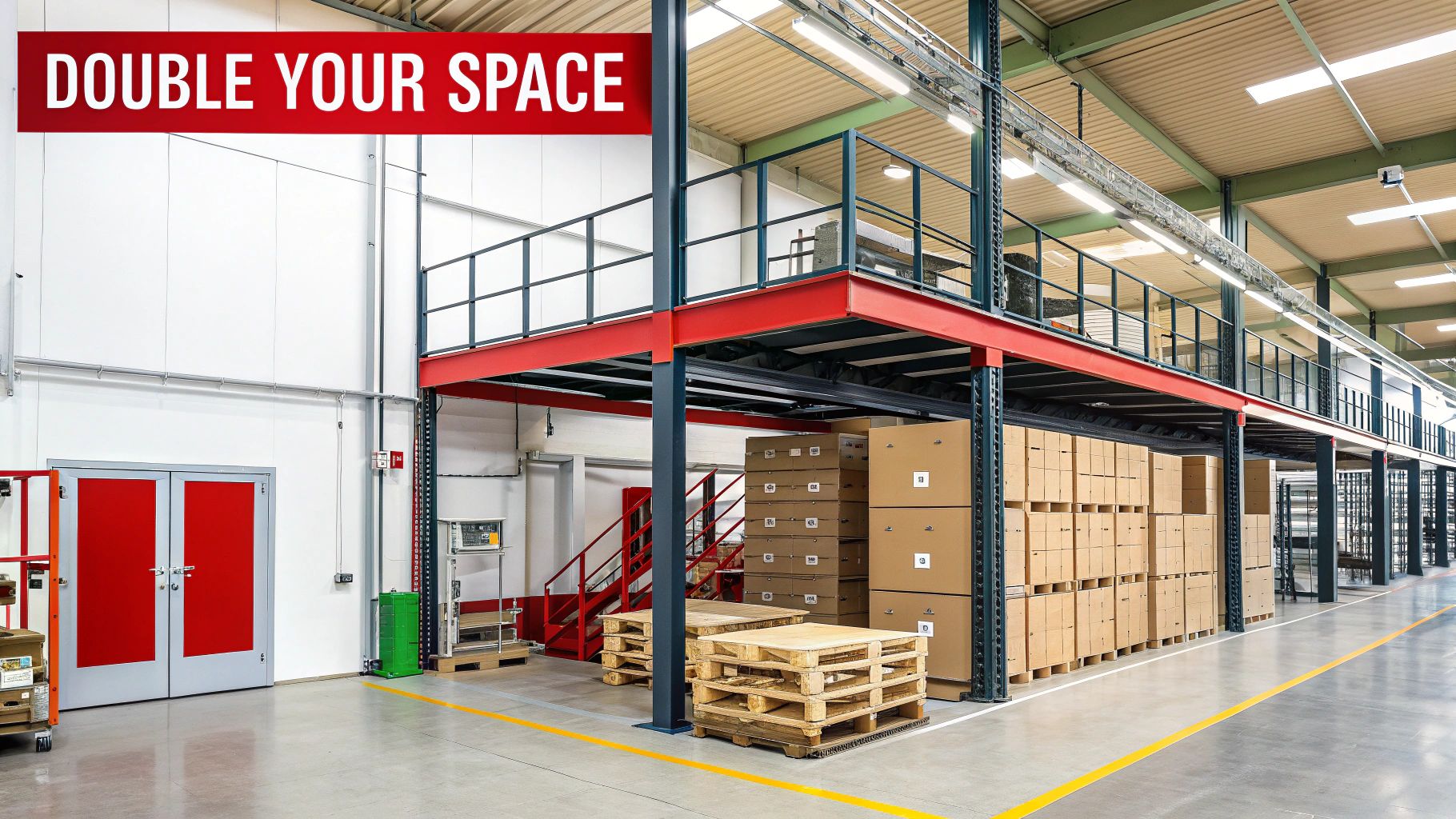
When your business starts bursting at the seams, the go-to solutions often feel drastic. You either face the headache of relocating or the massive disruption of major construction. Both are expensive, messy, and can bring your operations to a grinding halt.
But there's a much smarter play: going vertical with a mezzanine floor. The benefits go way beyond just getting more room; they offer serious financial and operational wins for any growing Australian business. A mezzanine floor kit isn't just an expense; it's a strategic move that unlocks the hidden potential in the building you already have.
Maximise Your Vertical Real Estate
The most immediate win is the sheer amount of extra floor space you gain. By building up, you can literally double the usable footprint of an area inside your facility. In Australia's tight commercial property market, that’s a game-changer where every square metre has a price tag.
Imagine your warehouse is packed tight with stock, and you're about to sign a lease on a pricey off-site storage unit. A mezzanine could create an entire second level for bulk storage right above your existing pallet racking, keeping everything under one roof. Straight away, you’re saving on rent and simplifying your logistics.
This vertical growth is also perfect for separating different parts of your business. You could keep noisy production or dispatch activities on the ground floor while creating quiet offices or meeting rooms on the new mezzanine level above.
A Smart Financial Decision
Let's be blunt: a mezzanine floor is vastly more cost-effective than the alternatives. Relocating means coughing up for removalists, new bonds, and killer downtime as you move. Extending your building brings in architects, months of construction, and a mountain of paperwork.
A mezzanine floor lets you invest in the property you already occupy. You bypass the huge costs of moving or building out, instead adding real value and function to your current asset for a fraction of the price.
The numbers back it up. Across Australian industrial sites, a mezzanine can boost your usable area by 50% to 200% without the crippling cost of relocation. With typical installation costs for a steel mezzanine falling between AUD $150 and AUD $350 per square metre, the payback is incredibly fast compared to the millions often needed for a full-scale move. You can read more about the cost-benefits of industrial mezzanine floors.
Enhance Operational Efficiency
A well-planned mezzanine does more than just add space—it can completely streamline your workflow. By creating dedicated zones for different tasks, you cut down on clutter, reduce travel time for staff, and give your whole operation a productivity boost.
Think of an e-commerce business. They could set up a mezzanine purely for packing and shipping. This pulls the entire fulfilment process away from the ground-floor storage area, creating a cleaner, more organised system. Orders are picked from below, sent up via a conveyor or goods lift, and then packed and dispatched from their dedicated zone.
This logical separation of tasks leads to real-world improvements:
- Improved Safety: Less congestion on the main floor means fewer close calls between forklifts and staff on foot.
- Faster Fulfilment: A clear, organised workflow gets orders out the door quicker and with fewer mistakes.
- Better Organisation: When every function has its own home, the whole facility becomes easier to manage.
At Super Rack, we make sure our high-quality mezzanine floor kits are competitively priced to deliver a durable, long-term solution. With fast, nationwide delivery and expert advice on tap, we help you make an investment that pays dividends for years. Ready to unlock your space? Contact Super Rack today for a consultation.
What’s in a Mezzanine Floor Kit?
Opening up a mezzanine floor kit for the first time can feel a little intimidating, but it’s far from a random pile of steel. Think of it as a complete, pre-engineered system where every single part is designed to lock together, creating one incredibly robust structure. It’s a full solution, built for strength, safety, and straightforward assembly.
Let's pull back the curtain and look at the key parts that form the backbone of these clever space-doubling systems. When you see how each piece plays its part, you really start to appreciate the engineering that goes into them. At Super Rack, we make sure every component is top-notch, guaranteeing a perfect fit and a structure that’s built to last.
The Structural Framework
This is the skeleton of your new floor—the part that does all the heavy lifting. It's not just a platform; it's a carefully calculated frame made from high-grade structural steel designed to bear serious weight.
- Main Beams: These are the big guns. As the largest horizontal steel sections, they are the primary load-bearers, spanning between the support columns and carrying the weight of the floor and everything you decide to put on it.
- Columns (or Posts): These are the vertical legs of the structure. They take the entire load from the main beams and transfer it safely down to your building’s concrete slab. Their size and how far apart they’re spaced is all worked out based on the mezzanine’s dimensions and how much weight it needs to hold.
- Joists (or Purlins): Running perpendicular to the main beams, these smaller steel sections create a tight grid. This grid is what your flooring material sits on, making sure the load is distributed evenly across the main beams instead of being concentrated in one spot.
Together, these beams, columns, and joists create a rigid and seriously strong frame. Super Rack’s commitment to quality means we only use premium steel, engineered for maximum strength and longevity. Peace of mind comes standard.
Flooring and Decking Options
Once the steel frame is up, it's time to lay the floor. The material you pick for the decking isn't a one-size-fits-all decision; it depends entirely on what you'll be doing up there.
For lighter duties, like setting up an office or storing archive boxes, structural particleboard is often the perfect choice. It’s cost-effective and gives you a solid, smooth surface that’s ideal for foot traffic and lighter loads.
But if you’re planning for heavy-duty industrial use—storing palletised goods, running machinery, or driving pallet jacks around—you'll need something much tougher. This is where heavy-duty steel plate or chequer plate flooring shines. It's incredibly durable, handles impacts like a champ, and provides excellent grip underfoot.
Choosing the right decking is non-negotiable for both safety and performance. The material has to match the load you’re planning and the day-to-day activities. Our team at Super Rack can walk you through the options to make sure you get the perfect flooring for your needs, ensuring your investment is practical for years to come.
Essential Safety Features
A mezzanine floor kit isn't complete without its safety gear. These components aren't optional extras; they're critical for protecting your team and ensuring you meet Australian safety standards. They are what transforms a raised platform into a safe, functional workspace.
A complete kit will always include these essential safety features:
- Handrails and Guardrails: These are installed around every open edge of the mezzanine to prevent falls. They have to be a specific height and strength to comply with safety regulations.
- Kick Plates (or Toe Boards): You'll find these small barriers running along the bottom of the handrails. Their job is simple but vital: to stop tools, small boxes, or anything else from being accidentally kicked off the edge and falling on someone below.
- Staircases: A sturdy, compliant staircase provides safe and easy access for your team. Every detail, from the depth of the treads to the placement of the handrails, is designed for safety. You can see our safety-first approach in action when you explore our pallet racking installation services.
- Pallet Access Gates: If you plan to move pallets on and off the mezzanine with a forklift, a pallet safety gate is a must-have. These clever gates create a safe loading zone, making sure there’s never an exposed edge while you work.
At Super Rack, we provide everything you need for a complete and safe installation, backed by our nationwide service and fast delivery. To figure out the best components for your warehouse, contact our team for a detailed chat.
How to Plan Your Mezzanine Floor Project
Before a single steel beam arrives on-site, a successful mezzanine floor project begins with a rock-solid plan. A bit of careful thinking now saves a world of headaches later and makes sure the final structure is a perfect fit for your business. It all comes down to asking the right questions so your investment pays off from day one.
Jumping straight into ordering a mezzanine floor kit without this groundwork is like building a house without blueprints. You need to map out exactly what you want to achieve, how you'll use the space, and what physical limitations you’re working with. This planning stage is where expert advice really shines, helping you nail down the details for a safe, efficient, and perfectly suited solution.
Define the Mezzanine's Purpose
First things first: what is this new space actually for? The answer to this question will drive almost every other decision you make, from the type of flooring you choose to the load capacity you'll need.
Get specific. "More storage" is a good start, but what kind of storage?
- Bulk Pallet Storage: Will you be storing heavy, loaded pallets? This requires a high load rating and a design that accommodates forklift access, likely with a pallet safety gate.
- Light Goods and Archive Boxes: If it's just for lighter, hand-loaded items, you can use different flooring and won't need the same heavy-duty structure.
- Office or Workspace: An office needs a much smoother floor finish, plus you'll have to think about power, data cabling, and how you'll light the area.
- Light Manufacturing or Packing Area: This might need a durable, non-slip surface and a layout that supports a logical workflow for your team.
This infographic shows the fundamental components that form the structure, from the foundational beams to the flooring and essential safety features.
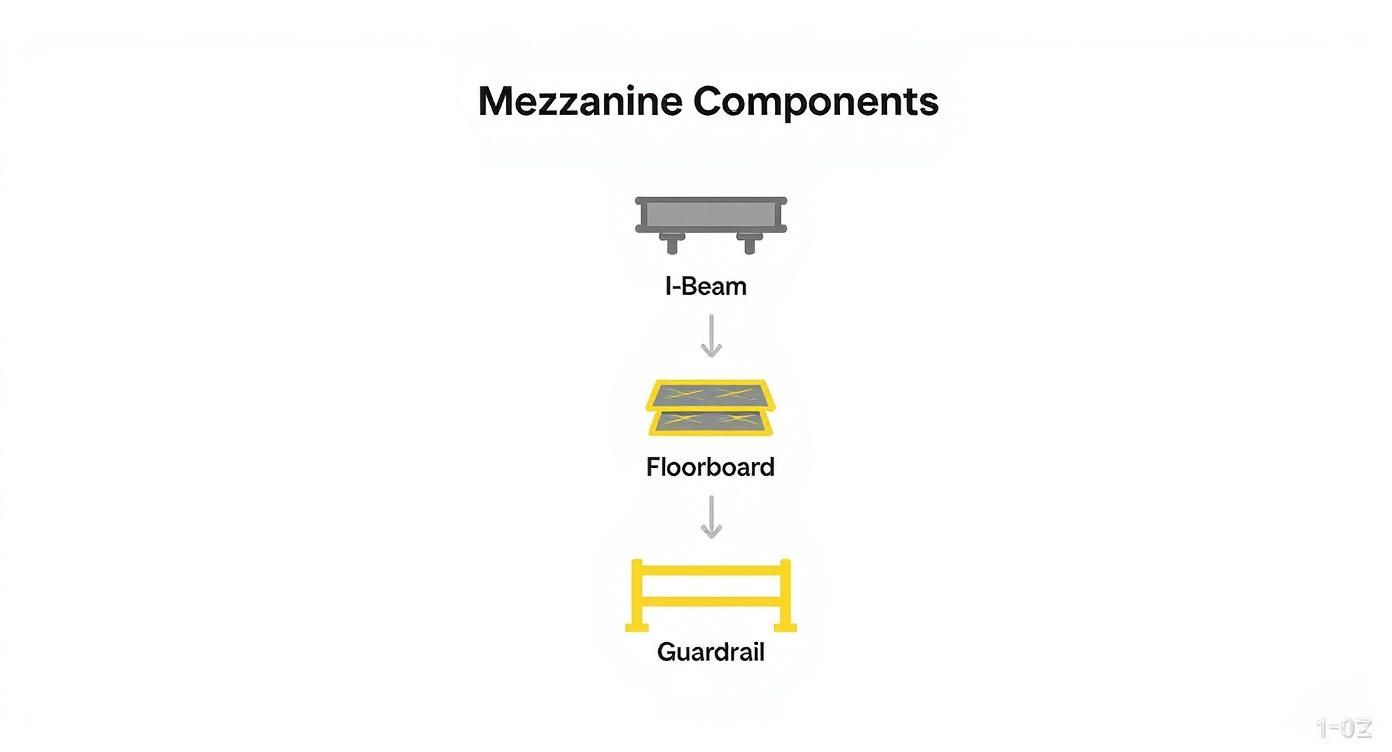
Understanding how these parts work together is key to appreciating why defining your purpose is the critical first step in planning.
Measure Your Space and Check Clearances
Next up, grab your tape measure. You need to know exactly what you’re working with. Don’t just measure the floor area you want to cover; vertical height is just as critical.
Measure the total clear height from the concrete slab to the lowest point on your ceiling—that could be a roof truss, a sprinkler head, or a lighting fixture. Remember, you need enough headroom both underneath and on top of the new mezzanine to work safely and comfortably. For more great advice, check out these tips on planning your construction project for lasting results.
Crucially, factor in the thickness of the mezzanine structure itself—the beams and flooring—when calculating your final head clearance. A common mistake is forgetting that the structure itself takes up vertical space.
Consider Workflow and Access
How will your team and your goods get up and down? A mezzanine needs to integrate smoothly with your existing operations, not become a new bottleneck. Think about where the staircase should go for the most efficient foot traffic. If you're moving goods with a forklift, where should a pallet gate be positioned for safe and easy access?
It’s also smart to think about how the new structure will affect what’s happening underneath it. Will the support columns get in the way of existing machinery or pallet racking? How will the mezzanine impact lighting and sprinkler systems on the ground floor? Tackling these questions early ensures everything works together seamlessly. This kind of careful workflow planning is also central to our professional pallet racking installation services.
A well-designed mezzanine is a powerful business asset. For expert advice to ensure your plan is safe, efficient, and ready for council approval, contact the Super Rack team today.
Navigating Australian Standards and Approvals
Putting in a mezzanine floor is a game-changer for your workspace, but it's a lot more than just assembling a new structure. It's a serious structural addition, and that means it falls under strict Australian building regulations.
One of the biggest myths we hear about mezzanine floor kits is that the word 'kit' somehow lets you sidestep all the legal paperwork. That's just not the case.
Think of it this way: a mezzanine isn’t a temporary shelf you can take down tomorrow; it's a permanent part of your building. For the safety of your team and the legal standing of your business, getting this right is non-negotiable. Your local council takes it very seriously, and you should too.
Why Compliance is Critical
In Australia, any major structural work is governed by the National Construction Code (NCC). This is the official rulebook for building safety and design across the entire country. The NCC points to a whole range of Australian Standards that your mezzanine floor absolutely must meet to be considered safe and legal.
It's just like a car needing a roadworthy certificate before it's allowed on the road. A mezzanine needs proper certification to prove it’s safe for people to work on. Cutting corners here isn't just risky—it's a gamble with your property, your people, and your business's future.
The Key Standards You Need to Know
You don't need to memorise the standards, but it’s good to know what they are so you understand what’s involved. This is where a qualified structural engineer is essential. They will design and certify your mezzanine to comply with critical standards like:
- AS 4100 – Steel Structures: This standard covers how steel structures must be designed and built to guarantee they’re strong and stable.
- AS/NZS 1170 – Structural Design Actions: This one is all about loads. It dictates what the floor must handle, from the weight of people and equipment (live loads) to its own weight (dead loads).
- AS 4600 – Cold-Formed Steel Structures: Often, components like the joists and purlins in the mezzanine frame will need to meet this standard.
An engineer's signed certification is your proof that the design ticks all these boxes.
The Council Approval Process Explained
Dealing with the council might sound like a headache, but it’s a pretty logical process. The exact steps can vary a bit from one council to the next, but it generally looks like this:
- Engage a Structural Engineer: This is your first move. Hire a professional engineer to assess your site, understand your needs, and produce the detailed drawings and certification for your mezzanine design.
- Submit an Application: With the certified plans in hand, you or your builder will submit a Development Application (DA) or Building Permit to your local council. This has to be approved before any work starts.
- Installation and Inspection: Once you get the green light, the installation can begin. It has to be built exactly as shown on the engineer's plans. Often, an engineer or a building certifier will need to pop in to inspect the work during or after construction. Just like keeping your warehouse safe requires ongoing checks, as we detail in our guide to professional pallet rack inspections, your mezzanine's compliance is an ongoing responsibility.
- Final Certification: After the job is done, a final inspection and certification are typically needed to confirm everything was built correctly and is safe to use.
It's crucial to remember that buying a top-quality kit is just the first step. True peace of mind comes from knowing it’s been professionally engineered, certified, and approved for your specific site.
At Super Rack, our mezzanine floor kits are engineered from the ground up to meet these strict Australian standards, giving you a solid foundation for your compliance journey. We’re here to offer expert advice and guide you through the process, making sure your project is not just a success, but also 100% safe and legal.
Choosing the Right Mezzanine Floor Kit
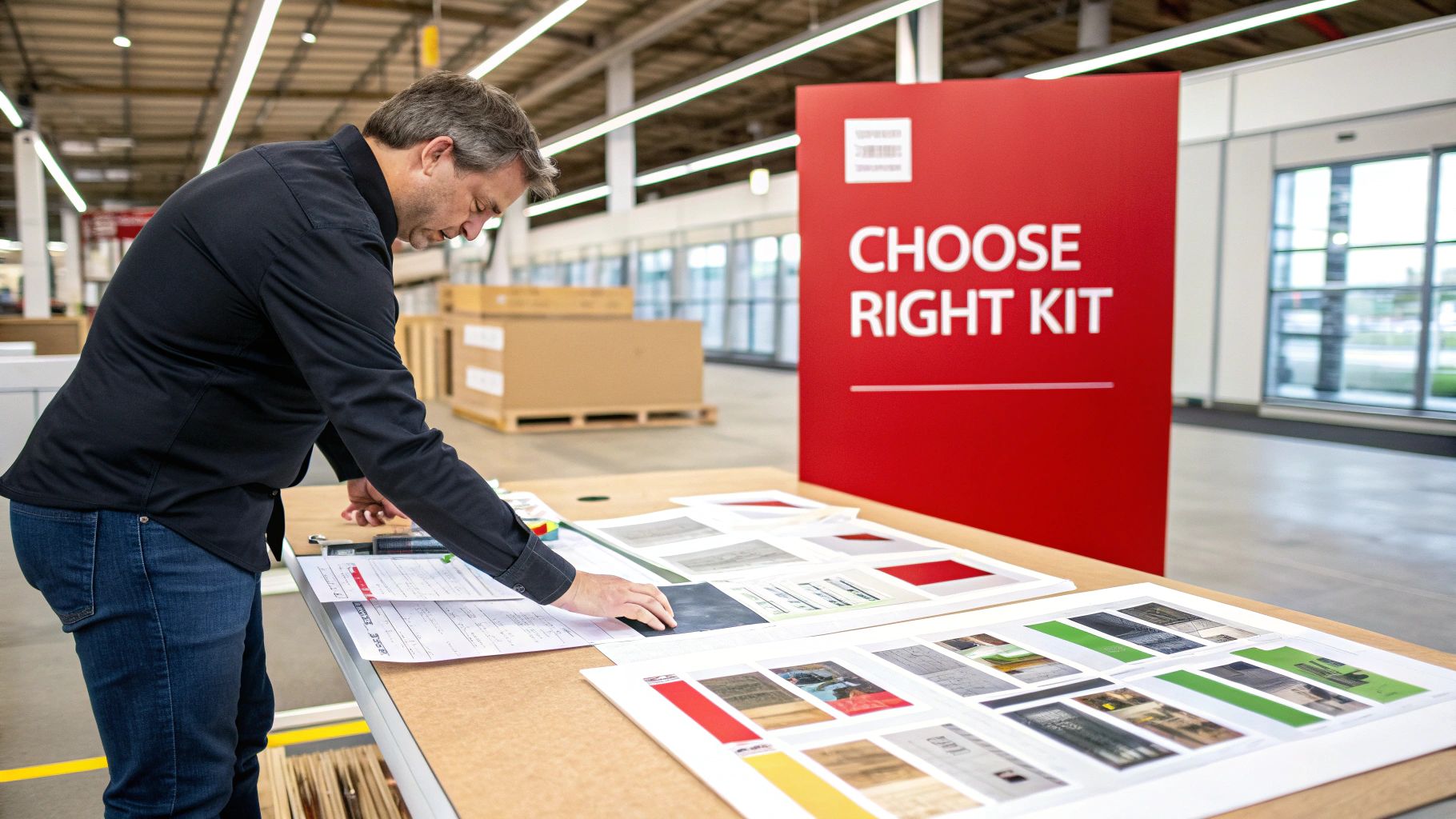
You’ve got a solid plan, which means you’re ready for the exciting part: picking the perfect mezzanine floor kit. This isn't just about finding the biggest one you can fit. It's about getting the right combination of components to build a safe, efficient, and genuinely useful workspace that will serve you for years.
Getting these details right from the start is what turns a good investment into a great one. Think of it as matching the right materials, the right strength, and the right features to your unique operational needs.
Match the Flooring to the Function
The floor itself—the part you walk and work on—is one of the most critical decisions you'll make. What you plan to do up there will dictate the best material for the job.
- Particleboard Flooring: Ideal for lighter duties. If you're setting up an office, a break room, or storing hand-loaded boxes, structural particleboard is a smart, cost-effective choice. It gives you a smooth, solid surface that's perfect for everyday foot traffic.
- Steel Plate Flooring: When the going gets tough, you need a floor to match. For storing heavy pallets, running machinery, or using pallet jacks, you'll need the resilience of heavy-duty steel plate (often called chequer plate). It offers incredible durability and can take a beating, making it the only real option for serious industrial work.
Don't cut corners here. The wrong flooring can wear out fast or, worse, create safety hazards. Always match the material to the workload.
Select the Correct Load Rating
Every mezzanine floor is engineered to hold a specific maximum weight, known as its load rating. This is usually expressed in kilopascals (kPa) or kilograms per square metre (kg/m²), and getting it right is non-negotiable.
For example, a simple office setup might only need a 3 kPa rating. But if you’re planning to store palletised goods, you’ll be looking at something much higher—perhaps 5 kPa or more. It is absolutely crucial that your kit's load rating exceeds your heaviest planned use. Overloading a mezzanine isn't just a compliance breach; it's incredibly dangerous.
Always plan for your heaviest possible scenario, and then add a bit more for good measure. A higher load rating not only guarantees safety but also future-proofs your space if your needs change down the track.
Get the Size and Configuration Right
A great mezzanine should feel like a natural extension of your workspace, not an obstacle course. This means carefully planning its size and layout to enhance your workflow. Think about where the support columns will go—you don’t want one landing right in the middle of a busy walkway or machinery path on the ground floor.
The layout also includes how you get up and down. Where's the most logical spot for the staircase? If you're moving stock with a forklift, where will a pallet access gate be the safest and most efficient? A well-designed configuration can make a massive difference to your team's productivity.
Customise for Your Operations
One of the best things about a modern mezzanine floor kit is how much you can tailor it to your business.
- Staircase Design: Don't just settle for a standard staircase. Choose a design that fits your floor plan, like a straight-run or a space-saving L-shaped stair.
- Pallet Gates: Match the gate to your loading method. An up-and-over gate works differently from a sliding gate, so pick the one that makes life easiest for your team.
- Handrails and Finishes: You can often select different handrail styles or finishes to align with your company's look and safety standards.
These custom touches are what make the mezzanine feel like it was designed just for you.
At Super Rack, we do more than just sell kits; we provide complete storage solutions. Our team has the hands-on experience to help you choose the right flooring, calculate the correct load rating, and design a layout that actually works. With our high-quality products, competitive pricing, and Australia-wide service, we’ll make sure you get a mezzanine floor that’s a perfect fit.
Contact Super Rack today for a free consultation and let our experts help you design the perfect space-saving solution for your business.
Got Questions About Mezzanine Floor Kits?
Let's wrap up by tackling some of the most common questions we hear about mezzanine floor kits. Getting straight answers to these will help you move forward with confidence.
How Much Do Mezzanine Floor Kits Cost in Australia?
The final price tag on a mezzanine floor kit can shift quite a bit, depending on its size, how much weight it needs to hold, and any extras you add, like staircases or pallet gates.
As a rough guide, a standard steel kit typically lands somewhere between AUD $150 to AUD $350 per square metre. Just keep in mind this usually covers the kit components only. You’ll also need to factor in professional installation, the cost of an engineer to certify the design, and any council approval fees. Here at Super Rack, we offer competitive pricing and can put together a detailed quote that covers everything your project needs.
Do I Need a Building Permit for a Mezzanine Floor?
Yes, almost certainly. In Australia, putting in a mezzanine floor is considered a structural change, which means you'll need a building permit from your local council.
The design has to be signed off by a qualified engineer to confirm it meets the National Construction Code (NCC) and other relevant Australian Standards. This isn’t just red tape—it's a critical step for keeping everyone safe and staying on the right side of the law.
Ready to unlock your warehouse's full potential? The expert team at Super Rack is here to help you design the perfect mezzanine floor solution. With superior quality, nationwide service, and fast delivery, we make expanding your space simple.
Visit us at https://www.superrack.com.au to learn more and get a free quote.