

A Guide to Pallet Racking Safety Inspections in Australia

Regular pallet racking safety inspections aren't just a 'nice to have' for your warehouse—they're a non-negotiable part of keeping your workplace safe and compliant. Think of them as a crucial health check for the backbone of your storage operation. The goal is to spot small issues before they have a chance to turn into major disasters.
Why Pallet Racking Inspections Are So Critical
Let’s be blunt: skipping pallet racking inspections puts your staff, your stock, and your whole business on the line. A damaged or overloaded rack doesn’t just fail; it can set off a domino-like collapse with devastating results. These checks are your first and best defence against accidents, huge inventory losses, and serious operational downtime.
Beyond the immediate physical dangers, there are hefty legal and financial reasons to keep on top of your inspections. Neglecting your duty of care can lead to massive fines from SafeWork and potential legal action if someone gets hurt. A solid, well-documented inspection history is proof you’re taking safety seriously.
Meeting Australian Standards
Here in Australia, these inspections aren't just good ideas—they're the law. Pallet racking safety is strictly governed by Australian Standard AS 4084:2023, which mandates a professional inspection by a competent person at least once every 12 months.
WorkSafe Victoria backs this up, specifying that formal inspections must happen annually, with more frequent, informal in-house checks strongly recommended.
It's About More Than Just Compliance
When you take a proactive approach to inspections, you build a powerful safety culture throughout your facility. When your team sees that management genuinely cares about the integrity of the storage systems, they become more vigilant in their own work. This means better equipment handling and, crucially, reporting minor dings and damage straight away.
Of course, good training is another key piece of the puzzle. You can find excellent insights into implementing effective modern forklift training systems to complement your safety efforts.
At the end of the day, a safe warehouse is an efficient one. Regular checks help you avoid:
- Costly Downtime: A rack collapse can shut down your operations for days or even weeks. That's a direct hit to your revenue and customer trust.
- Product Damage: Bent beams and damaged frames can lead to ruined inventory, which comes straight off your bottom line.
- Increased Insurance Premiums: A poor safety record is a red flag for insurers and can drive up your business costs.
By investing in high-quality systems, like Super Rack's durable and competitively priced pallet racking, and committing to regular inspections, you shift from a position of risk to one of control and confidence.
Your Practical Racking Inspection Checklist
Let's move from theory to action. A proper in-house pallet racking safety inspection program is what empowers your team to be the first and best line of defence against a potential collapse. This isn't about getting bogged down in complex engineering formulas; it's about training your staff to spot the obvious—and not-so-obvious—signs of trouble during their daily walk-throughs.
Think of your team as safety detectives. Their job is to look for clues that a rack’s structural integrity might be at risk. For example, a minor scrape from a forklift might seem like nothing, but it could easily be the starting point for a more serious failure down the track.
This checklist breaks down exactly what your team should be looking for, component by component.
This simple process flow shows how a strong safety culture protects your staff, secures your inventory, and keeps your business compliant.
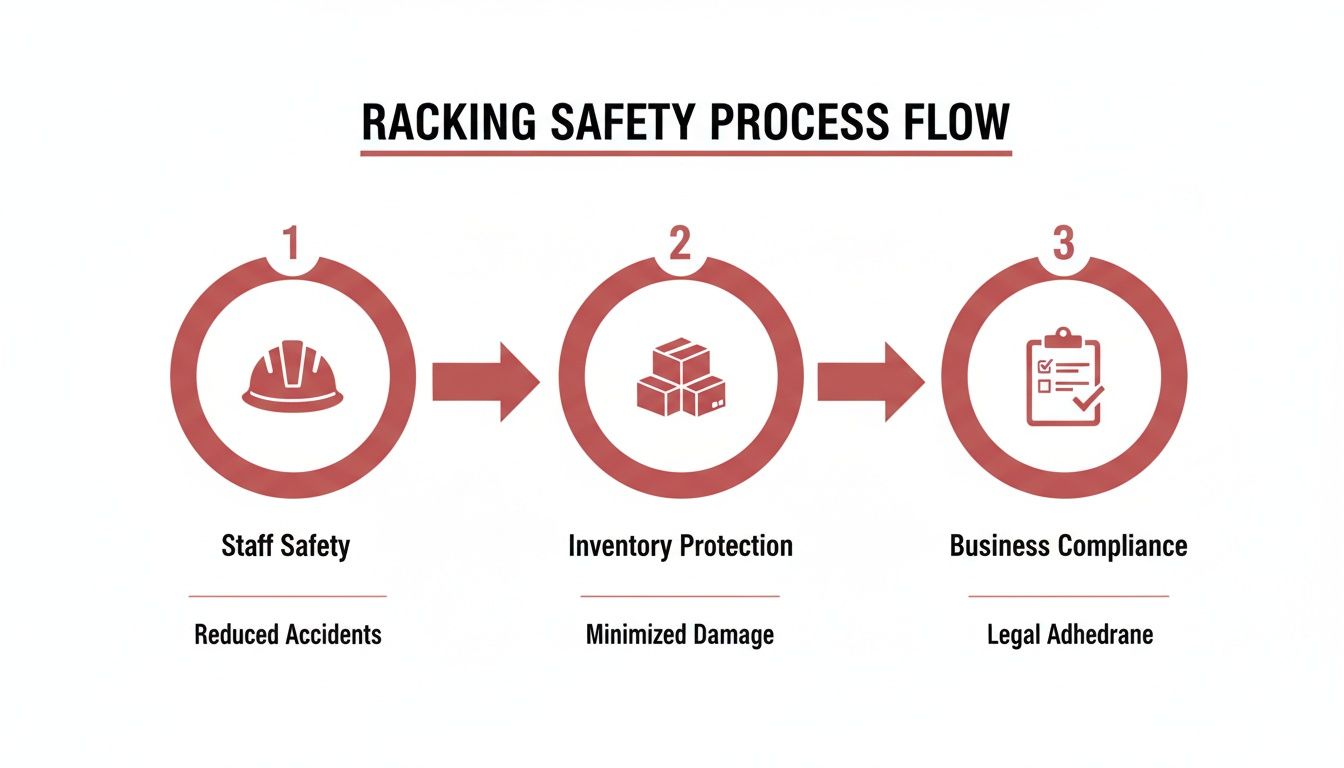
As you can see, it all starts with your people. Protect them, and everything else falls into place.
Uprights and Columns
The vertical uprights are the legs of your racking system, bearing the full weight of your inventory. Any damage here is a serious concern and needs immediate attention.
- Check for Plumbness: Stand at the end of an aisle and look down the row. Do the uprights look perfectly vertical? Any obvious leaning, twisting, or bowing is a major red flag that indicates serious instability.
- Inspect for Dents and Scrapes: Get up close and examine the front and side faces of each column. Pay special attention to the bottom 1.5 metres, where forklift impacts are most common. Even a small dent can dramatically reduce the steel's load-bearing capacity.
- Look for Corrosion: Rust isn't just a cosmetic issue; it's a structural one. It actively weakens the steel and can compromise the entire frame, especially in damp or cold storage environments.
Beams and Connectors
Beams are the horizontal workhorses that directly support your pallets. Their connection to the uprights is a critical stress point that can't be ignored.
- Assess for Deflection (Sagging): Look along the length of each beam, both loaded and unloaded. Can you see any visible sag or bowing in the middle? A sagging beam is a classic sign of overloading or internal damage.
- Verify Safety Pins and Clips: Every single beam-to-upright connection must have its locking pin or clip securely in place. These small parts are vital—they prevent a beam from being accidentally dislodged by a forklift. A missing pin is a non-negotiable hazard that must be fixed immediately.
- Check Connector Health: Look closely at where the beam connects to the upright. Can you see any cracks in the welds, bent connector tabs, or other signs of stress? This connection is fundamental to the rack's stability.
If you find missing or damaged clips, you can find high-quality replacement parts and other essential pallet racking accessories to make sure every component is secure.
Bracing Components
Bracing refers to the diagonal and horizontal struts that connect the uprights. They give the entire racking frame its rigidity and stop it from swaying side-to-side.
- Scan for Damaged Bracing: Have any bracing members been bent, dented, or completely knocked out by a stray pallet or forklift? A single damaged brace compromises the entire bay's stability.
- Ensure All Braces are Securely Attached: Check that all bolts and fixings are present and tight. A loose brace is just as useless as a missing one.
Expert Tip: Damaged bracing is one of the most commonly overlooked issues during informal checks. A compromised brace significantly reduces the rack's ability to resist lateral forces, making it vulnerable to swaying and potential collapse, especially during minor impacts.
Floor Fixings and Base Plates
The connection to the concrete floor is the foundation of the entire system. Without a solid anchor holding it down, the whole rack is fundamentally unstable.
- Confirm Anchor Bolts are Present: Every base plate should be securely bolted to the floor according to the manufacturer's specs. Check for missing, loose, or even sheared-off anchor bolts.
- Inspect Base Plates for Damage: Look for bent base plates or any cracks in the concrete around the anchor bolts. This can indicate the rack has been hit with significant force.
- Check for Gaps: Make sure the base plates are sitting flush with the floor. Any significant gaps, often filled with shims, should be stable and not show signs of movement or crushing.
Load and Capacity Signage
Safe Work Load Limit (SWL) signs are not decorations; they are critical safety instructions that are legally required.
Overloading plagues Australian warehouses and is implicated in up to 40% of collapse incidents, according to industry safety studies. The Australian Standard AS 4084:2023 demands clear, durable safe workload signs on every bay, detailing maximum loads per level and other critical data. Without them, your workers are left to guess—a recipe for disaster.
- Verify Sign Visibility: Is there a clear, readable load capacity sign on every aisle or bay?
- Check for Accuracy: Does the information on the sign match the current configuration of the racking? If beams have been moved, the sign is no longer accurate and must be replaced.
- Educate Your Team: Ensure all warehouse staff understand what the signs mean and know the severe risks of exceeding the stated limits.
By empowering your team with this practical checklist, you turn your daily operations into an active safety monitoring system. This proactive approach is the key to maintaining a safe, compliant, and productive warehouse.
What Causes Racking Damage? A Look at Common Culprits
You'll rarely see pallet racking fail in one big, dramatic event. It’s almost always a story of slow decline—a collection of small bumps, scrapes, and strains that quietly weaken the structure over time. Getting to the root of these issues is the only way to build a safety culture that stops damage before it starts.
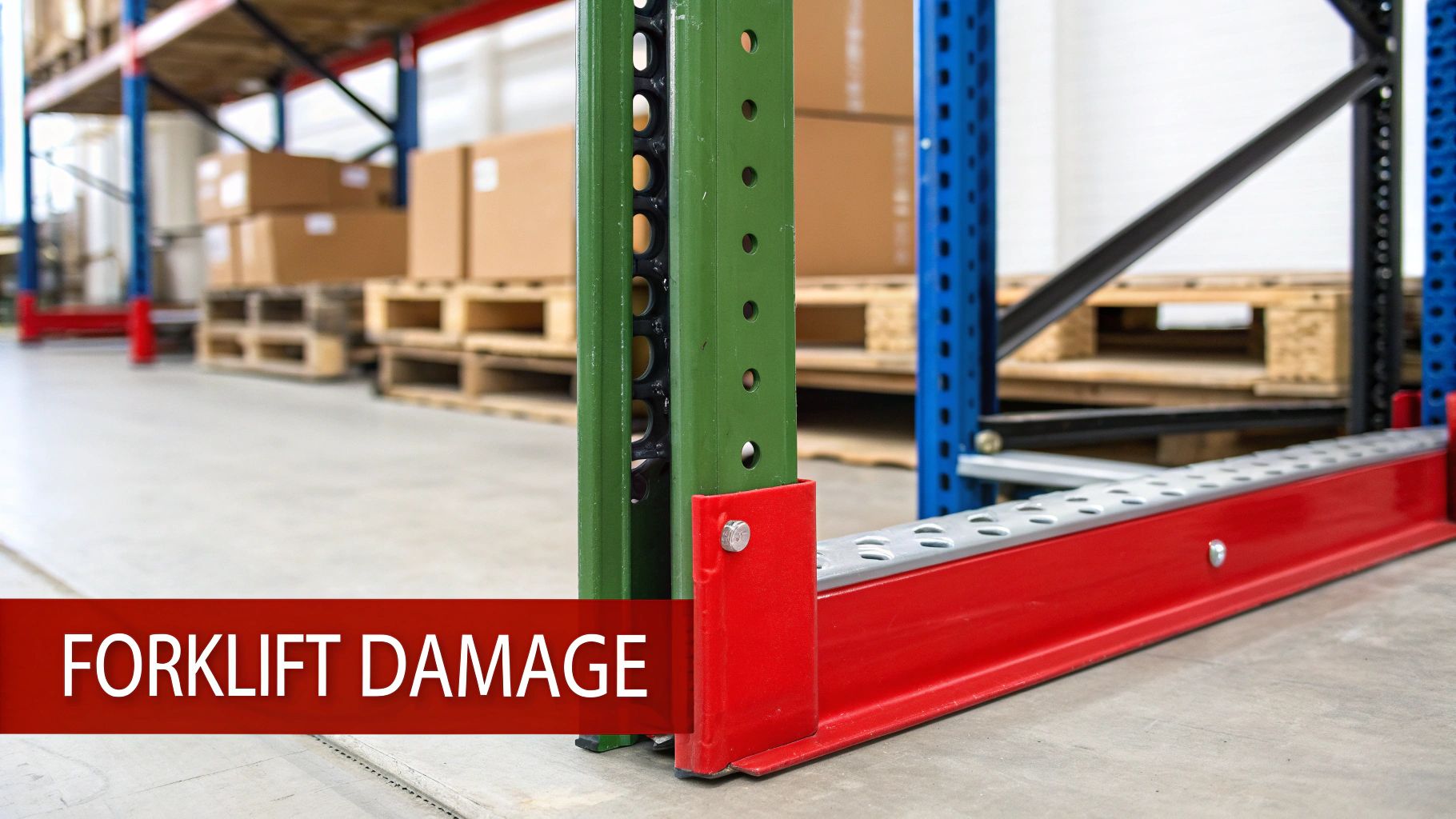
Without a doubt, the number one cause of racking damage in any busy warehouse is forklift impact. It’s just the reality of a fast-paced environment where operators are pushing to move stock quickly. A tiny miscalculation while turning into an aisle or lining up a pallet can mean a direct hit to a vulnerable upright or beam.
Forklift Impacts: The Usual Suspect
We’ve all seen it happen. It’s the end of a long shift, everyone’s rushing to get the last few pallets away, and an operator cuts a corner just a little too tight. The forks or counterweight clip the front of an upright. It might not look like much at first—maybe just a small dent and some chipped paint—but the real damage has been done.
That impact has compressed the steel, creating a hidden weak point that cuts down the upright’s load-bearing capacity. If that same upright gets hit again a few weeks later, the weakness gets worse. Over months, these small hits add up, creating a dangerously compromised frame that could collapse under its next load.
Forklift impacts are the leading cause of pallet racking damage in Aussie warehouses, with some studies linking around 65% of collapses to these kinds of collisions. In fact, data shows that over 30% of failures can be traced back to minor, unreported damage, often from forklifts clipping components. This is why SafeWork NSW guidelines highlight things like beam deformation and missing safety clips as major risks, pushing for regular in-house checks to catch them early.
More Than Just Forklifts: Other Common Causes
While forklifts are the main offenders, they aren't the only threat. A thorough pallet racking safety inspection needs to account for these other common culprits too.
- Accidental Overloading: This one is a silent but serious danger. When operators consistently load pallets that weigh more than the beam’s Safe Work Load (SWL), the steel starts to flex and sag. This permanent bend, known as plastic deformation, can’t be fixed and permanently weakens the beam. It’s only a matter of time before it fails, which is exactly why clear, accurate load signage is a non-negotiable legal requirement.
- Poor or Incorrect Installation: Your racking is only as good as its installation. If installers cut corners by not tightening anchor bolts properly, failing to get frames perfectly plumb and level, or mixing incompatible parts, the system's integrity is shot from day one. An uneven floor that hasn’t been correctly shimmed can also put incredible stress on the frame.
- Unauthorised Racking Modifications: Warehouse needs are always changing, and it can be tempting to just move a few beams around to fit new products. But shifting beam levels without checking the original engineering specs can dangerously alter how loads are distributed across the frame. It creates new hazards that didn't exist before. If you need to make changes, using compatible parts like Super Rack’s high-quality pallet racking beams ensures your system remains safe and compliant.
Key Takeaway: Damage is never random. It’s a symptom of operational pressures or flaws in your system. By focusing on better operator training, strictly enforcing load limits, and ensuring your racking was installed correctly, you can start addressing the causes, not just patching up the effects.
When your team understands why damage happens, they can shift from just spotting dents to actively preventing them. It helps create a workplace where an operator feels comfortable reporting a minor bump immediately, knowing it’s a crucial safety step, not something they’ll get in trouble for. That kind of transparency is the bedrock of a genuinely safe and efficient warehouse.
Establishing Your Inspection and Maintenance Rhythm
So, how often should you be running a pallet racking safety inspection? Finding the right rhythm is the key to keeping your warehouse safe and compliant. It’s not about a single, big check once a year; it’s about building a consistent cycle of checks and balances that protects your crew and your inventory.
The best way to think about it is having two layers of protection. Your first line of defence is your frequent, in-house checks. The second is the deep-dive annual audit by a qualified professional. You absolutely need both, as they serve very different roles in your safety strategy.
The Role of In-House Checks
Your internal checks are all about spotting immediate hazards. These are the quick, regular walk-throughs done by your own trained team members—whether that’s daily, weekly, or monthly. The goal isn’t a full-blown structural analysis, but to catch obvious new damage before it escalates.
For example, a forklift operator can do a quick visual scan of the racks they’re working in at the start of their shift. That’s the perfect time to spot a freshly dented upright from the night before or a beam that just doesn't look right.
A more formal weekly or monthly check could involve a supervisor walking every aisle with a checklist, specifically on the lookout for:
- Fresh forklift impact damage on uprights or beams.
- Missing or dislodged safety pins on beam connectors.
- Poorly placed or overhanging pallets.
- Any obvious signs of overloading, like sagging beams.
- Rubbish or obstructions in the aisles that could create new hazards.
These frequent checks catch problems the moment they appear, letting you take immediate action like unloading a damaged bay and taping it off.
The Mandatory Annual Professional Inspection
While those in-house checks are crucial for day-to-day safety, they don’t replace the legal requirement for a formal, professional inspection. Under Australian Standard AS 4084:2023, your racking must be inspected by a competent person at least once every 12 months.
This annual audit is a top-to-bottom assessment of your entire racking system’s structural integrity. A qualified inspector brings the expertise to identify subtle but dangerous issues that an untrained eye would easily miss—things like metal fatigue, twisted columns, or compromised floor fixings. They provide an independent, detailed report that documents the system's condition and spells out any repairs needed to stay compliant.
A professional inspection isn't just a box-ticking exercise. It's an independent verification that your racking system is fundamentally safe and fit for purpose, giving you documented proof of due diligence for any WorkSafe audit that might come your way.
Keeping Simple, Effective Records
Logging what you find is just as important as the inspection itself. You don't need anything complicated; a simple logbook or a digital spreadsheet will do the job perfectly.
For every in-house check, you should record the date, the name of the inspector, the specific area they checked, and a description of any damage. If you find something, note its location, severity (using the traffic light system), and what you did about it.
For instance: “15/10/24 – J. Smith – Aisle 3, Bay 4, Level 2 – Yellow damage to front upright. Bay unloaded and reported to manager for monitoring.” This creates a reliable paper trail that proves your commitment to a safe workplace.
Responding to Damage: Repair, Replace, or Monitor?
Finding damage during a pallet racking safety inspection is where your safety culture really shows its strength. Knowing exactly what to do next is what separates a close call from a catastrophe. Your response has to be fast, confident, and guided by a clear system that everyone on your team understands.
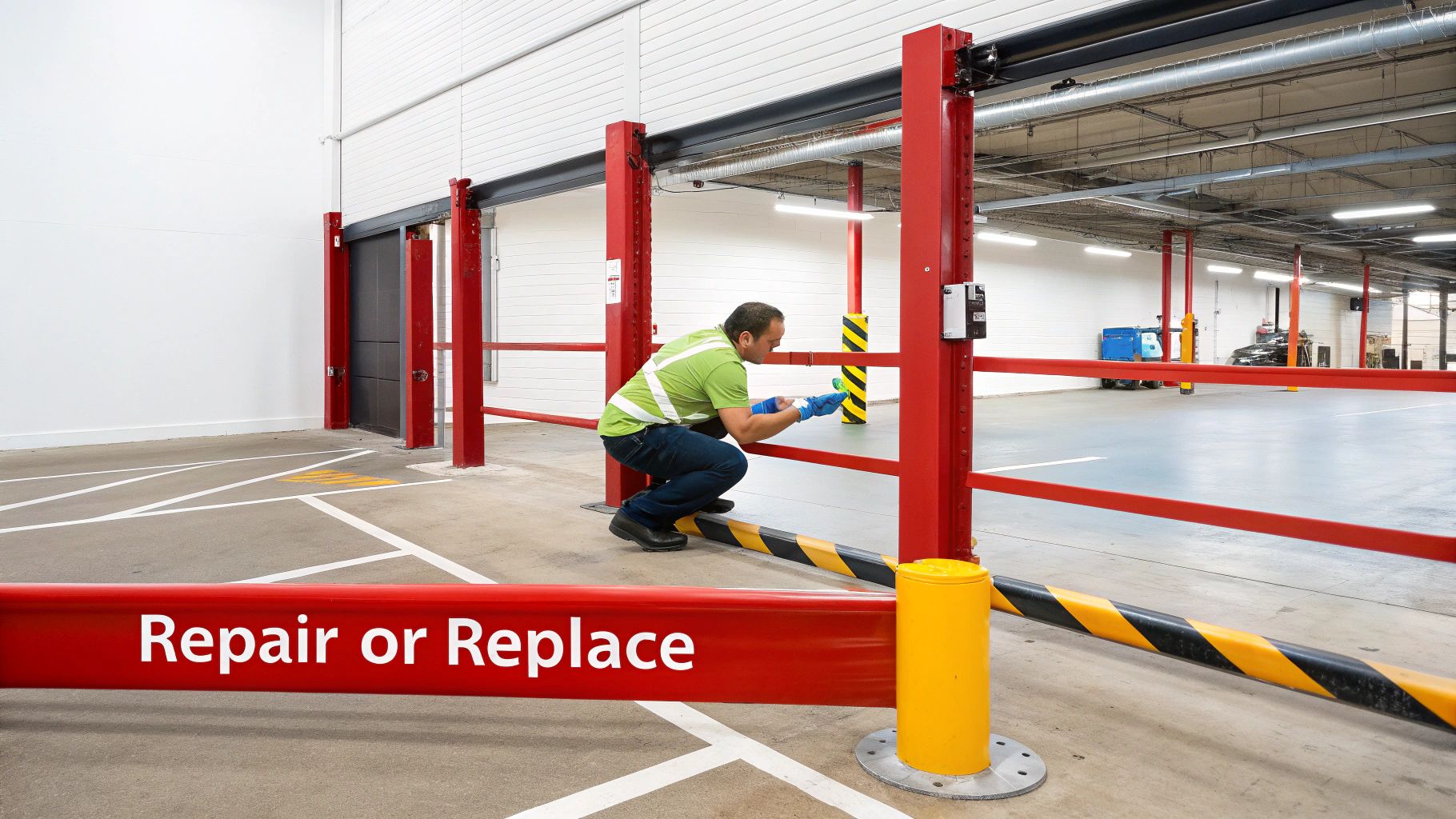
The best approach, and the one that lines up perfectly with Australian safety standards, is the simple but incredibly effective 'traffic light' system. It takes the guesswork out of the equation and gives you a clear plan of attack for every bit of damage you find, no matter how small it seems.
The Traffic Light System Explained
This system sorts damage into three distinct categories, each with its own non-negotiable action plan. It's a visual and intuitive way to manage risk the moment an inspection is done.
-
Green (Acceptable): This is for damage that's very minor and falls well within the manufacturer's allowable tolerances. For example, a light paint scrape on a beam that hasn't actually dented the steel. While you should still note it in your logbook for good record-keeping, it doesn’t need immediate action. The component is safe to keep using.
-
Yellow (Monitor): This category is for damage that needs a close eye. It's more than a minor scratch but not yet at a critical level. A good example is a small, shallow dent on an upright in a low-traffic area. The component requires more frequent checks to make sure it doesn't get any worse. You need to document the bay, and that specific bit of damage should be re-inspected during your next weekly or monthly check. If it changes at all, its status gets upgraded immediately.
-
Red (Immediate Action Required): This is for any damage that is outside the allowable limits and poses a direct danger. This is your highest priority, and the response is not up for debate. Any component tagged as Red must be taken out of service instantly. This means unloading the affected bay straight away and clearly marking it as "DO NOT USE" until a proper replacement can be made.
When to Repair, Replace, or Monitor
Working out the right course of action comes down to how severe the damage is and where it's located. The traffic light system gives you the framework to make this crucial call.
Monitoring is only for damage that's been classified as Yellow. The trick here is to set up a clear timeline for re-inspection. You might decide to check a 'Yellow' tagged upright weekly for a month. If there's no change, you could shift to monthly checks. But if that damage worsens in any way, it has to be upgraded to Red.
"Repair" is a word you have to be extremely careful with. Trying to bend a dented upright back into shape or weld a cracked beam is absolutely forbidden. These actions critically weaken the steel and create a situation far more dangerous than the original damage. True "repair" only means one thing: replacing a damaged component with a new, compatible one.
Replacement is the only acceptable action for any damage classified as Red. This covers any noticeable twist or buckle in an upright, any visible crack in a weld, or any beam that is visibly sagging under load.
The rule is simple: when in doubt, take it out. If you're even slightly unsure whether damage is Green or Yellow, treat it as Yellow. If you're debating between Yellow and Red, it's always Red. The safety of your team is not worth the risk.
The Critical Importance of Using Compatible Parts
When a component needs replacing, you can't just grab a part from another brand that "looks like it fits." Racking systems are engineered as complete, integrated structures. Mixing components from different manufacturers can create unpredictable weak points, void your warranty, and make your whole system non-compliant with Australian Standards.
This is where a trusted supplier with deep product knowledge becomes essential. At Super Rack, we provide expert advice to make sure you get the exact, high-quality replacement parts needed to restore your system's integrity. Using genuine components, like a new pallet racking beam designed specifically for your system, guarantees that your load ratings and structural safety are fully maintained. Our fast, nationwide delivery means you can get your bay safely back in service with minimal downtime.
Your Racking Inspection Questions Answered
Even with a detailed guide, it’s natural to have a few lingering questions about running a proper pallet racking safety inspection program. We get it. Here are the most common queries we hear from warehouse managers across Australia, with clear, straightforward answers from our team.
Who Can Do the Annual Racking Inspection?
This is a big one, and it causes a lot of confusion. Under the Australian Standard AS 4084, your annual inspection must be handled by a ‘competent person’.
This doesn’t just mean your most switched-on forklift driver or your longest-serving warehouse supervisor. It refers to someone with specific training: a professional racking inspector, a qualified structural engineer, or a certified technician from a reputable supplier. They know how to spot subtle signs of stress, metal fatigue, and structural weaknesses that an untrained eye would easily miss.
The inspection must always end with a formal, written report detailing the condition of your racking and any required repairs.
What Inspection Records Do I Need to Keep?
Good paperwork is your best friend when it comes to safety and compliance. You need to keep a dedicated logbook for your racking. Think of it as the system's service history.
This file should hold the detailed report from your annual professional inspection, plus all the records from your regular in-house checks. For every check you do internally, make sure you log:
- The date of the inspection.
- Who carried it out.
- Details of any damage you found (photos are great for this).
- The severity level you assigned (Red, Yellow, Green).
- A note of what you did to fix it and when.
These records are gold if SafeWork ever pays a visit, as they prove you're actively managing your warehouse safety.
Can I Just Repair a Damaged Beam or Upright Myself?
No, absolutely not. Trying to patch up structural steel components is incredibly dangerous and a huge red flag for safety compliance.
Things like welding a cracked beam, bashing a dent out of an upright with a hammer, or trying to bend a component back into place might seem like a quick fix, but they seriously weaken the steel. This compromises the entire structure's integrity and will instantly void any manufacturer warranties.
The only safe, compliant way to deal with damage is to replace the component entirely. It has to be a genuine, compatible part from a trusted supplier to make sure the system's original engineering strength is maintained.
How Can We Minimise Disruption During a Professional Inspection?
A good inspector is used to working in live, busy environments and knows how to keep out of your way. The key to making it all run smoothly is a bit of planning.
Chat with your inspector beforehand and try to schedule the audit during your quieter periods if you have them. Before they show up, get your team to do a quick whip-around to make sure the aisles are clear of stray pallets, boxes, and equipment.
Your inspector will usually work methodically, one aisle at a time, to keep the impact on your workflow to a minimum. You might have a few temporary access restrictions, but it’s a tiny price to pay for the peace of mind that comes with knowing your warehouse is safe and compliant.
At Super Rack, we're more than just a supplier; we're your partners in warehouse safety. Whether you need expert advice on your inspection duties or high-quality, compliant racking systems, we're here to help. With great products, competitive pricing, and fast nationwide delivery, we make sure you get the right solution, right when you need it.
Secure your warehouse and protect your team. Explore our full range of storage solutions and get expert advice today by visiting https://www.superrack.com.au.