
Ever looked at a cluttered wall and wished you could turn it into a perfectly organised, functional storage hub? That’s exactly what wall to wall shelving units are designed to do. This approach takes an entire wall and transforms it into a powerhouse of organisation, perfect for anything from garage tools and home office supplies to warehouse inventory.
Reclaim Your Space With Wall to Wall Shelving
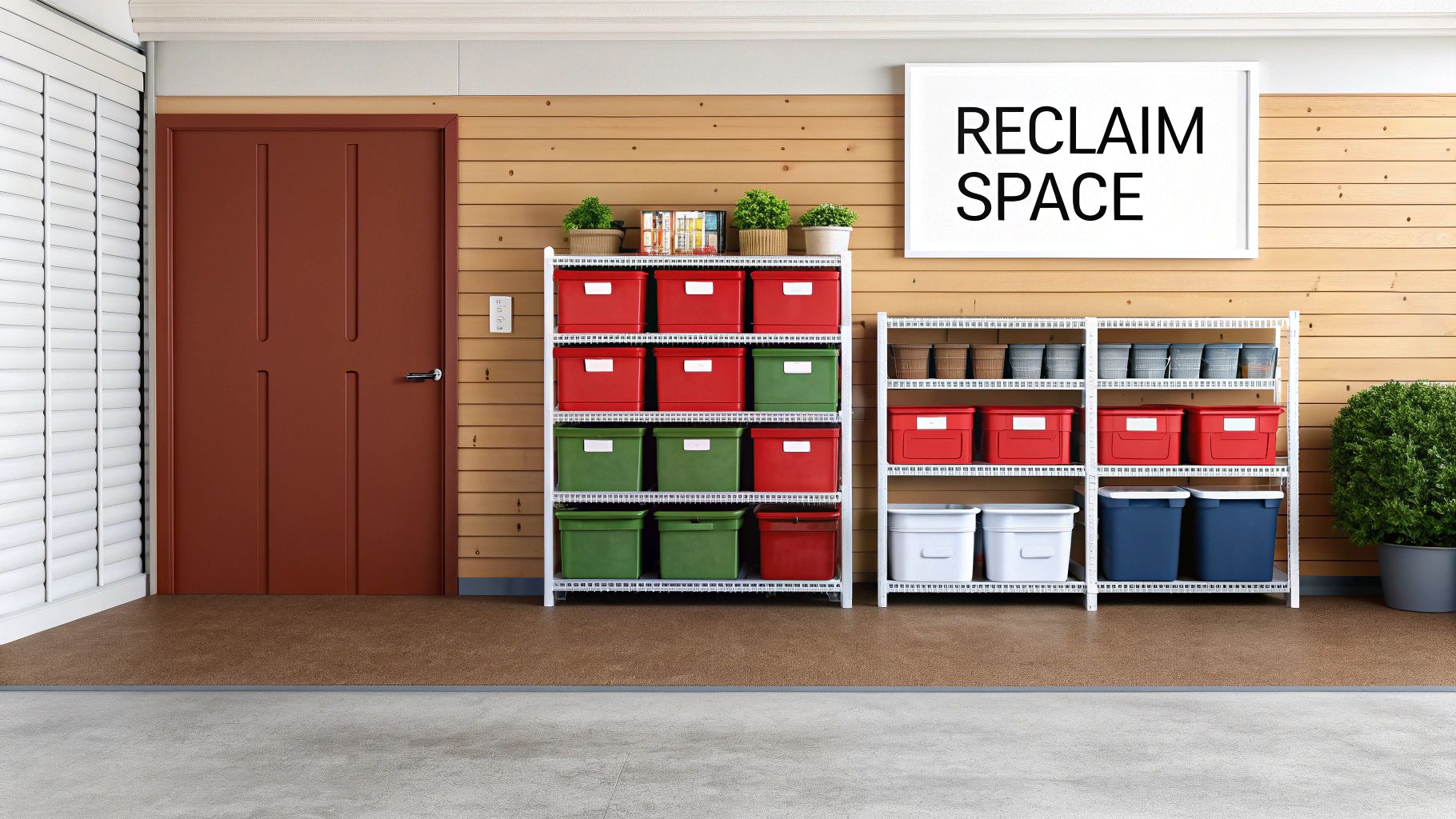
In modern Australian homes and businesses, space is at a premium. Every square metre counts. Wasted space is a missed opportunity, but dedicating an entire wall to storage is an absolute game-changer. It’s about more than just sticking up a few shelves; it’s a smart decision to get the most out of your floor plan without knocking down walls.
Think of it as creating a library for your belongings. Whether it’s tools, excess stock, or household items, everything gets its own designated, easy-to-find home. This method brings a sense of order and clarity to messy areas, turning them into highly functional assets.
Maximising Vertical Real Estate
The real magic of wall to wall shelving is using height to your advantage. Floorspace is almost always limited, but most rooms have heaps of vertical space that goes completely untouched. By running shelving from one end of a wall to the other, you create a massive amount of new storage capacity out of thin air.
This strategy is especially effective in spaces where efficiency is essential:
- Garages: Finally get those tools, car parts, and camping gear off the floor and neatly organised.
- Warehouses: Streamline your inventory management with accessible, clearly defined storage bays.
- Retail Storerooms: Maximise your back-of-house space to keep more stock on hand and ready for the shop floor.
- Home Offices: Organise files, books, and supplies for a more productive and less cluttered workspace.
Even in smaller living situations like apartments or granny flats, smart storage is essential. Making the most of vertical space is a key trick for maintaining an organised and spacious feel. For some inspiration, check out our ideas for effective tiny home storage solutions to see these principles in action.
The Super Rack Advantage
Choosing the right system is your first step towards a clutter-free space. At Super Rack, our focus is on delivering solutions that aren't just practical, but are also built tough to last. We know our customers need reliable storage they can depend on, day in and day out.
Our promise is simple: provide top-quality shelving at competitive prices, backed by fast, nationwide delivery. We believe that great storage shouldn't be complicated or break the bank.
With our team's expert advice, you can find the perfect wall to wall shelving units to suit your specific needs, whether you're tackling a small garage project or a large-scale commercial fit-out. We're here to help you plan, select, and install a system that solves your storage problems for good.
Ready to turn your cluttered walls into storage workhorses? Contact the Super Rack team today for some friendly advice and a free, no-obligation quote.
Choosing The Right Shelving Material
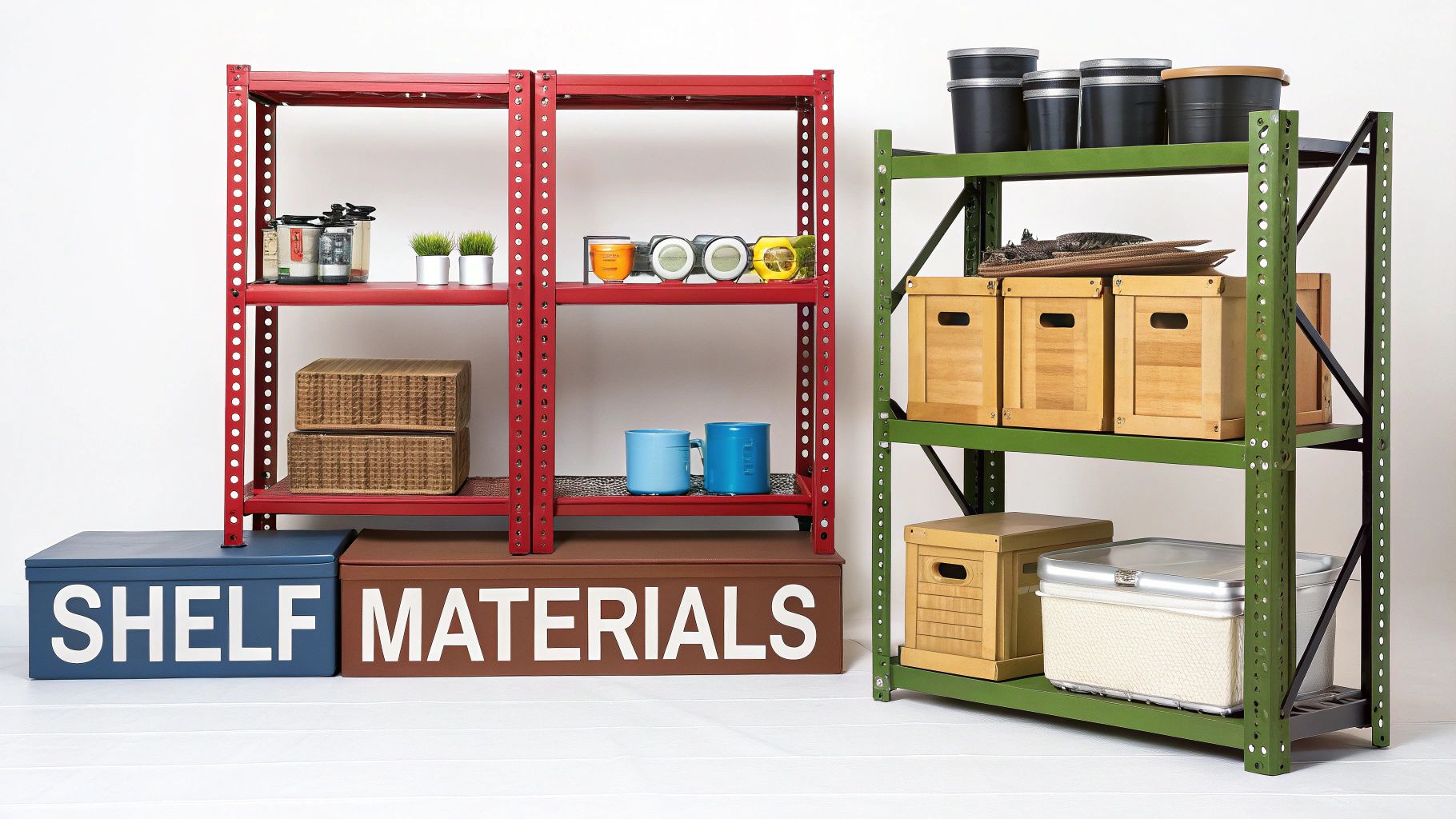
Not all shelves are created equal, and the material you pick is the foundation of a storage system you can rely on. Getting this choice right means your wall to wall shelving units will handle whatever you throw at them, year after year.
Let’s think about this in the real world. Picture a busy mechanic’s workshop. The shelving there needs to take the serious weight of toolboxes, heavy engine parts, and drums of oil without even thinking about buckling. In that scenario, heavy-duty steel isn't just a good idea; it's the only choice that makes sense.
Now, contrast that with a dry goods storeroom in a cafe. It still needs to be sturdy, but the main game might be airflow to keep products fresh. Here, wire shelving is an excellent option, letting air circulate freely around the stock.
Heavy-Duty Steel: The Workhorse of Storage
When you need pure strength and durability, nothing comes close to steel. There’s a good reason it’s the go-to material for commercial warehouses, packed workshops, and serious garage setups. Steel gives you an incredible strength-to-weight ratio, which means it can hold massive loads without being ridiculously bulky.
At Super Rack, our steel shelving is finished with a tough powder coating. This isn’t just for looks—it creates a hard-wearing barrier that fights off scratches, chipping, and rust. That makes it perfect for tough Aussie conditions where moisture and rough handling are just part of the day.
Think of a panel beater in Adelaide who needs a setup that won't rust from the humidity or get dinged up by heavy equipment. Powder-coated steel delivers that long-term reliability. Its non-porous surface is also a breeze to clean, which is a massive plus in any environment where spills are bound to happen.
The real value of quality steel shelving is the longevity and peace of mind it gives you. You invest once and get a solution you can trust to safely hold your valuable gear or inventory for decades, with barely any upkeep.
Exploring Other Common Materials
While steel is usually the best all-rounder, it pays to know about the other options out there so you can make a properly informed decision. As Aussies look for better ways to organise their spaces, different materials are becoming more common, especially wall-mounted solutions that fit our dynamic lifestyles. You can read more about these market trends if you're curious.
Here’s a quick rundown of the alternatives:
- Timber/Wood: A classic choice, wooden shelves bring a warm, natural look that’s popular in homes and retail displays. While they can be strong, they’re vulnerable to moisture damage and pests, and they just can't match the load capacity of steel. They’re much better for showing things off than for heavy-duty storage.
- Wire Shelving: Fantastic for ventilation. This makes it a great pick for pantries, linen closets, or even IT server rooms where keeping things cool is critical. The downside is that wire shelves can struggle with heavy, concentrated loads, and smaller items have a knack for falling through the gaps.
- Plastic/Polymer: This stuff is lightweight, completely rust-proof, and super easy to clean, making it a common sight in cool rooms or damp environments. Its main weakness is a much lower load capacity compared to steel.
Why Steel Is Often The Smartest Choice
When you weigh up durability, load capacity, and long-term value, high-quality steel shelving comes out on top for almost every practical storage job. It simply offers the best balance of performance and cost, especially for wall to wall shelving units built for serious work.
Take a small e-commerce business running from a garage in Brisbane. They need a system that can handle boxes of all shapes and sizes, be easily adjusted as stock levels change, and won't give out under pressure. Our heavy-duty longspan shelving is the perfect fit—it provides industrial-grade strength in a simple, boltless design that can grow right alongside the business.
Choosing the right material is the first critical step to building a storage system that’s both effective and safe. By understanding the pros and cons of each, you can lock in a solution that not only meets your needs today but provides real value for years to come.
If you want some expert advice on the best shelving material for your specific project, don’t hesitate to get in touch with the Super Rack team. We’re here to help you make a choice you’ll be happy with for a very long time.
Planning Your Wall to Wall Shelving Layout
A great wall to wall shelving installation is no accident—it all starts with a rock-solid plan. Taking the time to properly measure and map out your space is the single most important thing you can do to get it right the first time, saving yourself a world of headaches and extra costs down the track.
Think of this planning phase as your blueprint for success. It’s where your idea goes from a rough concept to a practical, working project, ensuring the final result is exactly what you pictured.
Measure Twice, Order Once
Before you even think about clicking "add to cart," get your tape measure out. Precision is your best friend here. A small miscalculation can throw off the entire project, so the goal is to get a crystal-clear picture of the dimensions you’re working with.
Start with the basics:
- Total Width: Measure the wall from corner to corner. Do this at the top, middle, and bottom, because walls are almost never perfectly straight. Always use the shortest measurement to play it safe.
- Total Height: Measure from floor to ceiling. Just like the width, check this at both ends and in the centre to catch any variations.
- Usable Depth: How far can your shelving stick out without getting in the way? Measure the clearance needed for doorways, walkways, or equipment. This is a crucial step for keeping your space functional.
Account for Obstacles
Very few walls are perfect, empty canvases. Most have little quirks and obstacles you need to plan around. Ignoring them now is a recipe for frustration later, so spot them early and build them into your layout.
Keep an eye out for common hurdles like:
- Power points and light switches
- Windows and door frames
- Pipes or ducting
- Skirting boards or uneven floors
- Existing fixtures or built-in features
Once you know where everything is, you can position your wall to wall shelving units to leave clear access. You don't want your new setup to block a window or make it impossible to plug in a power tool. For awkward corners or interruptions, specialised units like our corner gondola shelving can help you squeeze the most out of every last centimetre.
Visualise Your Layout
With your measurements sorted, it's time to bring the plan to life. You don’t need any fancy software for this—a roll of painter's tape is one of the best tools for the job.
Use the tape to mark the outlines of your proposed shelving uprights and shelf levels directly onto the wall. This simple trick lets you step back and get a real feel for how the system will look and function in the space before you commit.
This quick visualisation check helps confirm if your shelf heights are practical for what you’re storing and if the overall layout feels balanced and easy to use. It’s also the perfect time to think ahead. Will your storage needs change? Planning for a flexible system with adjustable shelves now means you can easily adapt as your requirements evolve.
A thorough plan takes all the guesswork out of the project. You’ll know exactly how many uprights, beams, and shelves you need, letting you order from Super Rack with total confidence. And if you need a hand finalising your layout, our expert team is always ready to offer practical advice to help you design the perfect storage solution.
Understanding Shelf Load Capacity
Choosing the right wall to wall shelving units is about more than just making them fit your space—it's about knowing what they can safely hold. Get this wrong, and you're not just looking at a messy collapse; you're dealing with a serious safety hazard. That's why understanding shelf load capacity is one of the most critical parts of your decision.
Think about it. A home office storing a few archive boxes has completely different demands than a mechanic's workshop stacking heavy engine parts and toolboxes. One needs a standard-duty setup, while the other requires a heavy-duty system built to handle some serious punishment.
This is where you'll see the term UDL, which stands for Uniformly Distributed Load. It's a simple but vital concept. It means the maximum weight a shelf can support when that load is spread evenly across its surface, not just piled in the middle. A shelf with a 400kg UDL is designed to handle that weight when it's distributed from end to end.
How to Estimate Your Weight Needs
Before you can pick the right shelving, you need a ballpark idea of how much weight you're planning to store. Don't worry, you don't need to be a mathematician to get it right. A quick estimation will point you in the right direction.
Getting your measurements and calculations right from the start is fundamental to choosing a system that's both safe and effective.
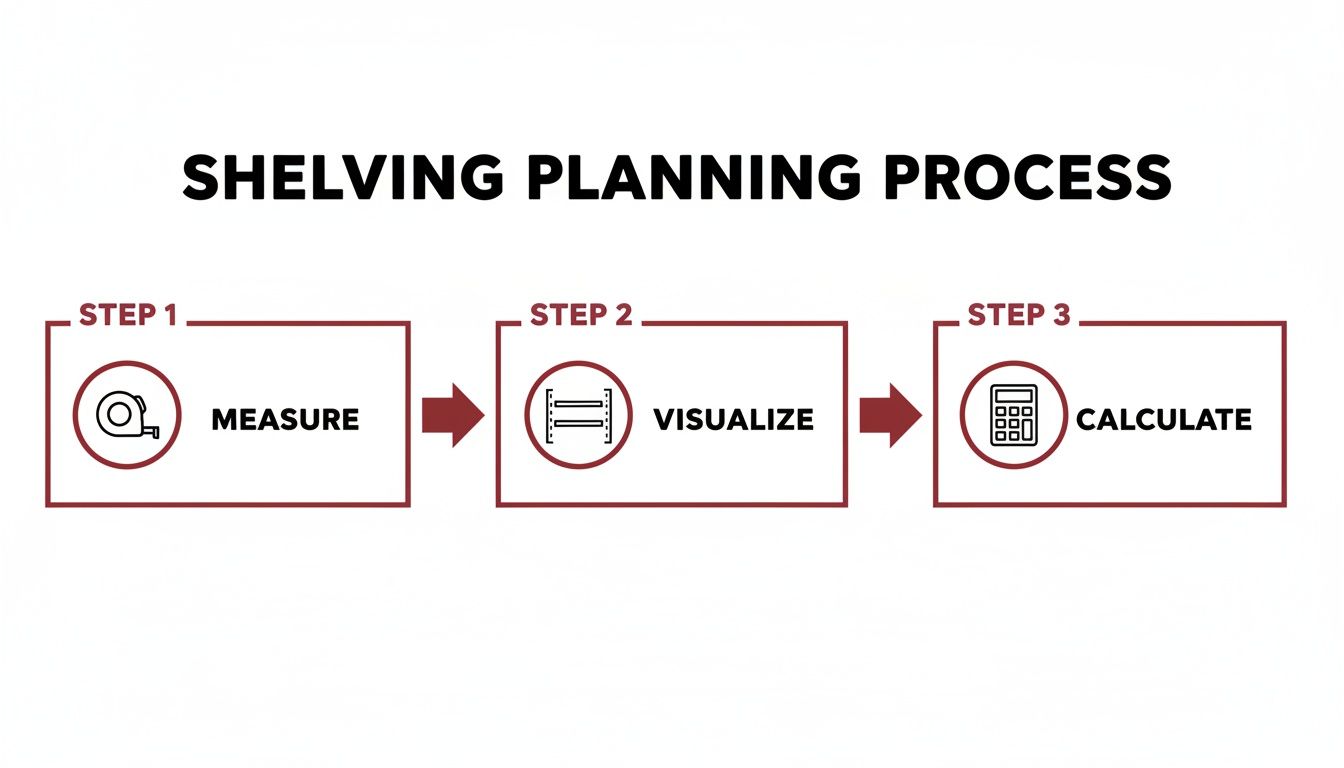
Here’s a practical way to figure out your needs:
- Find Your Heaviest Items: Start by identifying the heaviest things you’ll be putting on a single shelf. If it's tins of paint, weigh one and multiply it by how many you think will fit.
- Picture an Average Shelf: Think about what a typical, fully loaded shelf will look like in your new setup. Add up the estimated weights of all the items you plan to place on it.
- Always Add a Buffer: This is the most important step. Once you have a number, add a safety margin of at least 25%. If you estimate you need to hold 300kg, you should be looking for shelving rated for 400kg. This accounts for any future items you might add and ensures you're never pushing the system to its breaking point.
This simple foresight makes sure your shelving is not just good enough for today, but ready for whatever you throw at it tomorrow.
Matching Your Needs with the Right Super Rack System
With your weight estimate sorted, you can confidently choose a system that’s genuinely up to the task. At Super Rack, we clearly label all our products with their load ratings to take the guesswork out of it.
For instance, a home garage storing sporting gear, gardening tools, and a few toolboxes would likely be fine with a system rated for 200kg UDL per shelf. But for a small business holding heavy stock or equipment, a more robust option is non-negotiable. Our heavy-duty garage shelving with a 1600kg total capacity is specifically engineered for these demanding situations, giving you total peace of mind and lasting durability.
Always choose a load capacity that comfortably exceeds your heaviest estimated shelf load. It's the smartest way to invest in a storage solution that is safe, reliable, and built to last.
By getting a handle on load capacity, you’re making an informed choice that will turn your wall to wall shelving units into a dependable asset for years to come. If you’re ever unsure about your weight needs, our expert team is here to offer practical advice and help you select the perfect system.
Safe Installation and Long-Term Maintenance
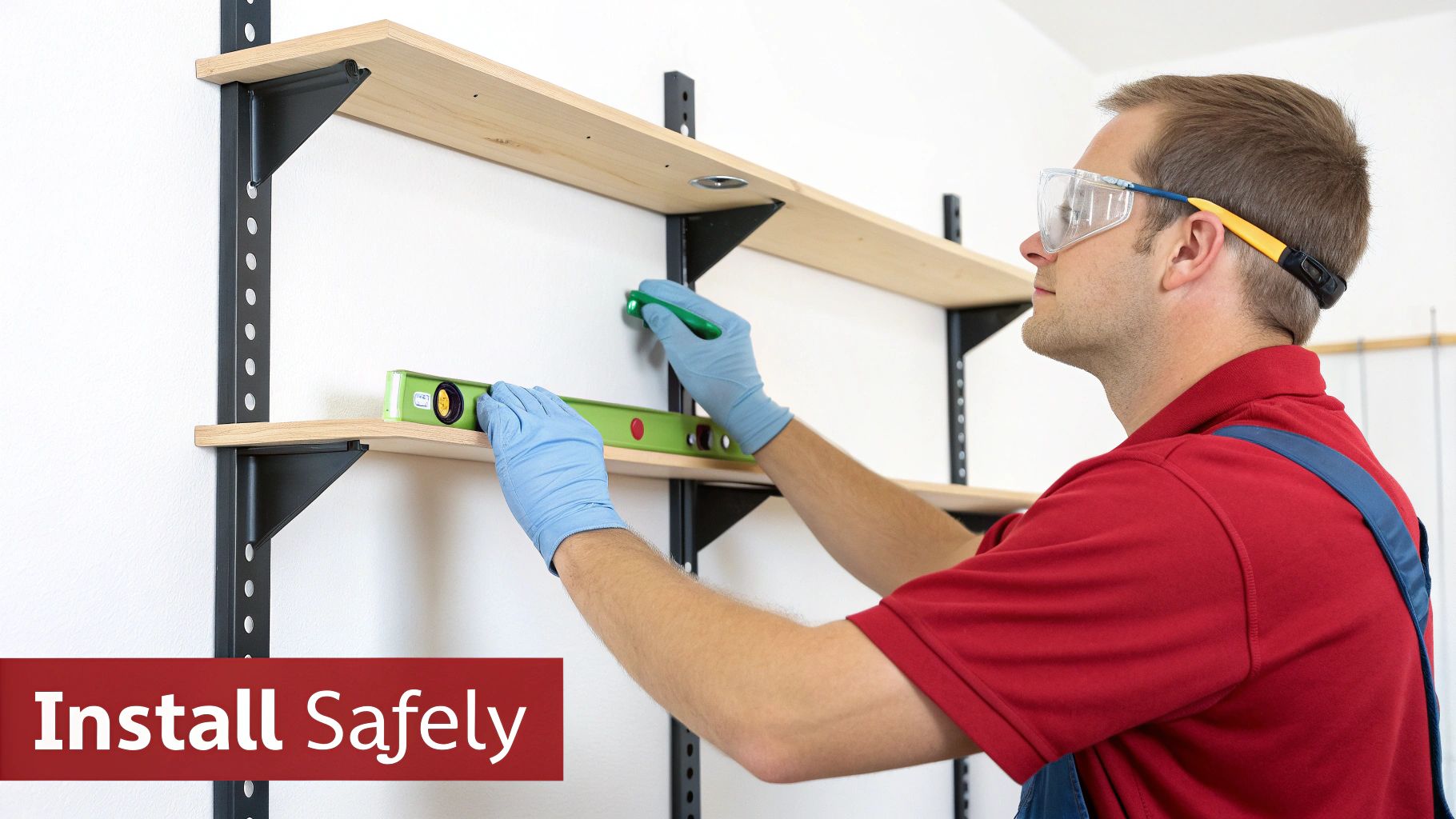
A well-planned storage system is only as good as its installation. Putting your wall to wall shelving units together safely is the top priority, ensuring they remain a stable and reliable asset for years. A secure setup doesn't just protect your stored items—it's absolutely critical for preventing accidents.
This all starts with understanding your walls. While freestanding units are fairly straightforward, securing shelving directly to a wall needs a bit more care. The goal is always to anchor your system to the solid framework behind the plasterboard, not just the plasterboard itself.
The Foundations of a Secure Installation
Before you even think about assembly, take the time to prepare your space and grab the right tools. A few non-negotiable steps will guarantee your shelving is level, stable, and ready to be loaded up safely.
The single most critical step is finding the wall studs—the vertical timber or steel beams that form your wall’s skeleton. Attaching your brackets or uprights directly to these studs provides the strongest possible anchor point. A simple stud finder is an inexpensive tool that makes this job quick and easy.
Next up, you need the correct fixings for your specific wall type.
- For plasterboard over timber studs: You'll need long, sturdy wood screws that can punch through the board and get a deep grip into the stud.
- For brick or concrete walls: This calls for masonry bolts or plugs designed to expand and lock securely within the solid wall. Using the wrong fixings is a recipe for disaster.
Finally, a spirit level is your best friend. Every upright must be perfectly vertical, and every shelf perfectly horizontal. An uneven installation puts uneven stress on the components, which can slowly compromise the entire structure’s integrity.
Long-Term Care for Lasting Performance
Once your shelving is installed and loaded, a little ongoing care will go a long way in extending its life and maintaining its safety. Think of it as a quick health check for your storage system. These simple routines take just a few minutes but can prevent major headaches down the track.
A proactive approach to maintenance ensures your wall to wall shelving units stay in top condition, protecting your investment and guaranteeing continued safe operation. At Super Rack, we engineer our products for durability, but regular checks are simply best practice for any storage system.
A quick visual inspection every few months is all it takes. This simple habit helps you spot potential problems early, before they become safety hazards. It’s the easiest way to ensure your shelving continues to perform exactly as it should.
Your routine check-up should include:
- Check for Levelness: Grab your spirit level again to make sure shelves haven't started to sag or uprights haven't shifted.
- Inspect Components: Look for any signs of damage, like bent beams or cracked welds. Make sure all locking pins or safety clips are still securely in place.
- Review Weight Distribution: Over time, things get moved around. Check that heavy loads are still spread evenly and that you haven't accidentally overloaded a single shelf or section.
- Wipe Down Surfaces: A quick wipe with a damp cloth keeps dust from building up and makes it easier to spot any surface damage on your powder-coated steel shelves.
Following these simple installation and maintenance tips ensures your storage solution is not just effective, but safe. For friendly, expert advice on installing your system, don’t hesitate to reach out to the Super Rack team—we're here to help.
Your Wall to Wall Shelving Questions Answered
When you're gearing up for a big storage project, it's normal to have a few questions floating around. We've pulled together some of the most common queries we get about planning and putting in wall to wall shelving units. Our aim is to give you the clear, practical answers you need to get the job done with confidence.
Here's what people usually want to know.
Can I Install Wall to Wall Shelving Myself?
You bet. Most of our shelving is designed for straightforward DIY assembly. We use clever, boltless designs where everything just locks securely into place, and every kit comes with clear instructions to make it as simple as possible.
Of course, if you're tackling a massive setup or just aren't a fan of DIY, bringing in a professional is always a smart move. The most important part, hands down, is making sure the units are properly anchored to the wall—especially with heavy loads—to keep them safe and stable for years to come.
How Much Weight Can These Shelving Units Hold?
That's the big question, and the answer really depends on the model. Our light-duty units are spot-on for home garages or office storerooms. On the other hand, our heavy-duty longspan shelving is built for tough commercial jobs and can handle much, much more weight per shelf.
It’s crucial to check the specific load rating, often called the UDL (Uniformly Distributed Load), before you buy anything. A good rule of thumb is to always pick a system that can handle more than your heaviest estimated load. Our team is always here to help you pick the right capacity, but if you want to see our toughest options, you can check out our heavy-duty longspan shelving.
Are the Shelving Units Adjustable?
Yep, flexibility is built right into our designs. The vast majority of our shelving systems come with fully adjustable shelves, so you can customise the height between each level.
This is incredibly handy because your storage needs are bound to change. It means you can easily reconfigure your setup for taller boxes or smaller items without having to pull the whole thing apart. It's a practical feature that makes our shelving a smart, long-term investment.
What's the Best Way to Maintain Steel Shelving?
Keeping our steel shelving in top shape is incredibly simple. The powder-coated finish is tough as nails, designed to resist rust, scratches, and general wear and tear from the get-go.
For a routine clean, just wipe the surfaces down with a damp cloth to get rid of any dust or grime. Steer clear of harsh or abrasive chemicals, as they can damage the protective coating. We also recommend giving the unit a quick once-over every now and then to make sure all the locking pins and safety clips are still sitting tight. That’s all it takes to keep your Super Rack shelving performing safely for years.
Ready to build the ultimate storage setup with high-quality wall to wall shelving units? The expert team at Super Rack is here to help you design and choose the perfect system for your space and budget.
Visit Super Rack today to explore our full range and get a free, no-obligation quote!