Let's be clear: regular pallet racking inspections are much more than a box-ticking exercise. They are the absolute foundation of a safe, productive, and legally compliant warehouse. Skimping on them is a direct threat to your team, your stock, and your bottom line.
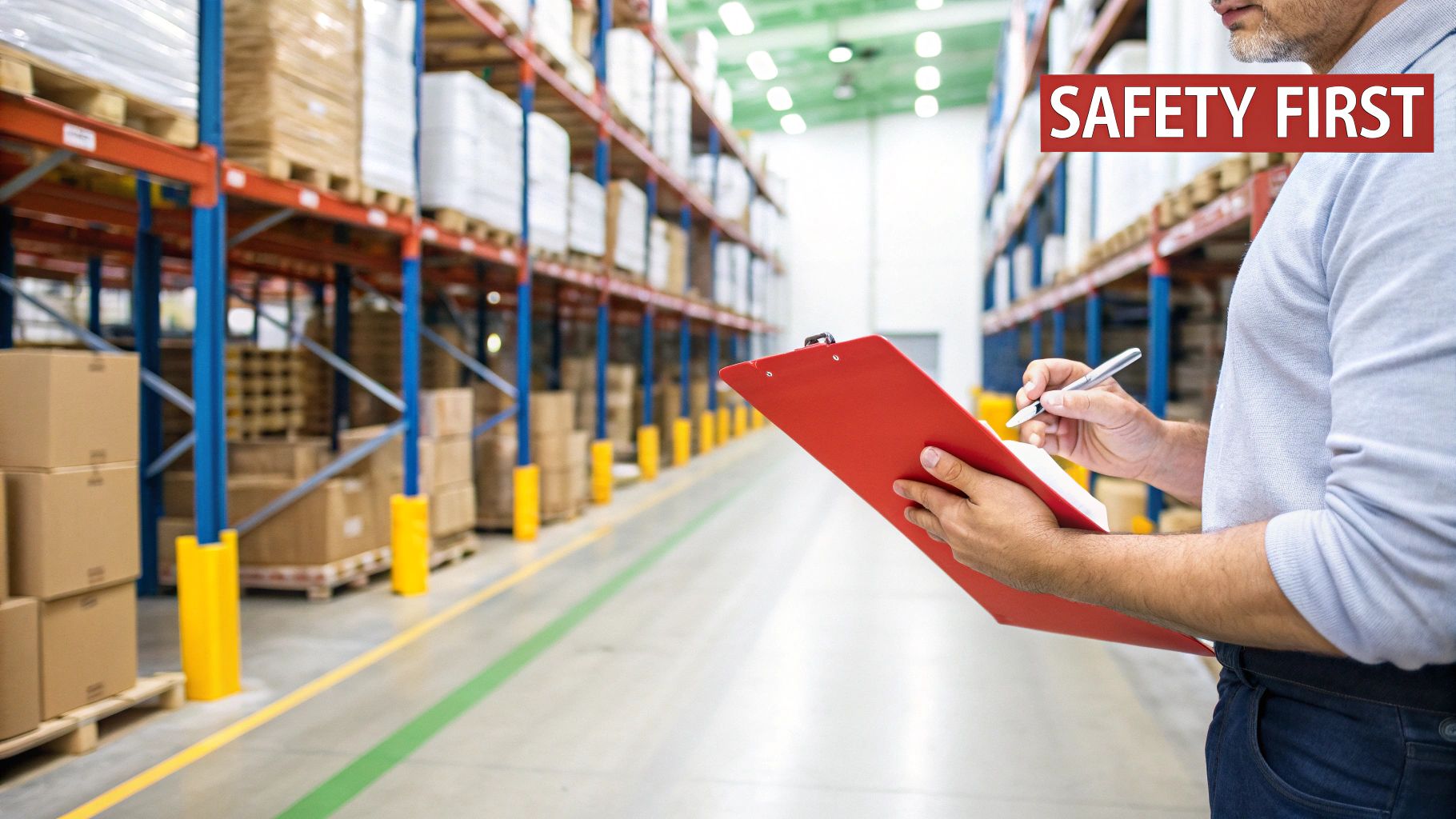
In a busy warehouse, little bumps and scrapes to your racking are just part of the daily grind. A forklift might clip an upright on a tight turn, or a pallet gets dropped a bit too heavily onto a beam. These moments seem minor, but they create hidden weak points in the steel structure. That's where the real danger starts.
Imagine a small, unnoticed dent in a lower frame. Day after day, the tonnes of weight from the pallets above put immense stress on that one compromised spot. The damaged steel, no longer able to hold its designed load, starts to buckle silently. Then one day, another small bump—or even just loading a new pallet—is all it takes.
The whole row can go down in a domino effect, bringing tonnes of product crashing to the floor.
The mess on the floor is just the beginning. A recent report revealed the average cost of a pallet racking collapse in Australia is a jaw-dropping AUD $185,000 per incident. That number isn't just about lost stock; it covers damaged equipment, massive operational downtime, and potential legal action.
What's really telling is that the same report found a concerning 72% of these collapses happened in facilities that had skipped their required annual inspection.
Under Australian SafeWork regulations, your duty of care to provide a safe work environment is non-negotiable. A racking collapse due to neglect is a direct breach of that duty. The consequences can be severe, including heavy fines and, in the worst-case scenario, prosecution.
The key to preventing these disasters and meeting your legal obligations is strict adherence to the Australian Standard AS 4084:2023 Steel Storage Racking. This standard is the industry benchmark, laying out the non-negotiable requirements for the design, installation, and—most importantly—the regular inspection of your pallet racking.
This isn't about creating paperwork. It's about building a proactive safety culture. A crucial part of this involves understanding pallets and how they interact with your specific system.
Ultimately, consistent pallet racking inspections are one of the smartest investments you can make. They protect your most valuable assets: your people and your products. By working with experts and investing in high-quality systems, you move from a reactive, 'fix-it-when-it-breaks' mindset to a proactive strategy that ensures long-term safety, efficiency, and peace of mind.
Figuring out your legal duties for warehouse safety can feel like a maze, but your responsibilities under Australian Standard AS 4084 are actually pretty clear. This standard is the official rulebook for keeping your pallet racking safe, and meeting its requirements is a non-negotiable part of your Work Health and Safety (WHS) obligations.
Essentially, the standard splits your inspection duties into two key types: frequent internal checks done by your own team, and a mandatory, deep-dive annual inspection carried out by a 'competent person'. Both are critical for a safe warehouse.
Think of it like maintaining your car. Your team handles the daily and weekly checks—like checking the oil, tyres, and looking for anything obviously wrong. These are your regular, internal pallet racking inspections. They can be done by trained staff who are on the floor every day, like forklift operators or warehouse supervisors.
The annual inspection, on the other hand, is like taking your car to a licensed mechanic for a full logbook service. AS 4084 requires this to be done at least once every 12 months by a 'competent person'.
So, who counts as a 'competent person'? The standard defines this as someone with the right mix of training, qualifications, and real-world experience to properly assess the structural integrity of your racking. This is almost always an external, third-party expert who provides an unbiased, technically sound report on your system's condition.
Let's walk through how this plays out in a busy warehouse. Imagine a staff member doing a routine weekly walk-through. They spot a horizontal beam on the second level that looks slightly bowed in the middle. It’s not a major deflection, but it’s definitely different from the others.
Instead of shrugging it off, they follow procedure. They immediately log the issue in the maintenance register, snap a photo, and report it to their manager. The manager then ensures no more pallets are loaded onto that bay and escalates the issue for a professional assessment. This simple act of diligence—part of their internal inspection process—has just flagged a potential failure point before it could lead to a collapse.
This proactive approach is exactly what AS 4084 is all about. It’s not just about passing an annual test; it’s about creating a continuous cycle of observation and reporting that keeps your team safe every single day.
Sticking to AS 4084 isn't just about ticking a compliance box; it has a proven track record of preventing accidents. In Australia, bringing in mandatory annual pallet racking inspections has significantly cut down on racking failures.
According to SafeWork NSW, there was a 35% decrease in reported incidents involving pallet racking collapses in warehouses that followed the standard’s inspection rules.
Of course, your responsibilities go beyond just the racking. While AS 4084 focuses on steel storage systems, your broader legal obligations for warehouse safety cover other critical areas. For instance, understanding Emergency Exit Signage Requirements is vital for ensuring your team can evacuate safely in any emergency.
Ultimately, a deep understanding of AS 4084 helps you build a rock-solid safety plan. The expert team at Super Rack can provide advice to ensure your racking not only meets but exceeds these crucial standards, offering superior quality components for any necessary repairs or upgrades. Learn more about the specifics of the AS4084-2023 pallet racking standard in our detailed guide.
Getting your team to conduct regular, effective internal checks is one of the most powerful things you can do for warehouse safety. Think of these frequent walk-throughs as an early warning system. They’re your best bet for catching small issues before they snowball into serious hazards.
A consistent checklist makes sure nothing gets missed and gives your staff the confidence to spot and report potential dangers. This isn't just about ticking boxes; it's about building a proactive safety culture where everyone feels responsible for keeping the racking solid and secure.
The infographic below shows the clear difference between the routine checks your team can handle and the mandatory annual audit that needs a professional eye.
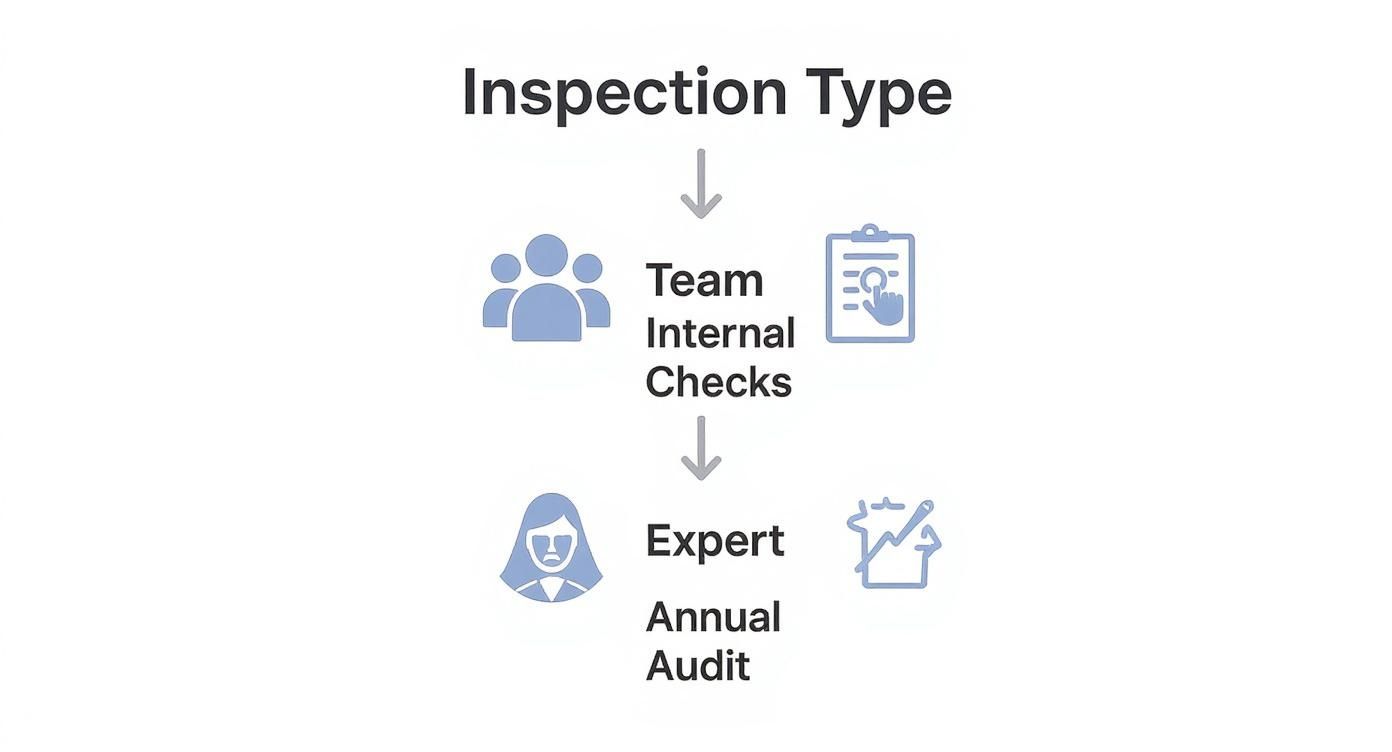
This visual is a great reminder that while your team's internal checks are crucial for day-to-day safety, they complement—they don't replace—the comprehensive annual inspection by a certified expert.
Your vertical uprights are the backbone of the entire racking system. Even what looks like minor damage here can seriously compromise the load-bearing capacity of the whole bay. During your checks, you’re mainly hunting for any signs of impact from forklifts or other machinery.
A good rule of thumb is to check for any dents, bends, or twists. If you can lay a straight edge over the damaged area and see a gap of more than 3mm on the face of the upright, or more than 5mm on the corner, that rack needs to be taken out of service. Immediately and safely unload it.
Once the bay is empty, cordon it off and report the damage for professional repair. An ounce of prevention is worth a pound of cure here. Investing in something like high-quality column protectors from Super Rack is a smart move, giving you a robust first line of defence against expensive impact damage.
Beams are the horizontal workhorses your pallets rest on. They need to be perfectly straight to distribute weight evenly and safely.
Keep an eye out for any signs of deflection or bowing in the middle of a beam. A slight sag under a heavy load can be normal, but if that beam stays bent after the pallets are removed, that’s a major red flag. The beam's connectors and their little locking pins are just as important.
Here’s what to look for on the beams:
Finding a missing locking pin is a simple but urgent fix. If you spot a beam that’s permanently bent, that bay must be offloaded and the component replaced—no exceptions.
The stability of your entire racking system literally starts at the floor. The base plates and anchors are what secure the uprights, preventing them from shifting, twisting, or tipping over.
During inspections, check that each base plate is anchored firmly to the concrete floor. Look for any damage to the plate itself, like cracks or bending from an impact. Most importantly, make sure the anchor bolts are tight and not showing any signs of shearing or pulling out of the floor.
A loose or damaged anchor is a critical safety hazard. It means the entire rack could become unstable, especially during a minor collision. Any issues with anchoring must be reported and fixed by a professional immediately.
So, your annual pallet racking inspection is done, and now you have a detailed report sitting on your desk. At first glance, it can look a bit overwhelming—full of technical jargon and classifications. But knowing how to read this document is the key to taking the right steps to keep your warehouse safe and compliant.
Most professional inspectors in Australia use a simple but effective ‘traffic light’ system to classify the severity of any damage they find. It’s a straightforward way to break down complex issues into three clear categories: Green, Amber, and Red. Understanding what each colour means will help you respond quickly and correctly.
Getting a 'Green' classification is the best news you can hope for. It means the component is in good condition and perfectly safe for continued use. You might see notes about minor surface wear or scratches, but nothing that affects its structural integrity.
However, a Green tag isn't a signal to "set and forget." Think of it as a heads-up to keep an eye on that area during your regular internal checks. It's a note to yourself: "This spot is fine now, but let's monitor it for any changes." This proactive approach stops minor issues from ever becoming major problems.
An 'Amber' rating is a serious warning that needs your prompt attention. This classification is used when damage has weakened the racking's load-bearing capacity but doesn't pose an immediate risk of collapse. It’s a clear sign that a component needs to be repaired or replaced—and soon.
When a component gets an Amber tag, you need to:
For example, say a main beam gets an Amber rating because of moderate deflection. The warehouse manager must get all pallets off that beam and the levels directly above and below it. The next step is to order a replacement from a trusted supplier like Super Rack and schedule the installation, making sure all staff know that bay is out of action.
A 'Red' rating means you have a critical hazard on your hands. This is reserved for severe damage where there is a real and immediate risk of the racking system collapsing. Any component with a Red tag is seriously compromised and poses a direct threat to your team's safety.
If you see a Red classification on your report, you must act instantly.
A Red-rated component, like a badly buckled upright from a major forklift impact, is a ticking time bomb. The priority is to isolate the danger and remove the load as quickly and safely as possible. There is absolutely no room for delay when you see a Red tag.
Unfortunately, finding damage is more common than you might think. A recent survey revealed that 68% of Australian warehouses reported at least one significant racking defect during their annual inspection. The most frequent culprits were bent uprights (42%), damaged beams (31%), and missing locking pins (27%). You can discover more insights about these common racking issues on Total Racking.
Understanding these classifications turns your inspection report from a confusing document into a clear action plan. It takes the guesswork out of the equation and helps you prioritise repairs, getting your facility back to full compliance quickly and confidently. For expert advice or high-quality replacement parts delivered nationwide, the team at Super Rack is here to help.
Regular pallet racking inspections are great for spotting existing damage, but the real goal is to stop that damage from happening in the first place. A genuinely safe warehouse culture is built on proactive prevention, not just reactive repairs. By focusing on everyday strategies that minimise risks, you can dramatically extend the life of your racking and, most importantly, protect your team.
This is all about shifting your mindset from finding problems to actively preventing them. It’s about building a robust safety net through solid training, clear communication, and physical protection.
It's an open secret in the industry: forklifts are responsible for the vast majority of racking damage. Some studies suggest as much as 90% of impacts come from them. That’s why comprehensive operator training is your single most effective preventative measure. This goes way beyond just getting a licence; it’s about fostering a culture of spatial awareness and careful operation every single shift.
Effective training needs to cover the fundamentals, like:
Imagine a warehouse that cuts its repair budget in half just by investing in a driver training refresher course. These are the real, tangible results you get when you prioritise operator skill.
Every single racking system is engineered to hold a specific maximum weight. Pushing past this limit is one of the quickest ways to cause a catastrophic failure. Safe Working Load (SWL) signs aren't just a good idea; they are a critical piece of safety equipment required by Australian standards.
These signs have to be clearly visible on every single run of racking, giving operators the essential information they need at a glance. They should specify the maximum weight per pallet, per beam level, and for the entire bay.
Without prominent SWL signs, your team is essentially guessing, and that’s a dangerous game to play. Clear signage removes ambiguity and empowers your staff to make safe loading decisions every single time, turning compliance into a practical, everyday safety habit.
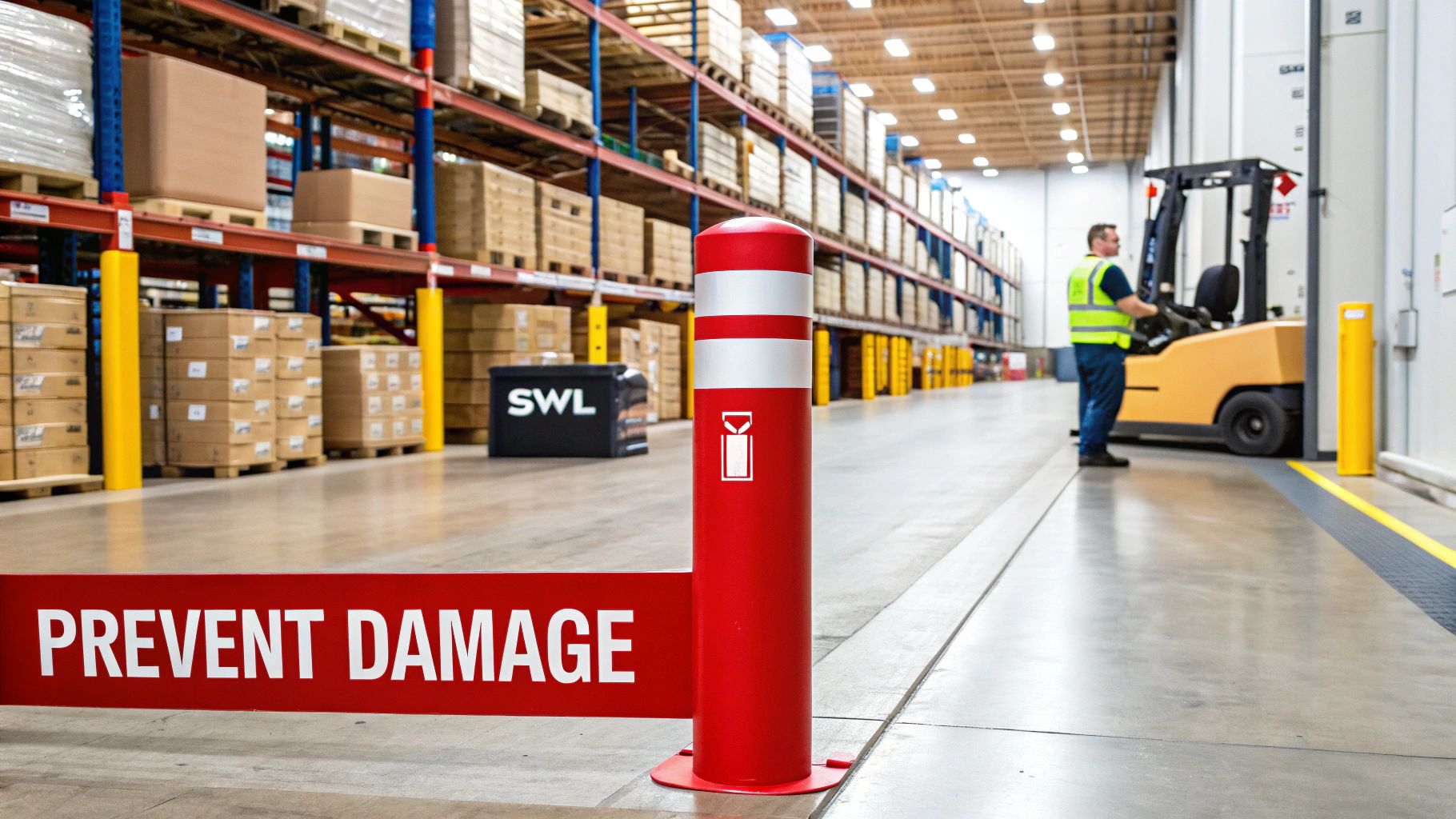
While good training is essential, physical barriers provide a vital last line of defence. In a busy warehouse, let's be realistic—occasional bumps are almost inevitable. Installing rack protection absorbs the force of these impacts, safeguarding the structural integrity of your uprights and frames.
Consider these highly effective, common-sense solutions:
By adopting these proactive measures, you create multiple layers of safety. For businesses looking to fortify their storage systems, understanding the proper techniques for pallet racking installation is just as important as ongoing maintenance. Super Rack offers expert advice and superior quality protection products, all delivered nationwide with competitive pricing, helping you build a safer warehouse from the ground up.
When it comes to pallet racking inspections, a few questions always pop up. It's totally normal. Getting clear, straight answers is the first step to making sure your warehouse is safe, compliant, and running smoothly. Let's tackle some of the most common queries we hear from business owners across Australia.
A professional pallet racking inspection will typically set you back somewhere between AUD $500 to AUD $3,000. The final figure really just depends on the size of your warehouse and how complex the racking layout is.
Sure, it's an operational cost, but it’s a tiny investment when you stack it up against the potential AUD $185,000 average cost of a racking collapse. That number doesn't even begin to cover the immense risk to your team. Think of it as essential insurance for your assets and, more importantly, your people.
This is a great question, and the answer has two parts. While your team's regular, quick checks are absolutely vital for spotting day-to-day damage, the official annual inspection required by AS 4084 must be done by a 'competent person'.
In short, this means an external expert who lives and breathes racking systems and knows Australian Standards inside out. Their impartial eye is critical for genuine safety and for ticking the legal compliance boxes. Your team are your first line of defence; the external inspector is there to give the whole system its annual health check.
Putting it bluntly, skipping your annual pallet racking inspection is a major breach of your Work Health and Safety (WHS) obligations. If an accident happens or SafeWork drops in for an audit, you could be looking at hefty fines, legal trouble, or even having parts of your operation shut down.
But the real cost isn't financial. You’d be putting your employees at an unacceptable and completely avoidable risk. Regular, documented inspections are your best defence—they show you’re serious about providing a safe workplace for everyone.
If your inspection report flags damaged components, you need to get them replaced—fast. But not with just any parts. It's crucial to source high-quality, compatible replacements from a supplier who knows what they're doing. The new parts have to be engineered to meet strict Australian standards and be a perfect match for your existing system.
Using mismatched or cheap, inferior components is like fixing one problem by creating another, hidden one. You're just introducing new weak points into the structure.
Never mix and match components from different manufacturers unless you have it in writing from an engineer that they are compatible. Cutting this corner can void your warranty and put the entire structure’s safety on the line.
At Super Rack, we stock a complete range of AS-compliant components—from uprights and beams to the all-important locking pins. With fast, nationwide delivery and expert advice on hand, we help you get repairs done right and done quickly, minimising your downtime and getting your racking back to a safe, compliant state.
For a no-obligation quote or some expert advice on your storage setup, visit us at https://www.superrack.com.au.
